An absence after closer European engagement
The EU's decision contrasts with its participation in the 2025 summit in Kuala Lumpur, which European Council President António Costa attended. It also follows a year of closer engagement with the Philippines, including a July visit by EU foreign policy chief Kaja Kallas and an agreement in principle on a free trade deal.
In a guest commentary for t-online, Daniela Braun describes the absence as a missed opportunity to give political weight to the EU's strategic partnership with ASEAN. Braun, who heads the Konrad Adenauer Foundation's Philippines office, argues that Southeast Asia's growing importance for trade and economic diversification makes high-level engagement particularly relevant ahead of the dialogue partnership's 50th anniversary in 2027.
The Philippines is hosting under its 2026 ASEAN chairmanship theme, "Navigating Our Future, Together." The gathering comes as the region faces volatile global trade and an energy shock caused by the closure of the Strait of Hormuz earlier this year, according to Asia Media Centre.
Digital trade and emergency fuel supplies
Economic resilience is a central concern at the summit and its related meetings. The Philippine chairmanship has promoted efforts to lower trade barriers, broaden international economic ties and make regional supply chains more independent and better able to withstand crises. Its initiatives span the digital economy, semiconductors, energy security and regional value chains.
One agreement has already been signed. ASEAN economic ministers signed the ASEAN Digital Economy Framework Agreement, or DEFA, in Manila on November 14, 2026, ABS-CBN News reported. It establishes shared rules covering e-commerce and other digital trade, digital payments, cross-border data flows, cybersecurity and artificial intelligence. The ASEAN Secretariat expects the agreement to enter into force in early 2027.
A planned ASEAN semiconductor roadmap is also expected to feature prominently in discussions. The initiative aims to strengthen the region's position as a production base for semiconductors and electronics.
Energy discussions include a push to accelerate ratification of the ASEAN Framework Agreement on Petroleum Security, which would enable members to coordinate emergency fuel sharing. Philippine Foreign Affairs spokesperson Dominic Xavier Imperial said only four or five countries had ratified it as of November 13, with the Philippines the first to do so, according to ABS-CBN News. ASEAN is also examining a proposal for a regional oil stockpile.
Maritime talks fall short of a 2026 agreement
The Philippines has made maritime security a priority during its chairmanship as its disputes with China in the South China Sea have intensified. Since 2023, Manila has systematically released photographs and videos documenting incidents involving Chinese vessels.
Braun notes that Japan, Australia, Germany and France have repeatedly backed the Philippines and emphasized freedom of navigation. Support within ASEAN has been more cautious: many members share concerns about China's conduct but are reluctant to confront a major economic partner.
ASEAN and China have spent more than two decades negotiating a South China Sea Code of Conduct intended to prevent incidents at sea and reduce the risk of escalation. Shortly before the summit, it became clear that they would miss their goal of completing the talks in 2026.
Philippine Foreign Affairs Secretary Ma. Theresa Lazaro said the sides had provisionally settled about 80% of the draft. They remain divided over its legal status, the area it would cover and how it would be implemented. Negotiations will carry over into Singapore's 2027 chairmanship.
A separate maritime initiative has advanced. ASEAN foreign ministers endorsed the concept note and terms of reference for a proposed ASEAN Maritime Centre in the Philippines, bringing it closer to approval by regional leaders. The proposed center would help members exchange information, conduct joint research and build capacity.
US outreach and China's representation
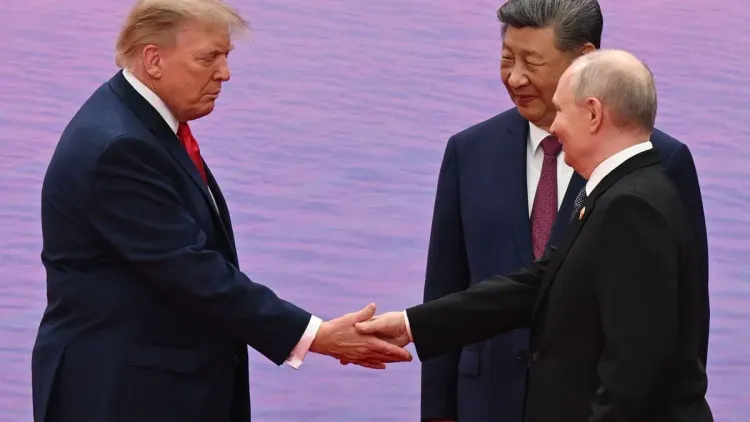
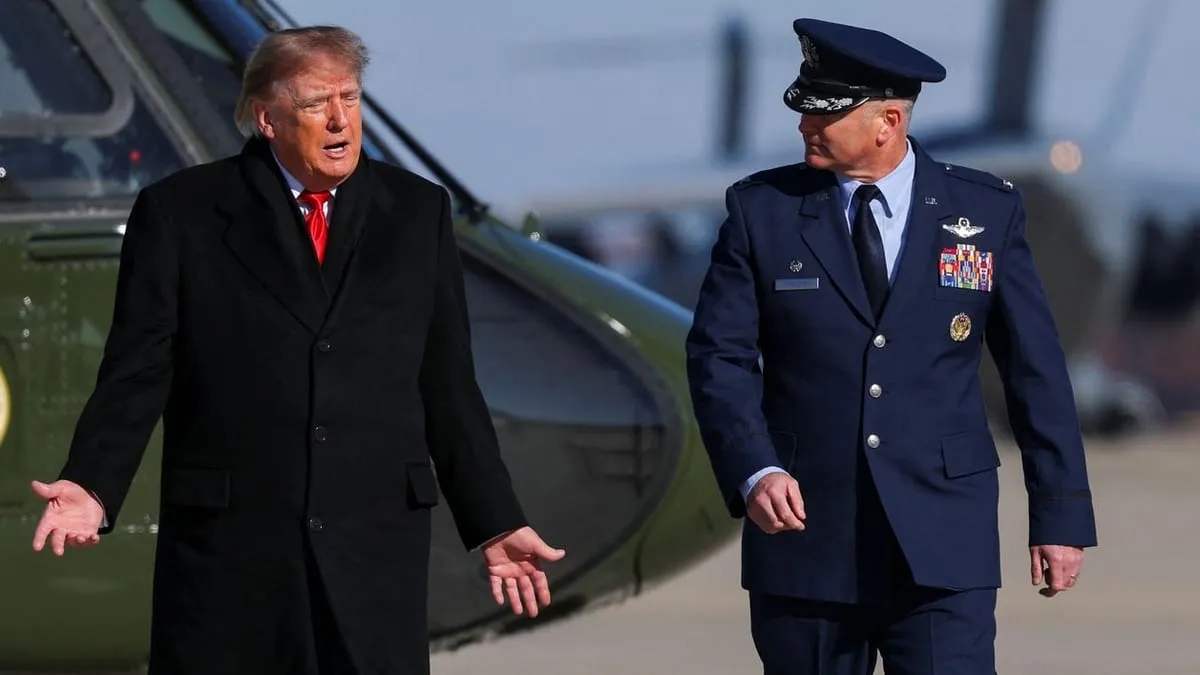
Braun views Trump's attendance as a diplomatic success for the Philippines, whose most important security partner is the United States. Washington has recently expanded its support. At an October meeting of defense ministers, US Defense Secretary Pete Hegseth announced closer security cooperation and plans for a new Defence Cooperation Framework with ASEAN, with negotiations to begin in 2027.
Washington also has commercial goals for the summit. According to Asia Media Centre, the administration wants trade agreements and commitments, now or in the future, for ASEAN countries to align with the US AI technology stack. Development assistance is being offered as an incentive.
A Quad leaders' meeting and talks between Trump and Philippine President Marcos were expected on the sidelines. Trump's itinerary called for him to reach Manila on November 16 before traveling to APEC in Shenzhen.
China is represented by Premier Li Qiang rather than President Xi Jinping. Although that follows Beijing's long-standing practice, Braun writes that Philippine foreign ministry officials had apparently hoped Xi would attend personally.
The choice of how to engage Beijing runs through many of the summit's debates. Braun describes governments that are conscious of a growing threat from China while also wary of jeopardizing ties with one of their most important economic partners.
A broad set of summit decisions
The summit's work extends well beyond trade and maritime disputes. Bernama reported that more than 100 outcome documents were expected across the summit and related meetings. Lazaro said leaders had approved or taken note of at least 150 documents addressing priorities that included trade, digital transformation, maritime security, energy and food security.
Leaders were expected to adopt a declaration on children's rights online, including cooperation to combat child sexual exploitation and abuse involving digital technologies and AI. A decision on implementing ASEAN's Five-Point Consensus on Myanmar was also among the documents awaiting adoption.
The gathering also featured the unveiling of ASEAN's updated emblem and a ceremony to raise its updated flag. The Philippines will hand the rotating chairmanship to Singapore for 2027.