Ukrainian forces report repelling armored assaults
Ukraine's General Staff recorded 47 Russian attacks in the Dobropillja sector on November 13. Ukrainian drone forces reported destroying four tanks and 10 armored personnel carriers during the fighting. Those figures could not be independently verified.
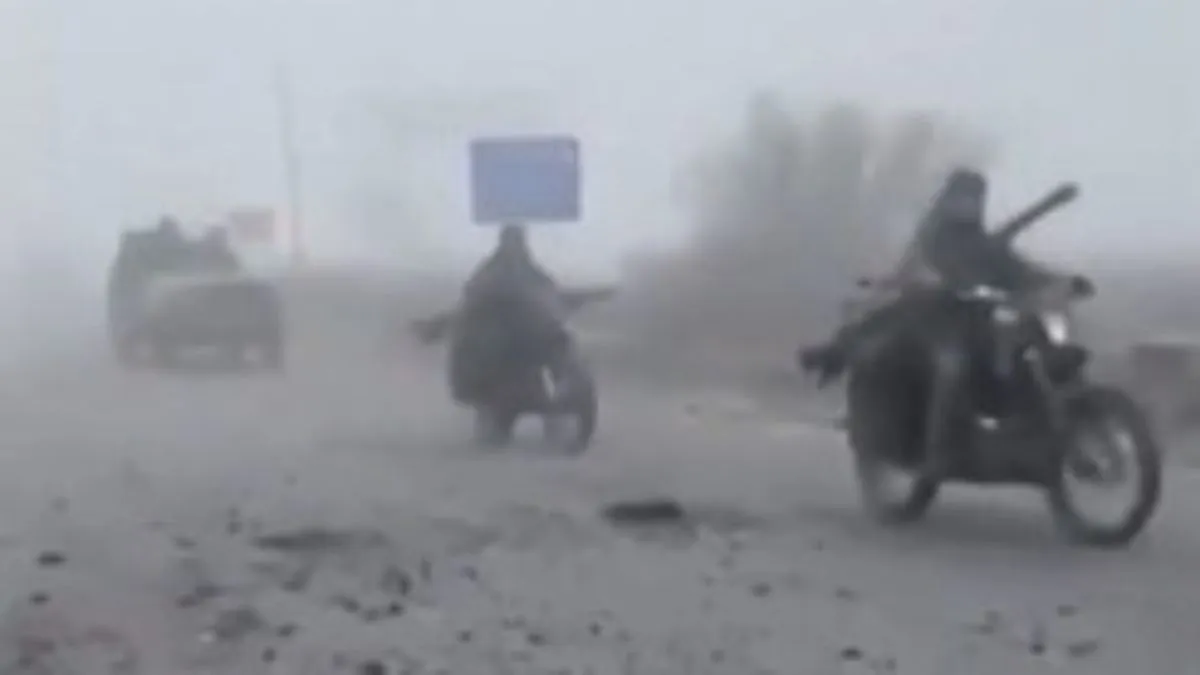
A more detailed account from the Institute for the Study of War (ISW), citing a Ukrainian military source, described a reinforced platoon-sized assault that day toward Hruzke, northeast of Dobropillja. Russia committed three tanks, three infantry fighting vehicles, and more than 10 light vehicles under cover of fog. Some armor reached the line of contact, while other infantry dismounted several kilometers from the front. ISW reported that Ukrainian forces repelled the attack.
Whether the broader push near Dobropillja achieved anything remains disputed. Military blogger Vitaly, after reviewing social media videos, concluded that Ukrainian troops had surrendered no positions on November 13. He cautioned that scattered Russian infantry might still be present in the area.
Militarnyi separately reported that operators from Ukraine's 1st Separate Assault Regiment destroyed a Russian column with Darts drones on November 14. Commander Dmytro Filatov said seven vehicles, three quad bikes, and 30 Russian servicemen were hit during efforts to disrupt preparations for an offensive on Dobropillja. ISW suggested the report might refer to the same assault toward Hruzke.
Ukraine's Defense Ministry put Russian armored combat vehicle losses on November 14 at 34, calling it the highest daily total since October 2025 and the largest recorded in 2026.
Why the weather raises concern
Large mechanized attacks have become unusual along the front because drones make advancing vehicle formations vulnerable to heavy losses. Fog can limit that threat. November and December are among Ukraine's foggiest months, and military observers expect Russia to intensify mechanized attacks as visibility deteriorates.
US journalist David Axe, writing for Euromaidan Press, said most drones used by both sides rely primarily on daylight cameras, whose images have limited usefulness in dense fog. Thermal-camera drones are deployed at the front, but their higher cost makes them less common. Axe expects Russian troops to continue using fog as cover for tanks and other armored vehicles.
Axe and military bloggers Clément Molin and Vitaly see the Dobropillja assault as more than an isolated attack. Vitaly wrote on X that Russia was trying to repeat its push under the conditions seen at Pokrovsk a year earlier; Molin offered a similar assessment.
In mid-November 2025, Russian troops used thick fog to make a decisive advance into the fortified city of Pokrovsk. Ukrainian defenders struggled to detect and strike them from the air, and the city fell soon afterward. Euromaidan Press noted that neighboring Myrnohrad fell a few months later, and that capturing both cities put Russia in position for this year's offensive toward Kramatorsk and Sloviansk, which it described as Donetsk's last free cities.
Preparations for a seasonal offensive
The recent attacks follow months of warnings about Russian preparations. According to ISW, Ukraine's 1st Corps commander, Brigadier General Denys Prokopenko, and Ukrainian servicemembers in the area have reported since mid-September 2026 that Russia was preparing fall mechanized assaults toward Dobropillja to take advantage of seasonal weather.
ISW also reported that Russian forces had begun deploying heavy equipment for attacks toward Dobropillja itself. Earlier, Russia had sent tanks equipped with modernized active protection systems to this sector in an effort to restore its ability to maneuver with armored forces. These systems use kinetic defenses against incoming drones and projectiles.
Armored attacks have also been reported nearby. According to Militarnyi, geolocated footage from November 11 indicated an attempted Russian mechanized assault toward Druzhkivka. Ukrainian troops destroyed several Russian infantry fighting vehicles near Nova Poltavka, about 10 kilometers from the front line.
ISW said the Dobropillja and Kostiantynivka axes together had accounted for about 80% of Russian offensive actions against Ukraine's Donetsk fortress belt since early October 2026.
Roads toward Kramatorsk and Sloviansk
Dobropillja lies northwest of Kostiantynivka and Druzhkivka, both part of Ukraine's fortress belt. Its sector is among the most active battlefronts in the Donbas. A Russian advance there could threaten the defensive lines from the southwest and help set up an encirclement.
Axe's assessment is that Russia apparently wants to force its way along the roads toward Dobropillja and establish positions in or around the town. Those gains could let follow-on forces pass through Dobropillja and advance north on the T0514 highway toward Kramatorsk. He placed the outskirts of the Ukrainian-held cities about 20 kilometers north of the disputed gray zone along the T0514 or H20 highways.
Euromaidan Press linked the importance of those southern routes to Ukraine's Operation Vivaldi. It reported that the 3rd Army Corps counteroffensive had pushed Russian troops back on their likeliest northern approach to Sloviansk and Kramatorsk, leaving the T0514 through Dobropillja and the H20 through Kostiantynivka as the Russian command's best remaining options.