Security pledge still lacks enforcement details
Kushner, President Donald Trump's son-in-law, said Washington had presented Moscow with a concept that would base any security pledge for Ukraine on the Article 5 principle. Speaking after the Coalition of the Willing meeting, he described the development as "a very important breakthrough," according to UNN.
He said he believed the United States had persuaded Russia to accept the concept, while acknowledging "a great deal of skepticism and disbelief in Russia." Russia's stated intention, he added, was that the end of this war should not be followed by another.
Ukraine insists that a future peace agreement with Russia include reliable security guarantees. NATO's Article 5 treats an attack on one member as an attack on all and provides for support from fellow allies. Who would defend Ukraine against another Russian attack, and what part the United States would play, remained unresolved.
Kushner offered few specifics about how the proposed guarantees would operate. He said they would need a system to ensure compliance, backed by strong deterrence and consequences. He described Article 5-style protection as enormously important from the US perspective and said he believed Trump was open to it.
Disagreement over who joins the talks
Kushner and US special envoy Steve Witkoff both traveled to Berlin. In an earlier post on X, Kushner said they had spoken with Kremlin aide Yuri Ushakov on Monday, November 16, about enabling direct engagement between Europe and Russia. He identified security guarantees, a route to EU membership and a postwar prosperity plan as pillars for Ukraine, while warning that major challenges remained and a final agreement would require difficult decisions.
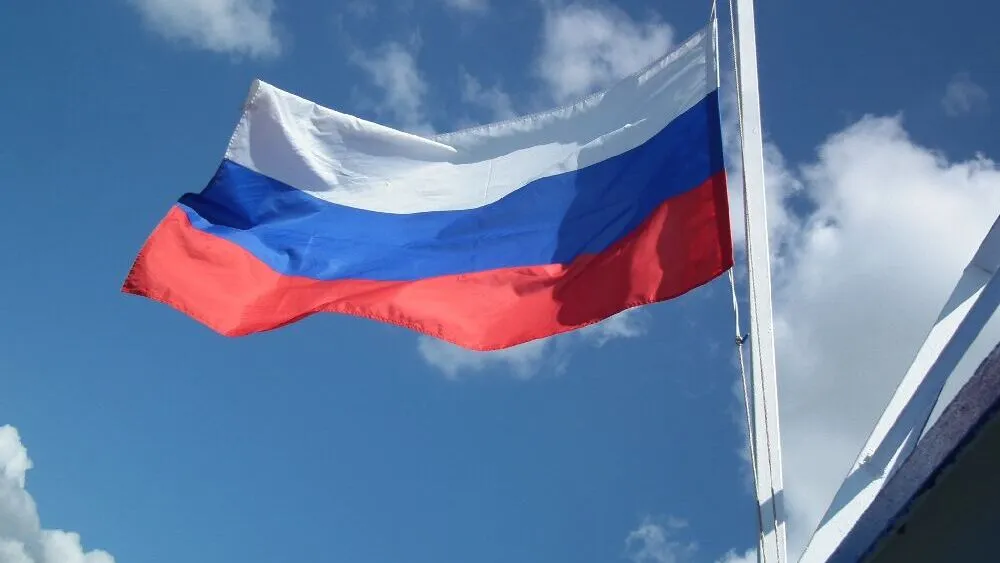
Moscow had not agreed to broaden negotiations beyond the Russian, Ukrainian and US delegations, Ushakov said before the summit, according to The Defense Post. He said at least one further round in that format would be necessary before Europe could join, and no date had been set for the next round.
German Chancellor Friedrich Merz argued after the Berlin meeting that Ukraine, Russia, the United States and Europe should all participate in talks. He called for a neutral venue, suggesting the United Arab Emirates, and rejected a "Yalta format" as incapable of bringing peace.
Kushner also sought to reassure European governments. Trump "wants to not impose anything unilaterally on the Europeans," he said, according to Neue Zürcher Zeitung and tagesschau.de. He praised their unity and resolve in supporting Ukraine and said he would convey that message to the president.
Air defense, NATO membership and funding
Russia continues to categorically oppose Ukrainian membership in NATO. Ahead of the summit, Russian Deputy Foreign Minister Sergei Ryabkov reiterated that position on November 17, calling accession "categorically unacceptable," The Defense Post reported.
French President Emmanuel Macron nevertheless called in Berlin for Ukraine's possible NATO membership to return to the agenda, citing Russia's maximalist demands. He also urged allies to do the maximum to reinforce Ukraine's air defenses, saying the country urgently needed new missile-defense and interception systems.
Financial support remained another unresolved issue. The EU faced a roughly 45 billion euro funding gap for Ukraine aid at the time of the summit, according to dpa reporting published by Ostfriesen-Zeitung. The European Commission had proposed a way to close the gap, but four countries had so far declined to participate.
Germany, the largest supporter, was pressing for future EU decisions on Ukraine aid to be made by qualified majority, according to Reuters reporting cited by Neue Zürcher Zeitung. That would prevent countries such as Hungary or Slovakia from blocking the aid through a veto.
Coalition's planned ceasefire force
Representatives from 40 countries attended the Berlin gathering, the Coalition of the Willing's largest summit to date. Established in early 2025 to support Ukraine, the group includes roughly 40 countries, among them Japan, Poland and Canada.
In December 2025, the coalition agreed to create a multinational force to help secure a possible ceasefire between Ukraine and Russia. Its first exercise was underway at the time of the Berlin summit, involving about 2,800 troops from 11 countries, including Germany's Bundeswehr. The exercise was taking place in Poland, over Romania and in the western Black Sea.