Government forces fall back toward Aden
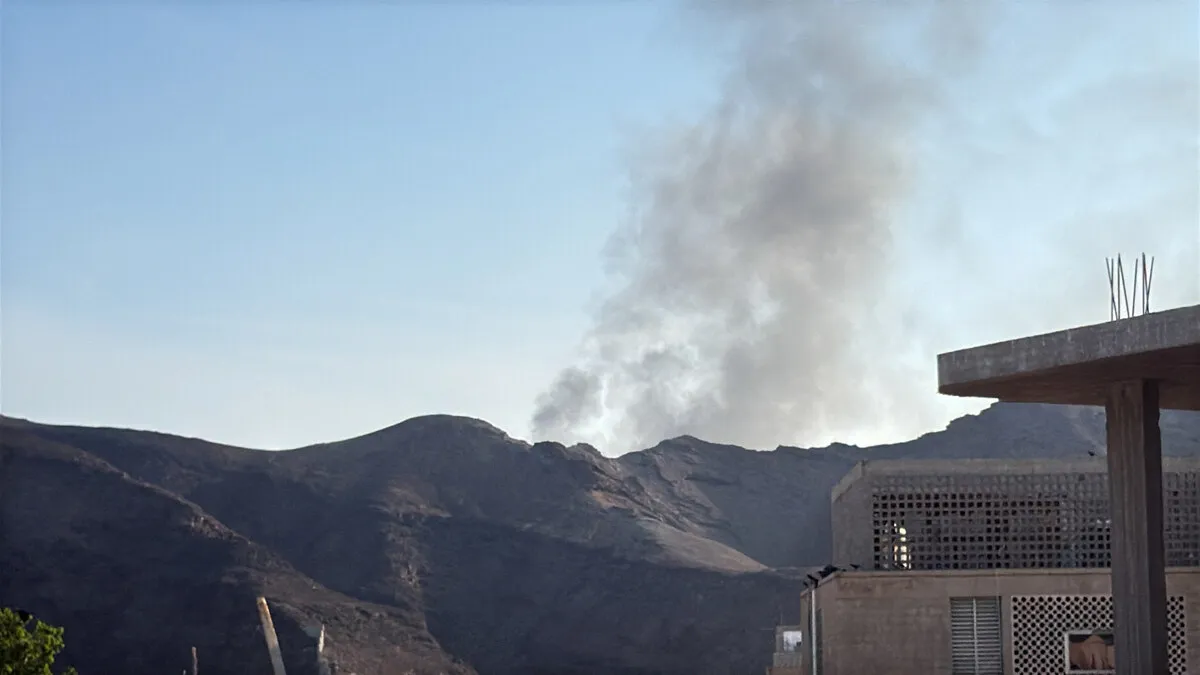
Yemeni military sources said the withdrawing troops moved to al-Saqiya, about 150 kilometers west of Aden, the government's seat. The military described the withdrawal as a realignment.
Brigadier General Mohammed al-Kumaim, an adviser to Yemen's defense minister, said the decision was a considered tactical move to avoid encirclement. Houthi forces had seized the Al-Maqatira mountains behind the government's supply lines, leaving its troops at risk of being cut off.
Al-Kumaim said defending Aden and ending the siege of Taiz now took priority. He also said thousands of mines planted by the Houthis along the coast had impeded government troops advancing across open ground.
Political scientist Anwar al-Ansi described the retreat as a major setback for the Dawn in Yemen campaign announced by the chair of the Presidential Leadership Council. He attributed it to fragmented government forces, the absence of a joint operations center and incompatible fighting doctrines among the factions, particularly the brigades of the Southern Transitional Council, which seeks southern Yemen's secession.
Renewed war and territorial losses
The withdrawal follows months of fighting after the fragile ceasefire that began in 2022 collapsed this summer. The Houthis made rapid gains against the government and its armed allies, advancing toward Bab al-Mandab, Taiz and Aden.
Taiz is again under siege. Government and allied forces still hold the city itself, while the Houthis control parts of its outskirts. Reports put Houthi forces about 60 kilometers from Aden. The United Nations says the conflict has displaced more than 330,000 Yemenis in recent months and left about 12,000 people dead or wounded.
In September, the Houthis captured the Red Sea coastal city of Mokha and claimed control of Perim Island, also called Mayyun Island, in the strait, according to S&P Global. Its analysts said possession of the island would improve the group's ability to attack ships at close range and potentially seize vessels.
Shipping routes and Saudi oil exports
About 12% of global trade passes through Bab al-Mandab on the route to the Suez Canal, according to taz. S&P Global puts the chokepoint's width at about 20 miles, or roughly 32 kilometers. Historically, it carried as much as 7 million to 9 million barrels of crude a day, but Houthi attacks have driven many shipping operators onto alternative routes since late 2023.
Previously, the Houthis attacked the strait from farther away using drones and drone boats; that distance helped defenders repel them. Holding the surrounding territory could give the group a strategic advantage, taz reported.
The strait gained importance for Saudi exports after the US-Iran war paralyzed shipping through the Strait of Hormuz, according to taz. Saudi Arabia's Red Sea port of Yanbu became a major outlet for its oil. The East-West Pipeline links the kingdom's Eastern Province to Yanbu and can carry 7 million barrels a day, according to S&P Global and Argus Media.
The Houthis have said they intend to block Saudi-linked shipping and attacked several tankers with Saudi connections in July. S&P Global dates their declared blockade of ships traveling to or from Saudi ports to July 20, 2026. Several vessels have turned back, and many tanker operators have avoided taking Saudi oil south through Bab al-Mandab. Instead, they have sailed north through the Suez Canal and then around Africa to reach Asia.
Kpler figures reported by Argus Media on November 16 show Saudi Red Sea oil shipments through Bab al-Mandab falling from nearly 3.5 million barrels a day in June to fewer than 400,000 in October. Argus reported that more oil was moving back through Hormuz despite the continuing threat of attacks there.
The Houthis have also claimed strikes on Saudi oil infrastructure. Military spokesman Yahya Saree said on November 12 that the group had hit Pumping Station No. 7 on the East-West Pipeline and the Yanbu oil facility, according to OilPrice.com, citing The New Arab. OilPrice.com also cited Al Jazeera's report that the group had pledged further attacks under the principle of "siege for siege, airport for airport, and escalation for escalation."
On November 16, a day after the government retreat, Brent crude futures declined 2.32% to $93.62 a barrel, while West Texas Intermediate fell 1.93% to $86.85, OilPrice.com reported. Abu Dhabi's Murban benchmark moved in the opposite direction, rising 1.52% to $94.89.
Foreign powers across the strait
Houthi officials said they had assured US officials that American ships would not be targeted. Axios reported that the United States did not intend to join the war.
Across the water in Djibouti, about 20 kilometers away, the United States, China, France, Japan and Italy maintain military bases, according to taz.
UN extends sanctions and maritime oversight
The UN Security Council unanimously adopted Resolution 2837 on November 12. It extended Yemen's sanctions regime, comprising asset freezes and travel bans, through November 14, 2027, and renewed the supporting Panel of Experts' mandate through December 15, 2027.
The resolution called on the Houthis to halt their offensive in Yemen, attacks on Saudi Arabia and threats to shipping. It also urged UN member states to do more to intercept weapons and components smuggled by land and sea, including by sharing more information, to enforce the targeted arms embargo on the group.
The Council asked the Secretary-General to enlarge the Panel of Experts from four members to six, adding dedicated maritime-security expertise. It also set out its intention to decide by January 11, 2027, on measures to keep specified dual-use components and precursor chemicals from reaching designated entities.
The resolution did not label the Houthis a terrorist group. Russia opposed that wording on the grounds that it would obstruct the political process, which taz described as effectively defunct. Yemen's UN ambassador, Abdullah al-Saadi, expressed regret that Council members had been unable to agree on what he regarded as naming the group for what it was.