


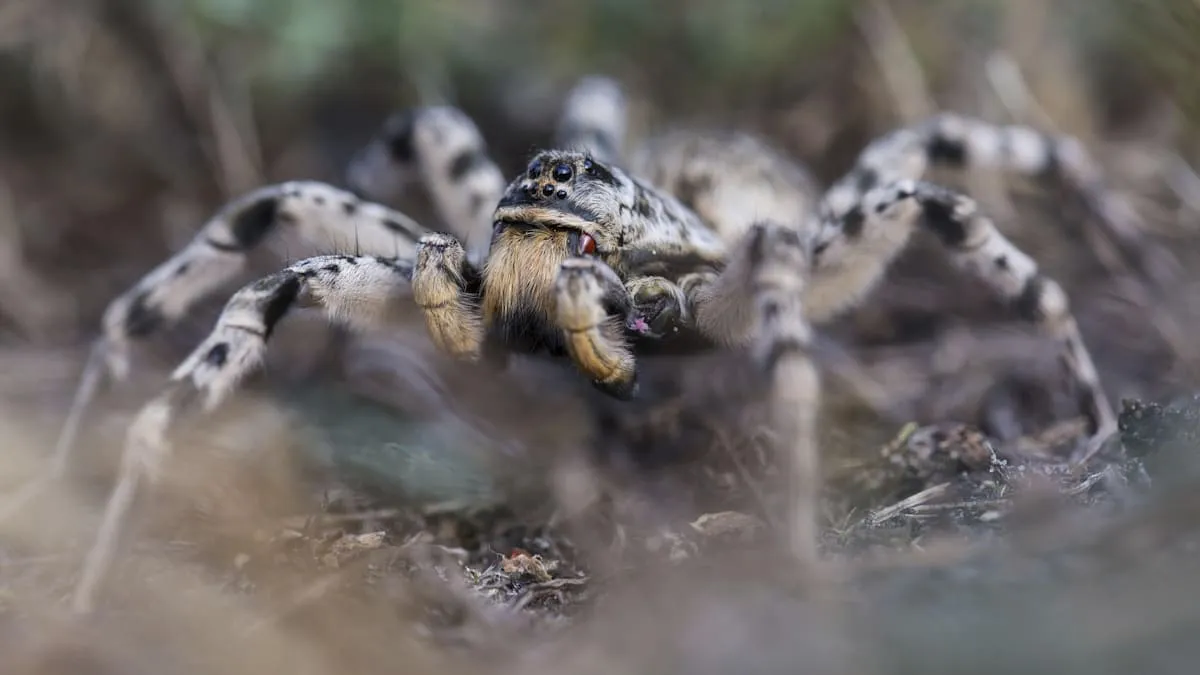
An unusually busy autumn
Austria has received more than 200 reports of South Russian and black-bellied tarantulas this autumn, including from places where the spiders had not previously been recorded. The volume has prompted talk of a tarantula year.
The Austrian Nature Conservation Association, Naturschutzbund Österreich, says Styria accounted for the most observations submitted since early September, with 66. Lower Austria followed with 49 and Burgenland with 43. This year's reports have largely involved separate regions: only black-bellied tarantulas were recorded in Styria and Carinthia, and only South Russian tarantulas in Vienna and Lower Austria. Both species were reported in Burgenland.
For perspective, the association's citizen-science platform logged 187 South Russian tarantula observations and 171 black-bellied tarantula observations over the entire period from 2006 to late summer 2025. Roughly 200 reports in about two months this autumn is unusually high by that measure.
Experts caution that report totals alone cannot establish how much the spiders are spreading. Increased public attention can also mean more people notice and report them.
New finds and older records
The Tulln sighting extends the picture of the South Russian tarantula's range in Austria. Its first Austrian records came from the Lake Neusiedl area and Vienna in the early 1920s. Over time, it has been documented in Burgenland, Vienna, Lower Austria and Styria.
The black-bellied tarantula has produced two notable finds of its own. A record from Stossau in Carinthia's lower Gailtal at the end of August 2026 was the species' westernmost documented occurrence in Austria. Its northernmost report came from Lackendorf in Burgenland, where experts expect the two species' ranges to overlap in the future.
Austria's first published black-bellied tarantula record dates to the 1970s in Styria. It subsequently spread through southern Austria and is now known from Styria, Carinthia and Burgenland.
Warm summers and the prospect of a German population
Germany has no confirmed records of either species in the wild. Their arrival cannot be ruled out, however. Burgenland, where both have been recorded, is about 240 kilometers from the German border, and experts note that people can also introduce the spiders to new places.
A 2025 study in the Journal of Insect Conservation found evidence of a renewed advance by the South Russian tarantula in the Czech Republic, immediately north of Austria. Czech records were frequent from the 1920s through the 1950s, followed by decades in which the species almost disappeared. Sightings began increasing again in the early 2000s.
Both periods of frequent records coincided with unusually hot, dry summers. The researchers concluded that climate may have played a decisive role in those regional changes. Warm summers help young spiders grow faster and build reserves before winter; cool, wet conditions can delay development and lower their chances of survival.
Austria has seen a similar return: after a long period of rarity, the South Russian tarantula has been encountered more often since the 2000s. But temperature alone would not determine whether it could establish itself in Germany. It also needs dry, sparsely vegetated ground suitable for burrowing, rather than dense forest or intensively farmed land.
Why spiders appear in garages and basements
The South Russian tarantula comes originally from the dry grasslands of Eastern Europe and Asia and has spread into Central Europe. With a body reaching four centimeters long, it is considered Central Europe's largest spider. The black-bellied tarantula is smaller, reaching two and a half centimeters, but also favors warm, open terrain.
Sunny, sandy ground with little vegetation suits the South Russian species. Instead of building a web, it digs a burrow and ambushes insects, other spiders and, occasionally, small rodents. It subdues prey with venomous fangs. Lacking chewing mouthparts, it releases digestive enzymes into the immobilized prey, liquefying the internal tissue before sucking it out.
Autumn brings some of these spiders indoors. Males roam in search of mates, while females seek sheltered places to survive the winter. Those searches can lead them into garages and basements.
Leave them undisturbed
Despite their imposing appearance, both species are harmless to people and generally retreat when approached. If cornered, they can bite, causing pain and slight swelling, but no more serious effects.
In the Middle Ages, a tarantula bite was believed to cause a form of dancing mania. The practical advice for an encounter today is simpler: do not panic, and leave the spider alone.