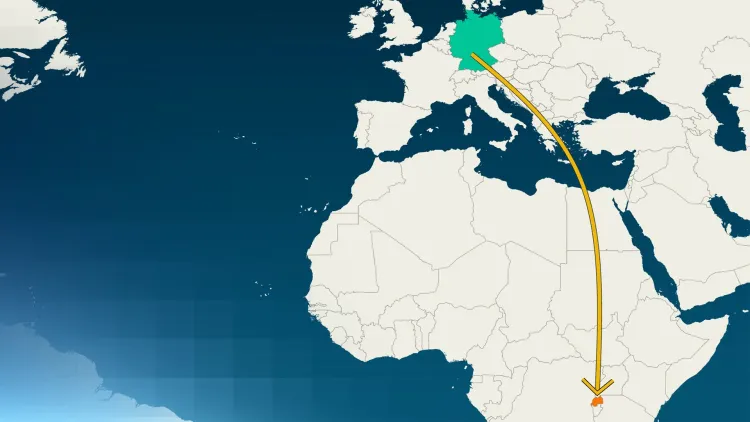
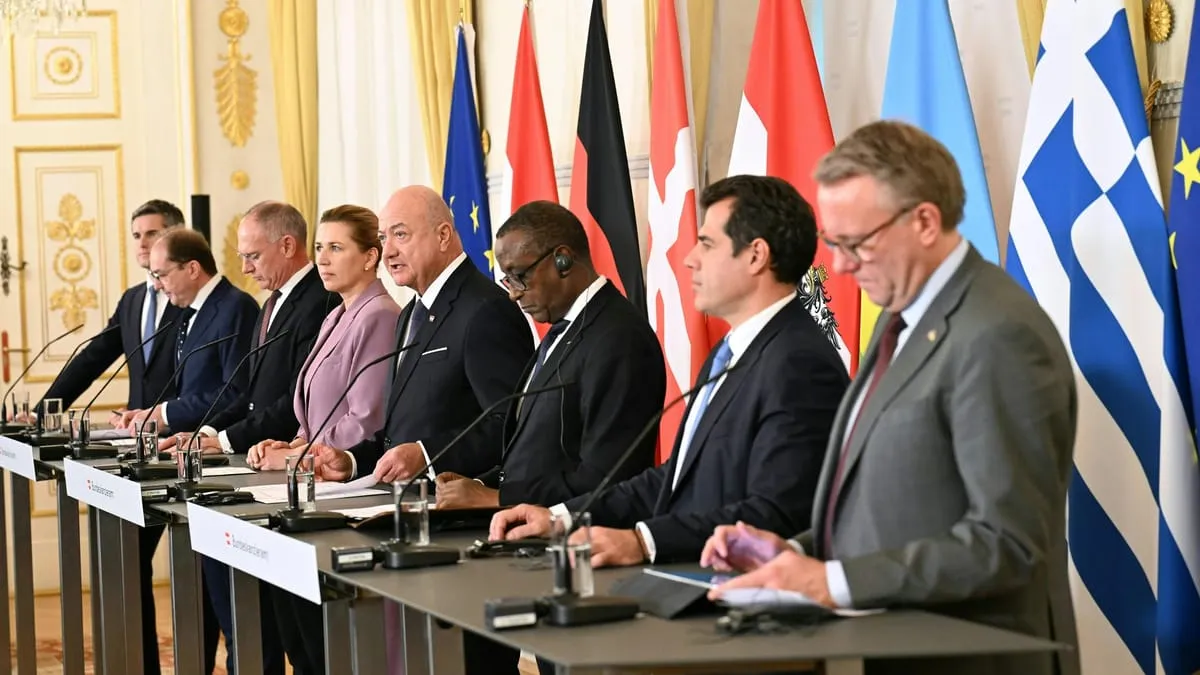
A proposed pilot for about 100 people
Austrian Chancellor Christian Stocker announced the 2027 target after Dobrindt and ministers from the other participating countries discussed the proposal in Vienna. The hub would accommodate rejected asylum seekers who are required to leave Europe but cannot be returned to their home countries.
Diplomatic sources cited by AFP and the BBC described an initial pilot for roughly 100 people. Each participating country could send about 20 migrants, with the five governments hoping to open the facility in 2027. Dobrindt, however, said he could not yet specify how many people would be sent.
The Dutch government said the first phase would be limited to single men. The Netherlands would focus on people from countries in the same region as Rwanda.
Dobrindt said Rwanda talks were further along than discussions on other potential locations, but establishing the hubs remained a difficult task at an early stage. He pledged that implementation would comply with German law and human rights standards and involve international organizations.
Residence in Rwanda, with an option to return home
Under the arrangements described by the Dutch government, migrants would stay in an open, temporary facility rather than a detention center. They would have residence rights in Rwanda and access to education, employment, health care and the legal system. Returning to their country of origin would remain an option.
Dobrindt rejected the idea of large camps, describing an approach centered on integration that could include vocational training in Rwanda or a journey home from there.
Rwandan Interior Minister Vincent Biruta said his government wanted to integrate those who chose to stay rather than keep them in camps. He nevertheless expected most irregular migrants to return to their home countries. Speaking through an interpreter, he said Rwanda would be paid for its efforts and that jobs were also part of the arrangement. He did not disclose a payment amount despite questions.
Hours after the announcement, the International Organization for Migration said Rwanda had requested help with implementation. The UN agency said it could offer support in principle, provided the work respected its mandate and international standards.
Deterrence and the new EU rules
Dobrindt defended the proposal against criticism from the Social Democratic Party, or SPD, a partner in Germany's governing coalition. He argued that return hubs could offer an option for people with no right to remain in Europe whose home governments would not cooperate with repatriation. He also explicitly identified deterrence as part of the policy.
Danish Prime Minister Mette Frederiksen portrayed the initiative as a major change that would signal that entering the EU without a lawful basis did not mean someone could expect to stay. Denmark has advocated a third-country return center for years. Frederiksen said decisions about admission and residence should be made democratically; Stocker likewise emphasized governments' control over who could remain.
The legal framework comes from EU return rules that received final approval from the Council of the EU on October 1, 2026, replacing the 2008 Return Directive. The return hub provisions took effect immediately. They cover people subject to enforceable return decisions who cannot be sent home, including when their country refuses to accept them or they themselves do not cooperate.
Unaccompanied minors are excluded from return hub agreements. The broader rules also permit detention beyond 24 months and indefinite entry bans for people posing a security risk. Recognition of another member state's return decisions remains voluntary, with that provision due for reassessment after three years.
AFP reported that fewer than 30% of people ordered to leave the EU are returned to their countries of origin. Using a different measure, the Council said roughly two-thirds of those ordered to leave do not actually depart.
Separately, EU border agency Frontex recorded almost 110,000 irregular crossings into the bloc during the first 10 months of 2026, down 29% from the same period in 2025.
Earlier British and Italian schemes faced legal challenges
European governments have debated third-country migration arrangements for years, but projects pursued by Britain and Italy have proved expensive and legally difficult.
Britain's asylum agreement with Rwanda took effect in April 2024. It envisaged sending migrants who had entered Britain irregularly to Rwanda to seek asylum there. The arrangement cost about 700 million pounds, or approximately 810 million euros. Official figures from London showed that only four migrants had traveled to Rwanda voluntarily. Britain's Supreme Court subsequently ruled the arrangement unlawful.
Dobrindt argued that the new proposal differed fundamentally from the failed British project: Britain sought to move asylum processing abroad, while the five EU countries would send people whose asylum claims had already failed in Europe and who had no prospect of remaining.
Italy agreed with Albania to conduct asylum procedures there for certain groups. Prime Minister Giorgia Meloni later decided that the camps built under the agreement should also hold people awaiting deportation. The model is before the European Court of Justice, which has yet to rule.
Despite Britain's earlier experience, Downing Street has not ruled out joining the new initiative and said it would watch developments "with interest".
Human rights objections and divisions in Germany
German Development Minister Reem Alabali Radovan, an SPD member, told the Frankfurter Rundschau that she was fundamentally skeptical of return hubs. She said the federal government still needed to discuss numerous unresolved issues, including questions of international law. The Greens and the Left also sharply criticized the proposal.
Parts of Germany's development cooperation with Rwanda are frozen because of the Rwandan government's activities involving militias in the Democratic Republic of Congo.
Human Rights Watch opposed the choice of Rwanda, citing its "well-established record of repression of dissent, arbitrary detention, ill-treatment in detention" and support for armed rebels in the neighboring Democratic Republic of Congo. The organization said the five governments had presented no human rights due diligence assessment at the announcement.
Spanish Prime Minister Pedro Sánchez also rejected the proposal, saying it had no "future or humanity," according to AFP.