
A small first phase, with terms still unsettled
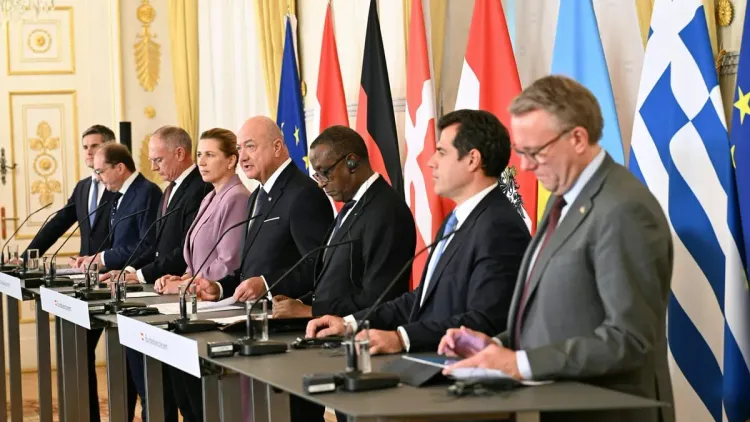
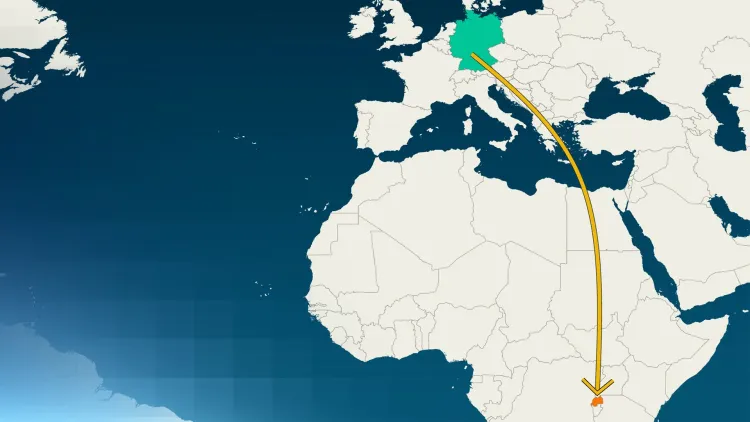
Rwanda is willing to receive migrants from Europe, but the five participating governments must still negotiate the details of the proposed Return Hub. According to Süddeutsche Zeitung's reporting on the November 16, 2026, announcement in Vienna, they expect to sign a contract in early 2027. Flights from Vienna, Athens, Berlin or Copenhagen to Kigali could begin as early as the middle of that year.
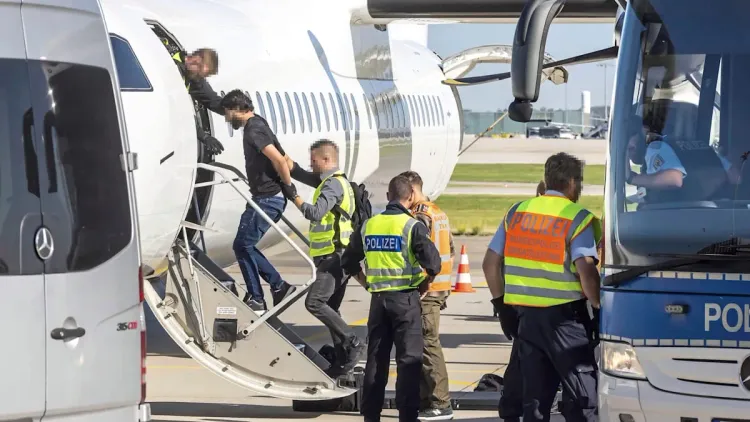
The initial phase would be a pilot rather than a large-scale operation. Reporting by Süddeutsche Zeitung and Deutschlandfunk puts the first-year total at around 100 migrants, or roughly 20 rejected asylum seekers from each participating country.
German Interior Minister Alexander Dobrindt had pledged to secure an initial concrete arrangement with a country outside the EU by the end of 2026. He pursued the project with the four partner governments separately from the EU's own efforts, while Brussels established the legal framework for such centers.
At the Vienna announcement, Rwandan Interior Minister Vincent Biruta said his country had the capacity and experience to host refugees and would treat them with dignity. He said those transferred could integrate, receive training and find work in Rwanda, or return voluntarily to their countries of origin.
Who the hub would serve, and at what cost
The centers are intended primarily for migrants whose home countries refuse to readmit them. Dobrindt wants the hubs to make deportations easier and prevent people from returning to Europe. Those transferred would not need any previous connection to the receiving country.
In a commentary for t-online, Julia Naue argues that this eligible group is likely to be relatively small and that the expense would be disproportionate to the result. She cites Social Democratic domestic policy specialist Sebastian Fiedler, who says Germany's 2027 federal budget allocates 20 million euros for just 40 places.
Naue supports the goal of reducing irregular migration and does not reject tougher measures or new approaches in principle. But she characterizes this project as costly political symbolism that would create dependence on Rwanda without advancing Dobrindt's goal. She also interprets his approach as an effort to project decisiveness rather than wait for Brussels.
Deterrence may be another aim, Naue writes, but she questions whether the possibility of removal to Rwanda would stop people from coming to Germany. She cites research indicating that deterrence has only a very limited effect.
EU authorization does not settle every legal question
The legal framework is the EU Return Regulation (EU) 2026/2280, published in the EU Official Journal on October 15, 2026. Its provisions allowing Return Hubs in third countries are among those that apply immediately; the regulation as a whole applies from October 17, 2027.
The European Parliament approved the regulation on June 17, 2026, with 418 votes in favor, 218 against and 30 abstentions, following a political agreement on June 1.
The Rwanda arrangement may also require approval from Germany's parliament. A report by the Bundestag's scientific service, seen by Süddeutsche Zeitung, says that will depend on the contract's terms.
As Naue notes, the centers would have to operate under EU law and guarantee strict human rights standards, including access to legal assistance, medical treatment and adequate housing. She questions whether Rwanda could meet those requirements and expects numerous lawsuits. Courts could ultimately reject the centers, she argues, leaving millions spent on a project that cannot proceed.
Rwanda's record and the British precedent
Britain's earlier Rwanda policy illustrates some of the legal concerns, though it differed substantially from Dobrindt's proposal. British courts found that Rwanda was not a safe third country and that fair asylum procedures could not be guaranteed. Under that arrangement, Rwanda was also supposed to process asylum claims for Britain; that is not part of the German minister's model.
According to Süddeutsche Zeitung, the UK-Rwanda deal, which entered into force in April 2024, cost Britain around 700 million pounds, or about 840 million euros. Only four refugees ultimately traveled to Rwanda voluntarily, and the UK Supreme Court ruled the plan unlawful.
Naue acknowledges that Rwanda stabilized under President Paul Kagame after the 1994 genocide, but points to restrictions on civil liberties, arbitrary state action and repression of political opponents. The EU imposed sanctions on Rwanda in 2025 over Kagame's actions in the Democratic Republic of Congo.
Germany's Foreign Ministry offered a more favorable assessment of Rwanda's treatment of refugees on November 16, 2026. According to Süddeutsche Zeitung, it cited repeated positive assessments by UNHCR and Rwanda's provision of basic services, security and care. The ministry nevertheless acknowledged difficulties in the bilateral relationship and pointed to Rwanda's support for the M23 rebels in eastern DR Congo.
The unresolved question of long-term stays
What happens if a person's home country permanently refuses readmission remains unclear. Biruta outlined opportunities to settle and work in Rwanda, while Dobrindt has described accommodation there as offering a future. Naue questions whether, in practice, people could be left in Rwanda indefinitely.
Her criticism also concerns Germany's choice of partner: she argues that paying a repressive government to accept unwanted migrants would undermine German values and expose Berlin to political pressure. Those concerns remain alongside the unfinished practical terms of the agreement, which the participating governments plan to finalize before signing in early 2027.