Germany identifies Russian suspects in Leipzig airport drone attack as diplomatic tensions escalate
German police have identified two Russian suspects linked to an attempted drone attack involving explosives at Leipzig airport last month, according to reports published Wednesday by German media outlets.
The breakthrough in the investigation comes as diplomatic relations between Berlin and Moscow deteriorate further. The German government formally blamed Russia for the incident on Tuesday, describing the operation as employing "low-level agents," and announced retaliatory measures including the closure of Russia's consulate in Bonn and a Russian cultural centre in Berlin.
The Sueddeutsche Zeitung daily, along with regional broadcasters NDR and WDR, reported that the first suspect is a Belarussian national who also holds a Russian passport. He is believed to have entered the Schengen area using an Italian tourist visa issued in Minsk and had previously attracted attention for offences committed in the Baltic states.
The second suspect reportedly holds both Latvian and Russian passports and is believed to have coordinated logistics and provided instruction for the operation. According to the reports, he arrived at Berlin airport in late July, rented a vehicle to travel to the Leipzig region, and departed Germany two days before the suspected attack.
Investigators identified the men through DNA traces discovered at and around the airport, including on a drone, in a tin can containing explosives, and on an antenna attached to a tree. Matches were established through European databases, with corroborating information from intelligence services, particularly from Lithuania and Finland.
The attack occurred on the night of August 4-5, 2026, when a small drone carrying an explosive charge struck the wing of a parked Ukrainian Antonov An-124 aircraft but failed to detonate, instead bouncing off onto the tarmac where a police robot later defused it. The incident was not isolated—officials have reported 18 drone incidents disrupting air traffic at the airport since January 2026.
Leipzig/Halle Airport serves as one of Europe's largest air-freight hubs and functions as a regular waypoint for the Antonov An-124, an outsize transport aircraft routinely chartered to move heavy military equipment to Ukraine. U.S. intelligence sources assessed that the explosive-laden drone belonged to Russia's Military Intelligence Directorate (GRU), with the explosives and device structure consistent with those typically used by the agency.
Diplomatic fallout intensifies
On Wednesday, the European Union summoned Russia's top diplomat as it considers sanctions over the attempted drone attack. Russia responded by summoning Germany's chargé d'affaires to protest what it characterized as "anti-Russian actions."
The closure of the Bonn consulate, scheduled for September 18, 2026, marks the end of Russia's last remaining consulate general in Germany, leaving only the Russian Embassy in Berlin to provide consular services to Russian citizens in the country.
Russian Foreign Minister Sergei Lavrov announced retaliatory measures on September 3, stating that Goethe Institut branches in Russia will be closed in response to Germany shutting the Russian House cultural centre in Berlin.
Energy sector calls for emergency backup systems
Germany's renewable energy industry has called for the creation of an emergency backup system within the national power grid following two suspected sabotage attacks on electricity infrastructure in Brandenburg and North Rhine-Westphalia.
Ursula Heinen-Esser, president of the German Renewable Energy Federation (BEE), told the Rheinische Post that while complete protection against such attacks is impossible, the energy system could be designed to limit disruption and recover more quickly from outages.
Heinen-Esser highlighted the potential role of bioenergy and hydropower facilities, which possess "black start" capability—the ability to restart without an external electricity supply. She argued that a larger network of smaller, decentralised energy producers could reduce vulnerabilities and improve resilience.
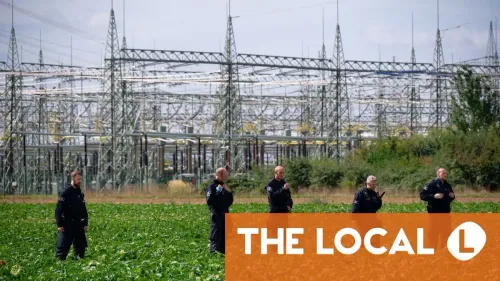
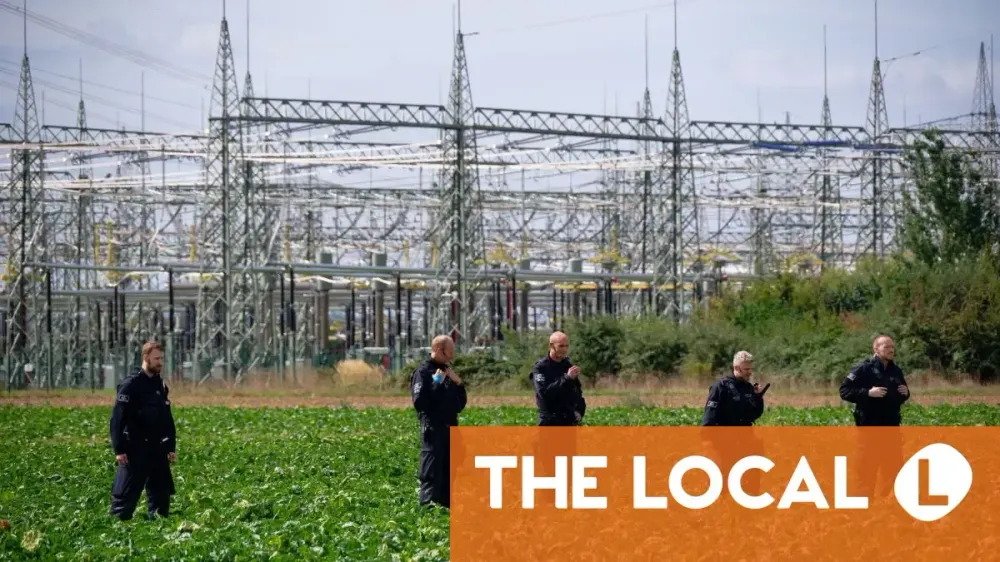
The recommendations follow incidents at substations in Turnow-Preilack, southern Brandenburg, and Bergheim near Cologne. Authorities discovered launchers and pyrotechnic devices near both sites and are investigating the incidents as suspected anti-constitutional sabotage. At Bergheim, five coal-fired power units with a combined capacity of 4,200 megawatts were taken offline, according to RWE, the company operating coal power plants that utilize the substation.
Kerstin Andreae, head of the Federal Association of Energy and Water Industries, urged tighter security measures, including restrictions on publicly available infrastructure information and changes to data protection rules to permit wider use of CCTV monitoring around critical facilities.
Germany has faced multiple infrastructure attacks in 2026. In January, suspected left-wing extremists set fire to high-voltage lines near a power plant in southwest Berlin, causing the longest power outage in the city since 1945 and affecting over 40,000 households for four days.
Foreign investment surges
Foreign direct investment in Germany surged by approximately 50 percent in 2025, reaching €86 billion and marking a significant recovery after a sharp decline the previous year, according to new figures from the German Economic Institute (IW).
The Cologne-based institute, citing Bundesbank data, reported the increase followed a nearly 32 percent fall in foreign investment during 2024, suggesting international investor confidence in Europe's largest economy has strengthened.
A notable shift occurred in investment sources. Investment from the United States fell sharply to €11.8 billion in 2025, a decline of almost 44 percent compared with the previous year, reducing the U.S. share of total foreign investment from more than 36 percent to around 14 percent.
In contrast, companies from the United Kingdom dramatically increased their spending, investing €26 billion—an increase of approximately 284 percent year on year. The UK accounted for nearly 31 percent of all foreign direct investment, making it Germany's largest individual foreign investor in 2025. Despite the British surge, investors from other European Union countries remained the biggest overall source of foreign capital, contributing a combined €43 billion.
Thuringian coalition faces crisis
Days before state elections in neighbouring Saxony-Anhalt, the BSW parliamentary group in Thuringia is breaking up, threatening the stability of the state's fragile coalition government.
Three MPs—Stefan Wogawa, Dirk Hoffmeister and Roberto Kobelt—are leaving both the parliamentary group and the party while retaining their mandates. They are founding a new party called "Your Voice Counts."
Justifying the decision, Stefan Wogawa said they had to increasingly fend off destructive attacks from the federal leadership of the BSW.
The departure is particularly destabilizing because the Thuringia coalition of CDU, BSW, and SPD controls only 44 out of 88 seats in the state parliament, meaning they must rely on at least one opposition vote from the Left party or AfD when making decisions. With three fewer BSW members, the coalition's position becomes even more precarious.
The BSW was founded in January 2024 and achieved unprecedented rapid political success, becoming a coalition partner in two German federal states—Brandenburg and Thuringia—within only nine months of its foundation.
The opposition Left party described the situation as "chaos days in Thuringia." Meanwhile, Thuringia's AfD leader Björn Höcke is calling for new elections, applying pressure on Minister President Mario Voigt, who leads the state coalition. Last Friday, Voigt survived a confidence vote after Höcke attempted to stand against him and failed.
Ikea announces major price cuts
Ikea has announced sweeping price reductions across its German stores, cutting the cost of around 1,500 products, equivalent to roughly 15 percent of its entire range.
The Swedish furniture retailer began introducing the lower prices on September 1st, with customers expected to save an average of 20 percent on affected items.
The most significant discounts will be seen in the popular Kallax shelving range, where some models will be up to 40 percent cheaper. The white 147cm x 147cm unit falls from €129 to €99, while the larger 182cm x 182cm version drops from €169 to €129. Smaller household items including Bumerang hangers, Ikea 365+ storage containers and Dröna storage boxes are also becoming more affordable as the retailer rolls out the reductions.