Germany pushes for major EU budget cuts
Germany has spearheaded a call by six fiscally conservative European Union member states for sweeping reductions to the European Commission's proposed €2 trillion long-term budget, arguing the spending plan is unaffordable amid current economic pressures.
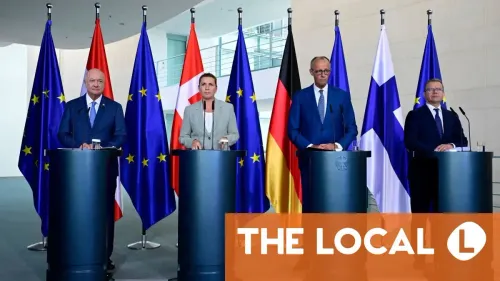
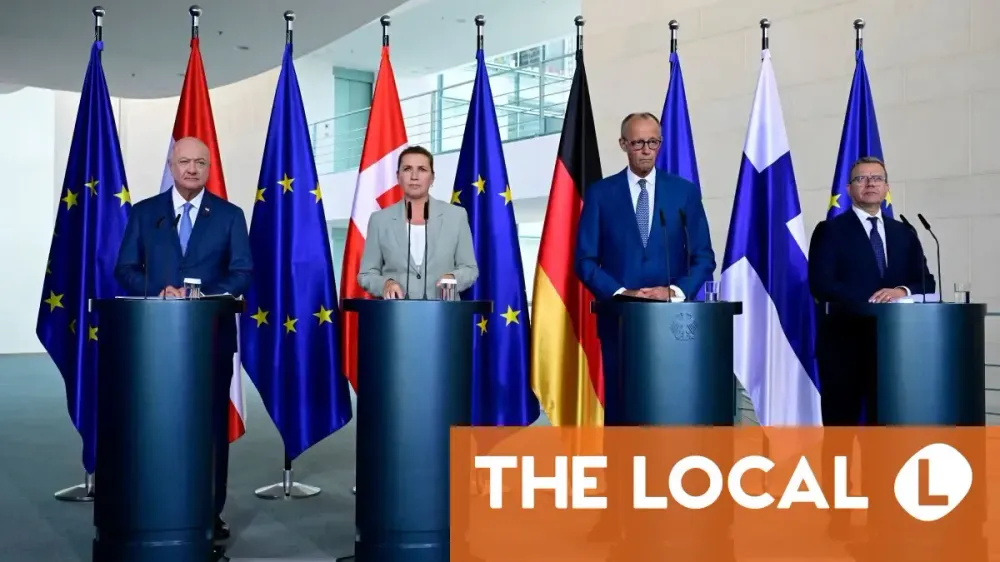
Chancellor Friedrich Merz hosted leaders from Austria, Denmark and Finland in Berlin on Thursday, with Sweden and the Netherlands participating remotely. The gathering aimed to align positions ahead of negotiations on the EU's 2028-34 Multiannual Financial Framework.
In a joint statement, the countries demanded the Commission's proposal be cut by several hundred billion euros and refocused on core priorities including security, defence, competitiveness, migration control and European sovereignty. The group argued that as national governments implement difficult spending reductions, the EU budget cannot remain exempt from fiscal discipline.
Merz rejected suggestions the coalition was being miserly, but insisted the Commission's spending blueprint failed to reflect economic realities. The six nations also opposed new common EU borrowing mechanisms and increases in staffing at European institutions.
Danish Prime Minister Mette Frederiksen emphasised the urgent need for enhanced defence spending and sustained support for Ukraine, cautioning that Russia continues to pose a serious threat to European security. Negotiations are expected to intensify before a December deadline for reaching agreement.
Healthcare cuts spark confrontation
Later on Thursday, Merz became embroiled in a heated televised exchange with a paediatrician who accused him of breaking his constitutional oath through planned healthcare spending cuts.
During RTL's town-hall-style programme, the Lower Saxony doctor challenged the chancellor over the government's healthcare austerity package, alleging the measures were inhumane, harmful to children and demonstrated contempt for human life.
Merz responded forcefully, characterising the remarks as a personal attack that exceeded legitimate political criticism. The chancellor rejected accusations that he was knowingly violating constitutional responsibilities or deliberately damaging children's futures.
He defended the healthcare reforms against claims they unfairly burden insured patients, arguing that savings measures had been distributed across the healthcare sector with all stakeholders required to contribute.
Merz also faced criticism from a father who said politicians were failing families. The chancellor responded that he found the criticism overly harsh.
Pay dispute raises far-right concerns
Outgoing Berlin Governing Mayor Kai Wegner of the CDU told a closed meeting that police officers and firefighters were increasingly gravitating toward the far-right Alternative for Germany, according to reporting by the Berliner Zeitung on Thursday.
The discontent stems from a protracted dispute over civil servant compensation. In September last year, Germany's Constitutional Court ruled that Berlin's pay levels for public servants had been unconstitutionally low and ordered the state to address the shortfall.
A recently leaked draft proposal would provide substantial back payments to some officials, including police officers, but only to those who had filed appeals in recent years. The plans have angered unions, which say the proposal does the bare minimum required and unfairly excludes many affected workers.
The draft was presented by Finance Senator Stefan Evers, who is now the CDU's top candidate in upcoming elections.
Gaming industry embraces digital future
Thousands of gamers, developers and industry executives gathered in Cologne this week for Gamescom, the world's largest video games trade fair, where Sony's announcement to stop releasing games on physical discs from 2028 dominated discussions.
Many attendees described the decision as marking the end of an era. Sony popularised disc-based gaming with the original PlayStation in the 1990s, but digital downloads now account for nearly 82 percent of PlayStation game sales as of early 2026.
Industry experts attribute the shift to economic factors, as digital distribution allows publishers to bypass retail costs and sell directly to consumers. Critics warn that an all-digital future reduces player control over purchased games, since digital titles cannot be resold or lent to others.
The debate has intensified ahead of the release of Grand Theft Auto VI, whose boxed version contains only a download code rather than physical media.
Glacier returns lost equipment after 63 years
A melting glacier in the Austrian Alps has helped solve a six-decade-old mystery, reuniting a German mountaineer with equipment he lost during a dramatic rescue in 1963.
The discovery occurred earlier this summer when a hiker found a backpack at nearly 3,000 metres on the Sulztalferner glacier in Tyrol, an area that has shrunk significantly in recent decades due to climate change.
Inside the weathered pack were an ice axe, a camera, a whistle and documents that appeared decades old. Following an investigation, police identified the owner as an 86-year-old man from the Regensburg region of Bavaria.
The elderly mountaineer told investigators he had been hiking with friends on the glacier in August 1963 when he fell into a crevasse. Because the group was roped together, his companions were able to halt his fall and pull him to safety. To facilitate the rescue, he threw his backpack into the crevasse, assuming it was lost forever.