Will Saxony-Anhalt's parliament elect a far-right president?
Saxony-Anhalt's state parliament convenes in Magdeburg on Tuesday for its first session since the Alternative for Germany (AfD) secured a landslide victory in the September 6 election, winning 43.8 percent of the vote and more than doubling its 2021 result of 20.8 percent. The historic turnout of 77.8 percent, up 17.5 percentage points from the previous election, reflected heightened public engagement in a contest that reshaped the state's political landscape.
The primary task facing lawmakers is the election of a parliament president. The AfD has nominated 35-year-old Tobias Rausch for the position. If successful, Saxony-Anhalt would become the first German state to elect an AfD member to head a state parliament, breaking a long-standing political taboo. At the federal level, no AfD candidate has been elected to a vice-president position in the Bundestag since the party entered parliament in 2017, despite parliamentary rules entitling each faction to one.
The significance of this development extends beyond the state's borders. The AfD, founded in 2013 during the eurozone crisis as an economically liberal, euro-skeptic party, has since shifted focus to migration and national identity issues, moving further right on the political spectrum. The party first entered state parliaments in 2014 and has become Germany's most successful far-right party since World War II. In 2024, the AfD became the strongest party in neighboring Thuringia for the first time in the party's history, signaling growing support in eastern Germany.
Balance of power and new seating arrangement
The AfD's 39 seats in the 83-member parliament fall just short of an outright majority. Combined, the CDU (15 seats), SPD (8), Left party (8), and Greens (8) hold an equal 39 seats. The remaining five seats belong to the Bündnis Sahra Wagenknecht (BSW), a party founded on January 8, 2024, which now holds the balance of power in the chamber.
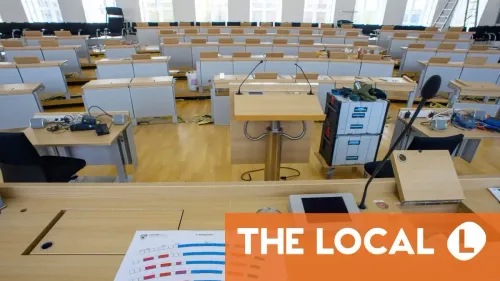
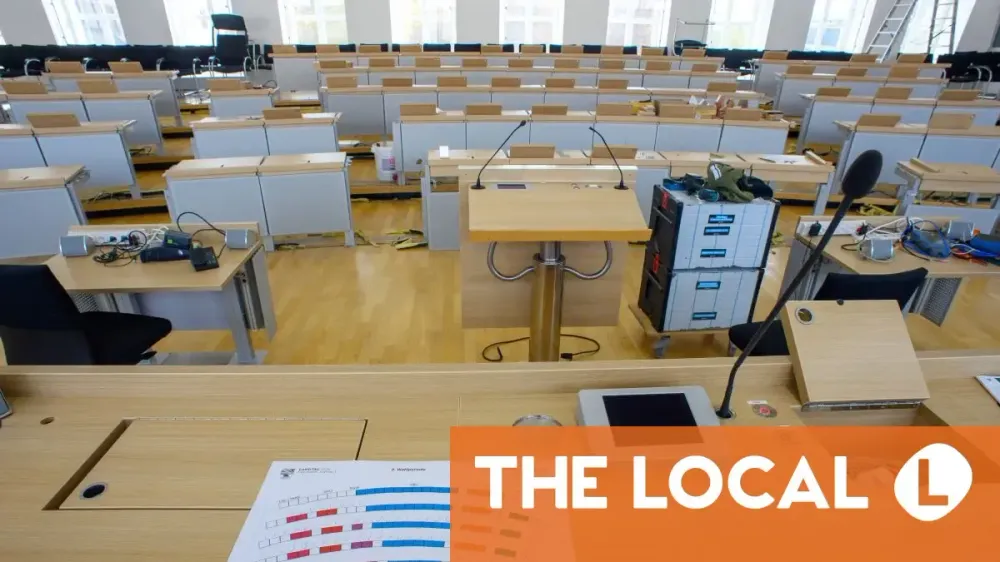
The AfD will occupy the center of the parliament hall, reflecting its new status as the largest group. The party's state chapter was classified by the Office for the Protection of the Constitution as a confirmed right-wing extremist effort in November 2023, an upgrade from its earlier suspected classification in January 2021.
While BSW leadership has ruled out joining the AfD in a coalition government, they have signaled willingness not to block the AfD from forming a minority government. According to media reports, BSW members have already assured the AfD that they will back Rausch for president.
We will base our decisions on substance. If we have common ground with the AfD because it makes sense for the people, then we will do so.
said BSW Federal Chair Amira Mohamed Ali and Secretary-General Oliver Ruhnert.
Election procedure and candidate profile
The session begins at 11 am and will be opened by Eva von Angern of the Left party, the longest-standing member of parliament. The president is elected by simple majority through a secret ballot, with results announced immediately. As the largest parliamentary group, the AfD has the right to nominate its candidate first. If Rausch fails to secure a majority in the first ballot, other groups may nominate alternative candidates for a second round.
Rausch, born in 1990 in Mellrichstadt, Bavaria, grew up in Saxony-Anhalt and trained as a car mechanic and real estate agent. He is chairman of two regional football clubs and an active player. A member of the AfD since 2013, Rausch has served in the state parliament since 2016 and has been parliamentary secretary of the AfD group since 2021. He has cultivated political connections across party lines, including with outgoing parliament president Gunnar Schellenberger of the CDU.
Earlier this year, Rausch was at the center of a nepotism scandal when it was revealed that three of his siblings, a brother-in-law, and his wife were employed by AfD parliamentarians. Despite this, the AfD in Saxony-Anhalt has continued to support him. Rausch has described himself as pragmatic, stating,
I am not a hardliner. I'm pragmatic. I try to find compromises.
Opposition and historical precedent
Critics remain unconvinced by Rausch's moderate self-portrayal. Left party leader Eva von Angern stated,
History teaches us that a member of a right-wing extremist party should never again hold such an office.
She accused Rausch of nepotism and self-service, adding that
such behaviour disqualifies him from representing the state of Saxony-Anhalt in this office.
The potential election carries national implications. Saxony-Anhalt holds four of the 69 votes in the Bundesrat, Germany's federal legislative body representing the 16 state governments. If the AfD gains control of the state government, the party would be represented in federal legislative processes.
The question of cooperation with the AfD has long been contentious in German politics. In 2020, Thomas Kemmerich became the first Minister-President in German history elected with AfD votes in Thuringia, but he resigned within days after national outcry and served only in an acting capacity until a new election.
What comes next
The president of parliament holds significant administrative, procedural, and legal authority over parliamentary functioning. The position is formally non-partisan and must be exercised neutrally, but it is the highest-ranking member of parliament and the second-highest state official after the Minister-President. The president leads parliamentary sessions, chairs the parliamentary advisory committee, and swears in the state's Minister-President.
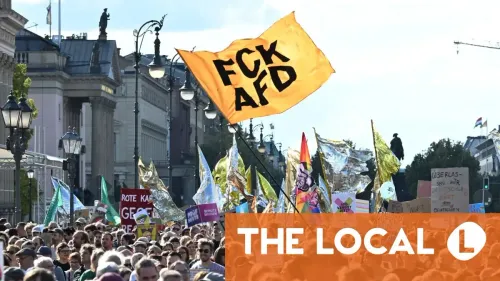
The AfD's top candidate, Ulrich Siegmund, is set to stand for election as Minister-President, with the vote expected during the parliament's December meeting. Demonstrations against the far-right are planned in Magdeburg on Tuesday, with the Bündnis Solidarisches Magdeburg organizing actions from 8 am to 2 pm, including a public reading of the first 20 articles of the Basic Law at the state parliament starting at 9 am.