Free speech tensions rise as Germany braces for pivotal far-right election
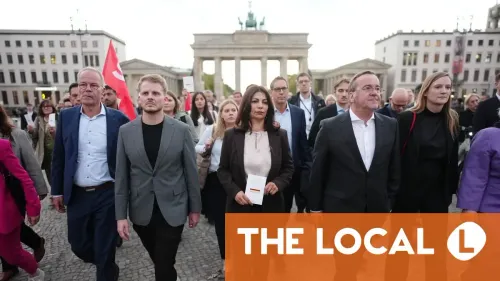
Germany finds itself at a crossroads this weekend as the former East German state of Saxony-Anhalt, home to approximately 2 million people, prepares for an election that could fundamentally reshape the country's political landscape.
The federal government this week accused Russia of orchestrating an attempted hybrid attack involving an explosive-laden drone discovered at Leipzig/Halle Airport on August 4th. The device, carrying 800 grams of pentaerythritol tetranitrate (PETN) explosive, struck the wing of a Ukrainian Antonov An-124 cargo aircraft near its fuel tank before falling to the ground without detonating. The airport serves as home to NATO's Strategic Airlift International Solution (SALIS), which delivers equipment to NATO battle groups from Finland to Romania and operates almost daily.
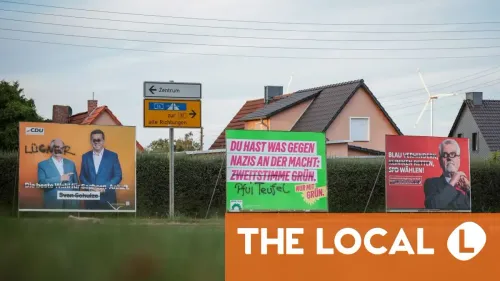
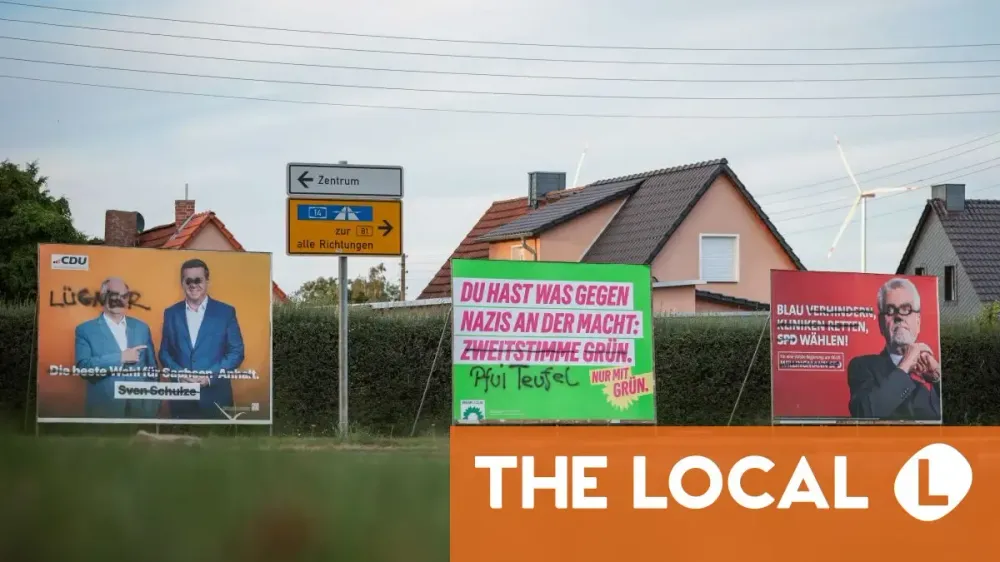
The timing of the announcement raised questions, coming just days before Sunday's state election where the far-right Alternative for Germany (AfD) is polling at 41 to 43 percent support—roughly twenty points ahead of the conservative Christian Democrats (CDU). This represents a dramatic surge from the 2021 election, when the CDU secured 37.1 percent and the AfD received 20.8 percent.
The AfD's lead candidate, 35-year-old Ulrich Siegmund, has openly discussed establishing Saxony-Anhalt as Germany's first AfD-led single-party state government. If successful, he would become the youngest ever premier of a German state. The party's programme includes a large-scale "deportation offensive", sweeping restrictions on migration, cuts to democracy-promotion initiatives and efforts to curb what the party labels political activism in public institutions.
The Saxony-Anhalt branch of the AfD was classified as a confirmed right-wing extremist organization by Germany's domestic intelligence agency, the Office for the Protection of the Constitution, in November 2023. Siegmund himself participated in the 2023 Potsdam far-right meeting and was subsequently removed from his role as chair of the social affairs committee in the state parliament in February 2024.
The potential victory carries particular weight given recent electoral history. In September 2024, the AfD secured its first state election victory in postwar Germany in Thuringia with 32.8 percent of the vote, and came a close second in Saxony with 30.6 percent—marking the first time the far right won the most votes in a state election since the Nazi era.
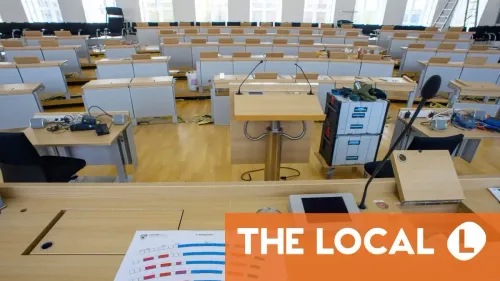
Currently, Saxony-Anhalt is governed by a three-party coalition known as the 'Germany coalition' consisting of the CDU, SPD, and FDP, led by Minister-President Sven Schulze (CDU), who took office in January 2026. The Landtag has a minimum size of 83 members, though the current parliament consists of 97 members due to overhang and leveling seats designed to ensure proportionality.
Culture wars and political silence
As the election approaches, tensions over political expression have erupted in unexpected quarters. The synth-pop band Alphaville, known for their 1984 global hit "Forever Young", was removed from the lineup of the Glücksgefühle Festival at Hockenheimring after refusing to guarantee they wouldn't make political statements on stage.
Promoter Markus Krampe and former football star Lukas Podolski, the public face of the event which attracts hundreds of thousands of visitors, reportedly sought assurances that the band wouldn't make comments against the AfD and far-right extremism that band members had made at earlier appearances. When Alphaville refused, organizers removed them from the programme, explaining that the festival was "completely apolitical" and promising visitors "Good Vibes Only".
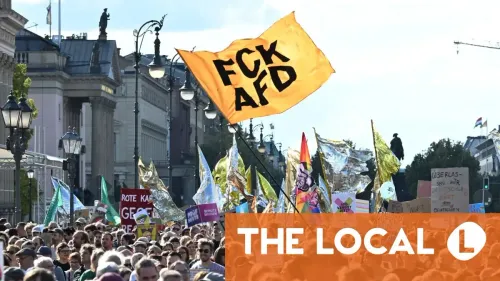
The decision sparked immediate backlash. Musicians, politicians and fans accused the festival of attempting to silence criticism of the far-right at precisely the moment a German state could vote the AfD into power. Campino of Die Toten Hosen, one of Germany's most influential bands, called the decision absurd. Marian Gold, the 72-year-old frontman of Alphaville, described the demand as a "gag order".
Krampe subsequently apologized, admitting that "the way we handled it was a mistake", but Alphaville declined his renewed invitation and announced they wouldn't perform.
The controversy echoes earlier debates about artists and politics. At the Berlinale in February, jury president Wim Wenders argued that filmmakers should remain outside politics. "We have to stay out of politics because if we make movies that are dedicatedly political, we enter the field of politics," he said. "But we are the counterweight of politics, we are the opposite of politics."
The 81-year-old director, born in the closing months of the Second World War in 1945, is currently presenting his film "From Inside Out: The Architecture of Peter Zumthor" at the Venice Film Festival—a 3D documentary exploring the work of a celebrated Swiss architect through space, light, texture and silence.
What happens next
Polling stations open at 8am and close at 6pm on Sunday. ARD and ZDF will broadcast exit-poll projections the moment voting ends, with these typically proving remarkably accurate. The preliminary outcome is expected late Sunday night or in the early hours of Monday morning.
The election is part of a broader pattern of voting across Germany. Two additional state elections are scheduled for September 20th in Mecklenburg-Vorpommern and Berlin, where the AfD is also polling strongly, with support at 37 percent in Mecklenburg-Vorpommern.
Many of the AfD's proposed measures would primarily affect immigrants, refugees and other minority groups. Whether voters ultimately deliver the far-right its first state government since the Nazi era, the debates over elections, extremism, Russia, free speech, democracy and belonging show no signs of subsiding—regardless of Sunday's outcome.