Mass protests sweep Germany as far-right AfD seeks first state government since Nazi era
Approximately 150,000 protesters flooded the streets of some 20 German cities on Saturday, demonstrating against the Alternative for Germany (AfD) following the party's landslide victory in the eastern state of Saxony-Anhalt last week.
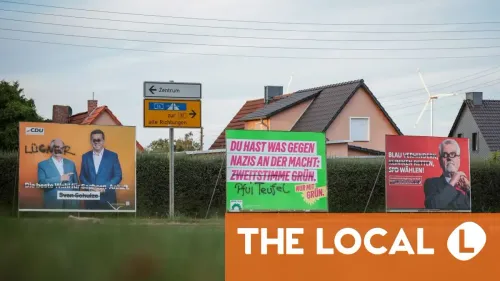
The far-right party captured 43.8 percent of the vote in the September 6 election in the region of 2.1 million people, securing 39 seats in the 83-member state parliament. The result left the AfD just three seats short of the 42 needed for an absolute majority, and the party has begun coalition negotiations as it attempts to form what would be Germany's first extreme-right state government since the Second World War.
The electoral outcome represented a dramatic 23.1 percentage point surge from the 2021 election, when the AfD received 20.8 percent. Meanwhile, the governing CDU saw its support collapse from 37.1 percent to just 17 percent, losing more than half its voter base.
Demonstrations across major cities
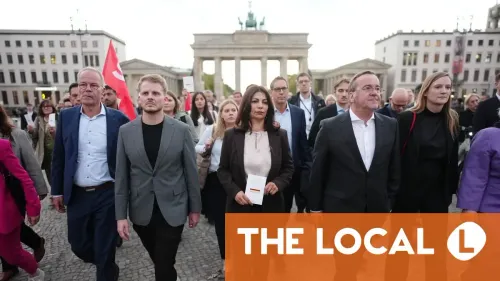
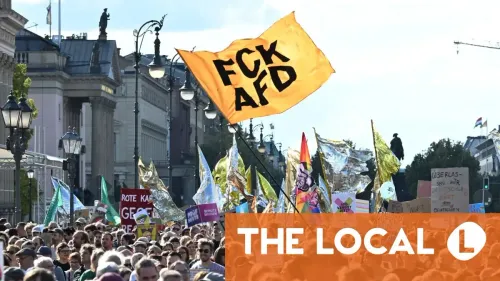
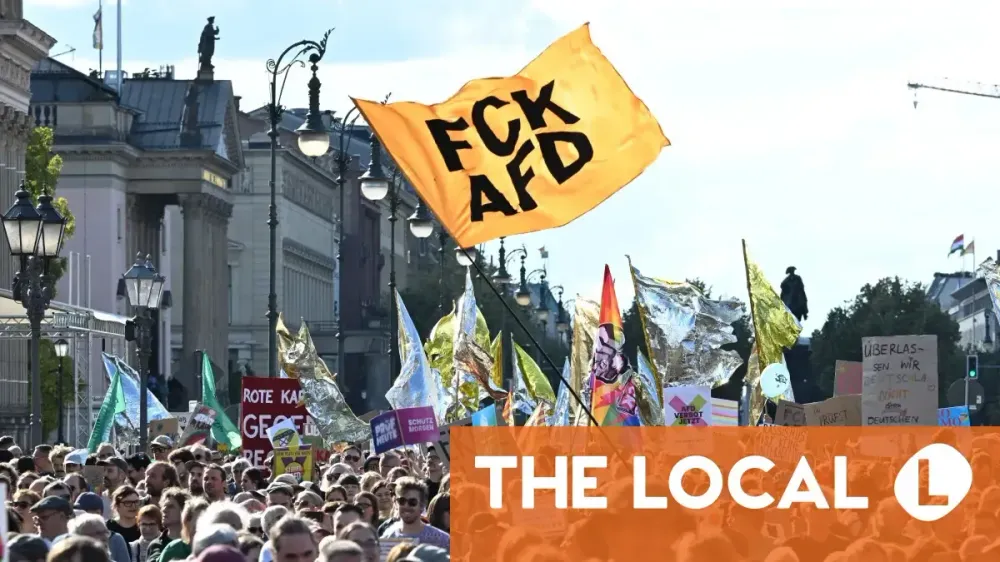
Demonstrations took place in major cities including Berlin, Hamburg and Munich, organized by Pruef, a group advocating for a ban on the AfD, along with campaign organization Campact. Protesters carried banners with messages such as "Ban the AfD now" and "Democracy needs no alternatives," while rainbow flags reading "Not into Nazis" were prominently displayed.
"A broad cross-section of civil society is taking to the streets to prevent the enemies of the constitution, the AfD in Saxony-Anhalt, from gaining government power," said Christoph Bautz, head of Campact.
In Berlin, police reported several thousand participants across multiple demonstrations. Hamburg saw around 25,000 protesters, while approximately 12,000 gathered in Munich. The AfD organized a counter-demonstration in the capital, attended by Kristin Brinker, the party's lead candidate in the Berlin state election scheduled for September 20.
Intelligence classification and surveillance
The AfD's rise has intensified concerns among those who believe Germany bears a special responsibility to confront its Nazi past. Germany's domestic intelligence agency officially classified the AfD as a confirmed right-wing extremist organization in May 2025, based on a comprehensive 1,100-page report. The designation enables authorities to deploy expanded surveillance measures, including recruiting confidential informants and intercepting communications, and could potentially exclude the party from state funding.
Legal obstacles to party ban
Calls for banning the AfD have grown louder, though such action faces substantial legal obstacles. Under Germany's constitution, only the Federal Constitutional Court can ban a political party, following an application from the Bundestag, Bundesrat, or federal government. The court requires evidence of "aggressive combativeness" against the constitution or "systematic pursuit of anti-constitutional goals."
The difficulty of achieving a party ban was illustrated in 2017, when the Constitutional Court declined to ban the neo-Nazi National Democratic Party of Germany, despite finding it unconstitutional. The court ruled the party lacked sufficient potential to achieve its anti-constitutional objectives. A cross-party group of 113 lawmakers has submitted an application to initiate ban proceedings against the AfD, though this represents only a small fraction of the 734 members of the Bundestag, and few are leading figures in their parties.
Chancellor Friedrich Merz of the centre-right CDU has expressed skepticism about pursuing a ban. The CDU received 17 percent of the vote in Saxony-Anhalt, finishing a distant second to the AfD's dominant performance.
As the anti-immigration, Russia-friendly AfD begins talks with other groups and individual MPs to form a governing coalition, the protests reflect widespread unease about the party's potential to hold executive power in a German state for the first time in the post-war era.