Four mysterious votes shake Germany's political firewall against the far-right
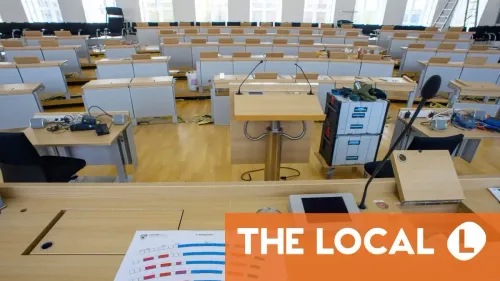
When Tobias Rausch of the Alternative für Deutschland was elected president of the Saxony-Anhalt state parliament on Tuesday, political observers had already anticipated his victory. What has sent shockwaves through Germany's political establishment is not the result itself, but the arithmetic behind it.
Rausch, a 35-year-old AfD politician whose father Daniel Rausch also serves as an AfD member in the same parliament, became the first far-right politician to claim the parliamentary presidency in any German state since reunification. The position grants him significant authority over parliamentary proceedings, staffing decisions and administrative matters.
His election was always likely. The AfD holds 39 seats following its landslide victory in the September 6 election, when the party won 43.8 percent of the vote with 576,037 ballots cast in its favour. That result represented a 23.0 percentage point surge from the 20.8 percent it received in 2021, more than doubling its support. The Bündnis Sahra Wagenknecht, with five seats, had publicly pledged to support Rausch's candidacy, giving him a projected total of 44 votes.
Yet when the ballots were counted, Rausch had received 48 votes. Those four extra votes have become the centre of an intensifying political crisis.
Breaking a post-war tradition
Since 1990, every president of the Saxony-Anhalt state parliament has come from either the CDU or SPD. Rausch's victory marks the first departure from that pattern in the post-reunification era. The significance extends beyond symbolism: the AfD branch in Saxony-Anhalt has been classified by the state's Office for the Protection of the Constitution as a confirmed right-wing extremist organisation since November 2023, an upgrade from its previous status as merely suspected extremism.
Rausch has attempted to reassure critics, describing himself as a pragmatist who will treat all parties fairly. His opponents point to previous disciplinary warnings he received in parliament and question whether a senior AfD official can credibly serve as a neutral arbiter.
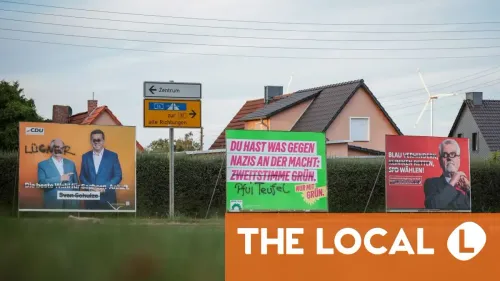
The SPD, Greens and Left Party had all publicly ruled out supporting Rausch. CDU parliamentary leader Sven Schulze announced his party would abstain. The ballot was secret, but the parliamentary arithmetic offers few alternative explanations for where the extra votes originated. Most political analysis has concluded they likely came from within CDU ranks, though this cannot be definitively proven.
A second shock in the same session
The mystery deepened later that day when Hans-Thomas Tillschneider, a controversial AfD hardliner, was elected vice-president of the parliament with more votes than the AfD should have commanded alone. Tillschneider was one of the original signatories of the Erfurter Resolution in March 2015, the founding document of the AfD's radical Flügel faction led by Björn Höcke and André Poggenburg. Since February 2020, he has been under surveillance by Germany's Office for the Protection of the Constitution, placing him alongside figures such as Höcke and Andreas Kalbitz among the most closely monitored AfD politicians.
While the CDU comfortably secured the election of its own candidate Carsten Borchert as vice-president, the SPD candidate Armin Willingmann was defeated. Willingmann, a former state minister and the party's lead candidate in the recent election, saw his loss as a humiliation for the Social Democrats despite having governed alongside the CDU until last month.
The voting pattern suggested that some CDU deputies were not only willing to support AfD candidates but also prepared to deny backing to their former coalition partners.
National outcry and historical echoes
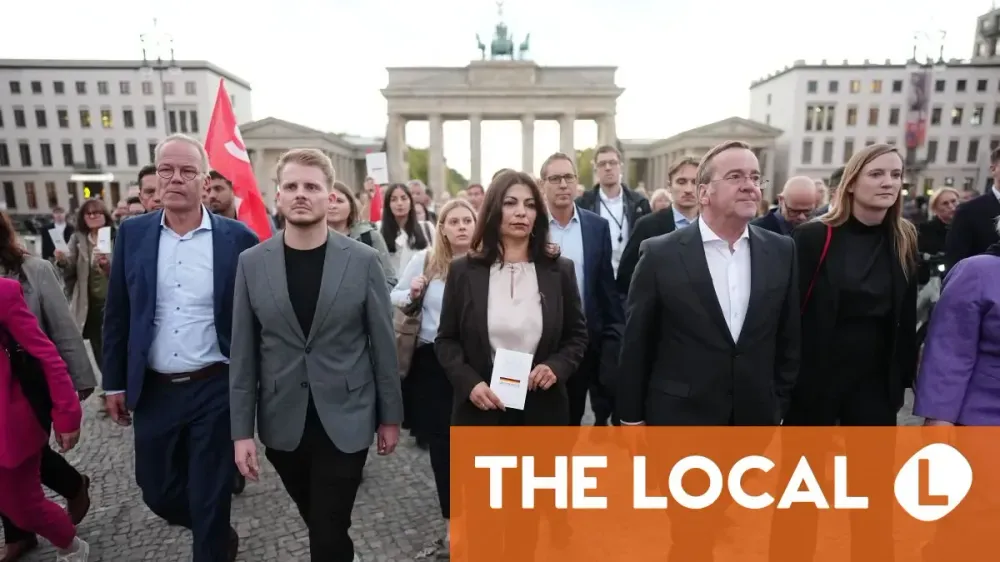
The SPD's response carried unusual emotional weight. On Tuesday evening, members of the SPD's Bundestag parliamentary group staged a spontaneous march through central Berlin. Lawmakers carried copies of Germany's Basic Law and gathered at Bebelplatz, the site associated with the Nazi book burnings of 1933. Defence Minister Boris Pistorius described the vote as a day of anger and accused those who enabled the election of having betrayed the democracy of our great country.
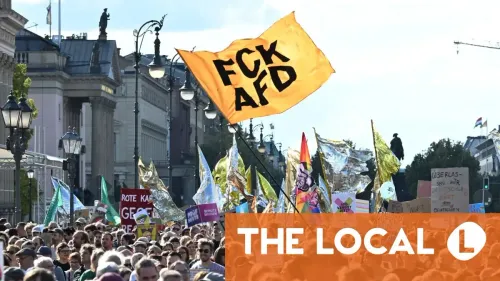
Outside the Saxony-Anhalt parliament building, hundreds of protesters had gathered to oppose Rausch taking office. The demonstration reflected broader public concern about the erosion of what Germans call the Brandmauer, the firewall that mainstream parties have maintained against the AfD.
The turnout in the September election had reached 77.8 percent, an increase of 17.5 percentage points from the 60.3 percent recorded in 2021, suggesting heightened public engagement with the political stakes.
Contrast with federal practice
The Saxony-Anhalt result stands in stark contrast to established practice at the federal level. Since the AfD entered the Bundestag in 2017, none of dozens of AfD candidates for vice-president positions have ever been approved. As of October 2025, the latest attempts received only a few dozen votes from other factions.
The only comparable precedent occurred in February 2020, when FDP politician Thomas Kemmerich was elected Minister-President of Thuringia with decisive votes from the AfD. That marked the first time in Federal Republic history that a minister-president was elected with far-right support. Kemmerich resigned after three days amid national outrage, and the episode has since served as a cautionary tale about breaching the firewall.
December looms
The question now facing Germany's political establishment is whether Tuesday's vote was an isolated incident or a preview of what lies ahead. In December, Saxony-Anhalt's parliament is expected to elect a new minister-president. AfD leader Ulrich Siegmund has repeatedly claimed he can assemble a parliamentary majority for that position.
Until this week, many observers dismissed those claims as political posturing. After the election of Rausch and the unexpected voting patterns that followed, those assumptions look far less certain. No one knows whether Siegmund can actually prevail, but the calculations that previously ruled out such an outcome have been thrown into doubt.
As one commentary on public broadcaster Tagesschau observed:
Nothing is certain anymore.
That assessment, however dramatic it may sound, reflects a growing uncertainty about whether the political rules that have governed postwar Germany still hold in an era when the far-right commands more than two-fifths of the vote in a German state.