EU plans cross-border emergency comms system to replace radio
The European Commission presented proposals Wednesday for a continent-wide emergency communications infrastructure that would enable police, firefighters and other first responders to coordinate seamlessly during cross-border crises, moving away from traditional radio technology to modern broadband networks.
Emergency services across the 27 EU member states currently rely primarily on TETRA (Terrestrial Trunked Radio), a European standard specifically designed for government agencies, police forces, fire departments, ambulance services and military operations. However, these secure radio channels operating on allocated frequencies of 380-400 MHz typically cease functioning at national borders, creating significant obstacles during international emergency operations, according to Brussels.
"When crisis strikes, our first responders must be able to communicate instantly across agencies, across borders, across Europe," said Magnus Brunner, the EU's commissioner for internal affairs and migration, who assumed his position in December 2024 after previously serving as Austria's finance minister.
The proposed "EU Critical Communication System" would transition national emergency communications from radio to broadband technologies such as 5G, a shift Brussels notes most member states are already planning independently. The EU's role would involve coordinating these national systems through a central hub to ensure interoperability and establishing a monitoring centre to track cybersecurity risks and provide technical support.
Under the framework, EU satellites would serve as backup infrastructure should terrestrial systems fail during events such as widespread power outages. The satellite component would be provided by IRIS² (Infrastructure for Resilience, Interconnectivity and Security by Satellite), the EU's third major space program following Galileo and Copernicus. Contracts for IRIS² were signed in August 2024, and the expanded constellation now comprises 348 satellites designed to provide secure governmental connectivity for crisis management, border surveillance and protection of critical infrastructure while eliminating communication dead zones across Europe, Africa and the Arctic.
The transition from radio to broadband would enable first responders to share real-time video feeds, text messages and geolocation data, typically using smartphone devices, though the EU proposal does not mandate any specific hardware.
Brussels identified wildfires, counter-terrorism operations, drone threats and Mediterranean search-and-rescue missions as scenarios where the enhanced technology could prove decisive. Military forces would also have the option to utilize the system.
Real-world cross-border coordination challenges
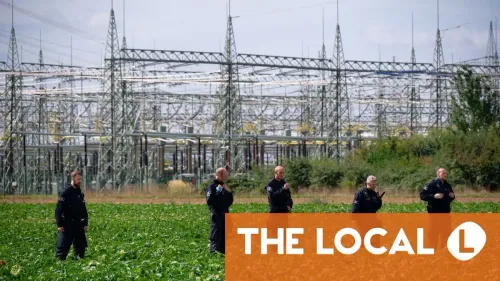
Brunner cited the massive wildfire that erupted on August 14, 2026, in Belgium's High Fens nature reserve near the German border as a prime example of current communication limitations. The blaze burned approximately 3,000 hectares, making it Belgium's largest wildfire on record and destroying roughly one-third of the reserve's total area.
"The moment a first responder had to cross the border, their radio actually stopped working," Brunner explained.
The firefighting operation required unprecedented international cooperation, with nearly 500 personnel and nine aircraft arriving from Germany, Luxembourg, the Netherlands, Sweden, Norway and the Czech Republic through the EU Civil Protection Mechanism.
In another case, Brunner described a shooting incident in the Netherlands that occurred just 200 metres from the Belgian border, triggering a cross-border police pursuit "where every minute counted." The Dutch operational centre in Maastricht, located in the Meuse-Rhine Euroregion adjacent to Belgium with a metropolitan population of approximately 3.9 million including the nearby Belgian city of Liège, could not directly alert Belgian counterparts in Liège under current systems, hampering coordination with officers on the ground.
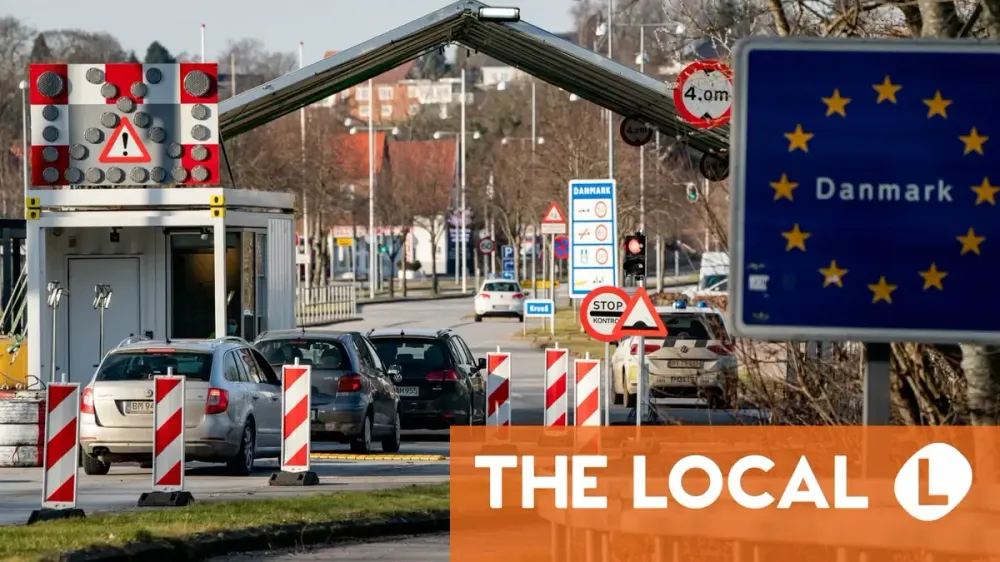
The communication challenges occur despite temporary border controls being in place, with the Netherlands among 10 EU member states currently conducting checks at crossings with Germany and Belgium, measures extended until at least June 2026.
European industry involvement and timeline
The Commission emphasized that critical components underpinning the new system would be developed by European companies. EU officials indicated that firms including Airbus, Italy's Leonardo and Austria's Frequentis participated in pilot programs for the technology.
Brussels aims for the system to achieve full operational status by 2036. The proposal requires approval from both EU member states and the European Parliament before implementation can proceed.