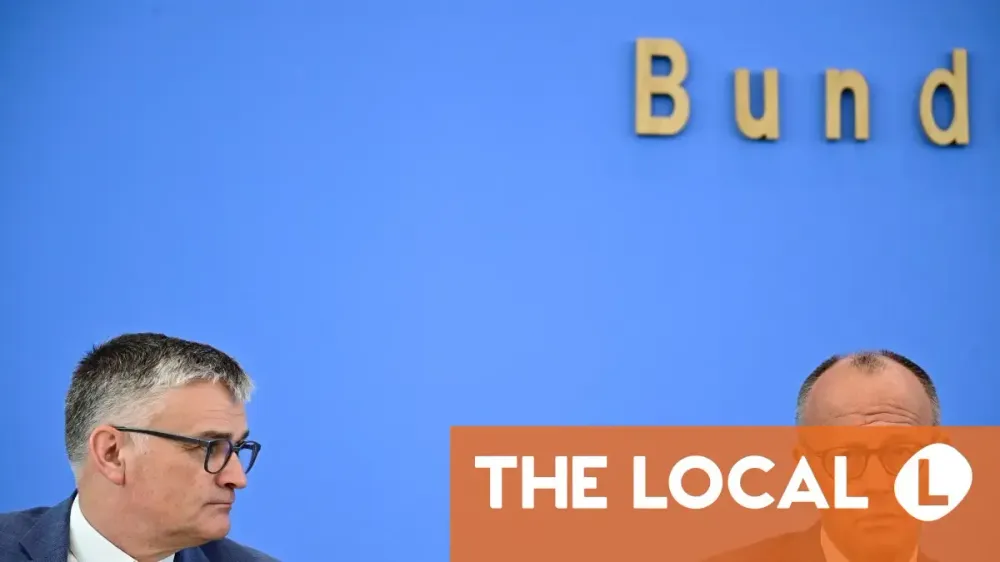
Germany vows to pursue new Russia sanctions despite US diesel agreement
Germany has reaffirmed its commitment to imposing additional sanctions on Russia despite a controversial agreement between Washington and Moscow to supply diesel fuel to global markets, government spokesman Stefan Kornelius announced Saturday.
"The German government sticks to its measures sanctioning Russia and is working jointly with its European partners on new sanctions," Kornelius, who has served as Federal Government Spokesperson since May 2025, said in a statement. He emphasized that Germany's "support for Ukraine in its struggle to defend itself remains unfailing" while diplomatic efforts for a peaceful resolution continue.
US-Russia diesel deal sparks controversy
The statement came one day after US President Donald Trump announced on social media that Russia would "immediately supply over 300,000 Tons of Diesel Fuel to the American and Global Marketplace" following talks with Russian President Vladimir Putin. The Kremlin confirmed Moscow's readiness to supply oil and petroleum products to international markets.
To facilitate the transaction, the US Treasury Department temporarily waived sanctions on Russian diesel through April 2027 under a general license issued Friday. The timing of the deal, coming weeks before November's US midterm elections where Republicans face potential congressional losses amid voter concerns over rising living costs, has drawn sharp criticism.
Ukrainian President Volodymyr Zelenskyy immediately condemned the arrangement, warning that easing sanctions without requiring Russia to de-escalate would only extend the conflict.
Germany's firm stance on Russia
Chancellor Friedrich Merz, who took office in May 2025 after a historic two-round vote to secure the chancellorship, has positioned himself as a staunch supporter of the European Union, NATO, and the transatlantic alliance. His foreign policy stance aligns with continued pressure on Moscow despite the recent US shift.
Germany has backed its diplomatic position with substantial material support, allocating at least €11.5 billion in military assistance to Ukraine for 2026, making Berlin one of Kyiv's largest European backers. This commitment comes as Merz faces domestic political challenges, with September polling showing only 14 percent of respondents viewing him as the right leader.
European Union sanctions framework
The European Union has maintained a robust sanctions framework against Russia, adopting 21 separate packages since Moscow's 2022 invasion of Ukraine. The most recent measures, implemented in July 2026, targeted Russian energy sectors, financial services, and cryptocurrency operations. These sanctions build upon restrictions first imposed in March 2014 following Russia's annexation of Crimea.
Berlin's position suggests growing transatlantic divergence on Russia policy as Washington prioritizes domestic economic concerns ahead of crucial elections while European partners maintain pressure on Moscow through economic measures.