What foreign residents need to know about Mecklenburg-Western Pomerania's state election
Voters in Mecklenburg-Western Pomerania will elect a new state parliament on Sunday, September 20th, in an election that could reshape policies affecting everyone living in Germany's north-eastern Baltic Sea state.
While foreign residents are not eligible to cast ballots, the election results will determine the direction of integration programmes, education policy, policing and public services throughout the state for the next five years.
Mecklenburg-Western Pomerania, commonly known as "Meck-Pomm" or "MV", is home to approximately 1.6 million residents. The state extends from the Baltic Sea islands of Rügen and Usedom inland to the Mecklenburg Lake District.
Voter eligibility and the electoral system
Only German citizens aged 16 or older who have maintained their primary residence in the state for at least 37 days before election day qualify to vote. Each eligible voter receives two ballots: one for a constituency candidate and another for a party list. Political parties must typically secure at least five percent of votes to gain seats in the Landtag, the state parliament, which comprises a minimum of 71 members.
Current polling shows tight race
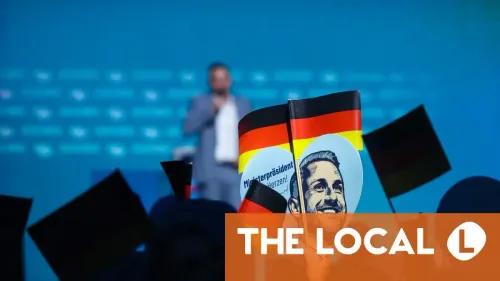
The election has become a contest between Minister-President Manuela Schwesig of the Social Democrats (SPD) and the Alternative for Germany (AfD). The latest ZDF Politbarometer places the AfD at 37 percent and the SPD at 34 percent, with the margin between the parties narrowing in recent weeks.
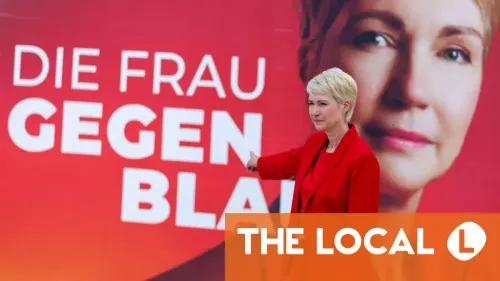
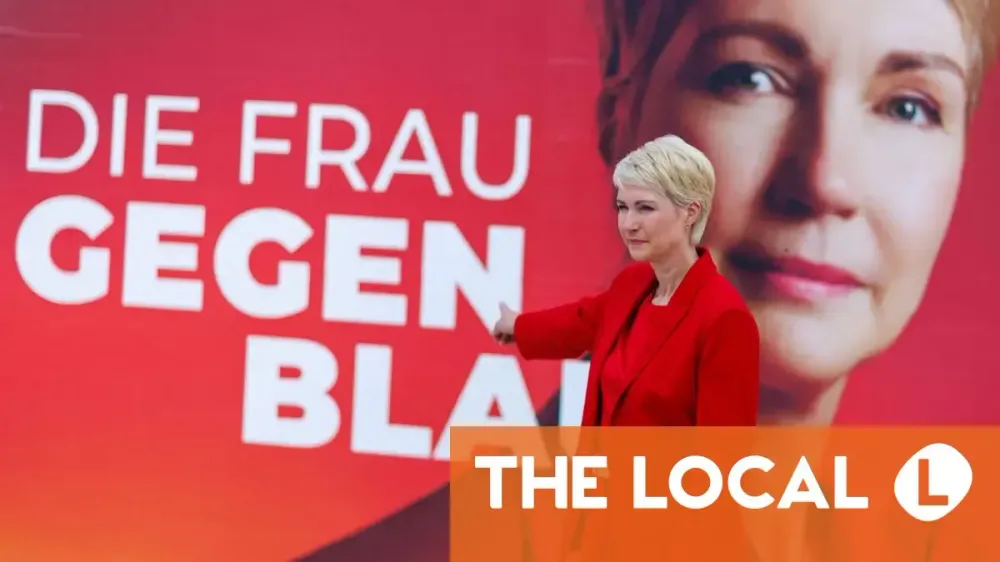
The SPD campaign centres heavily on Schwesig's personal popularity and opposition to the AfD. Campaign materials depict Schwesig in red before Schwerin Castle with the slogan "The Woman Against Blue". According to ZDF polling, 61 percent of respondents prefer Schwesig to remain Minister-President, compared with 28 percent who support AfD candidate Leif-Erik Holm.
The SPD has pledged an "MV Investment Plan 2035", continued free childcare provision and substantial school investment. The AfD is running on a platform called "Ready for the Blue Turn", emphasising stricter migration controls and changes to policing and energy policy.
The Christian Democrats (CDU) are registering just 7 percent support in current surveys, while the Greens are struggling to clear the five-percent parliamentary threshold. Sahra Wagenknecht's BSW is polling around 4 percent, positioning it among several smaller parties whose performance could prove crucial during coalition formation.
Key concerns for voters
Despite migration dominating national headlines, polling indicates that Mecklenburg-Western Pomerania voters prioritise economic issues, employment, schools, education and infrastructure. Rising living costs remain a significant concern, alongside pensions, elevated gas and energy prices, and Germany's policy towards Ukraine.
Coalition scenarios and uncertainties
Current polling suggests the existing SPD-Left coalition may struggle to retain its majority. Smaller parties hovering near the five-percent threshold could exert disproportionate influence on coalition negotiations, similar to dynamics observed in Saxony-Anhalt.
The CDU faces a particularly challenging contest. According to reports, the party may record its worst state election result anywhere in Germany since 1949.
National implications of the vote
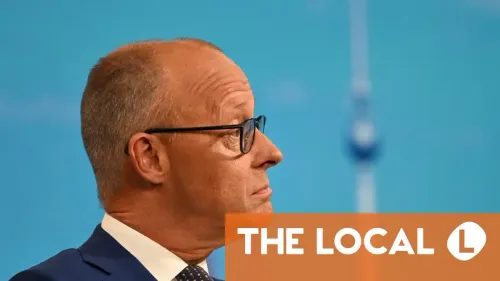
The election has attracted significant national attention, with politicians and media outlets interpreting it as an indicator of broader political trends. Issues such as migration, energy prices, Ukraine support and dissatisfaction with Chancellor Friedrich Merz's federal coalition have featured prominently in campaign discourse, despite the state government in Schwerin having limited authority over these policy areas.
National figures are framing the election as a referendum on the federal government's black-red coalition in Berlin and a test of whether the AfD can build momentum following its victory in neighbouring Saxony-Anhalt.
Sahra Wagenknecht has argued that a strong BSW performance could destabilise Chancellor Merz's government. Unlike Germany's mainstream parties, which maintain a "firewall" against cooperation with the AfD, the BSW has agreed to exploratory talks following the AfD's breakthrough in Saxony-Anhalt. These discussions have raised the possibility of the AfD entering state government for the first time, though significant differences remain between the parties regarding the form any cooperation might take.