'Tectonic shift': What next for Chancellor Merz and the CDU after far right win?
Chancellor Friedrich Merz faces mounting pressure within his own party after the far-right Alternative for Germany delivered its most decisive electoral victory yet, capturing 44 percent of the vote in Saxony-Anhalt and relegating his centre-right CDU to a distant second place with just 18 percent.
The result in the eastern state of approximately 2.2 million inhabitants represents a seismic shift in German politics. For the first time since World War II, a party officially classified as right-wing extremist by domestic intelligence services stands on the verge of forming a state government. The AfD fell just three seats short of an absolute majority in the 84-seat state parliament in Magdeburg, according to projections by public broadcasters.
Merz's troubled chancellorship
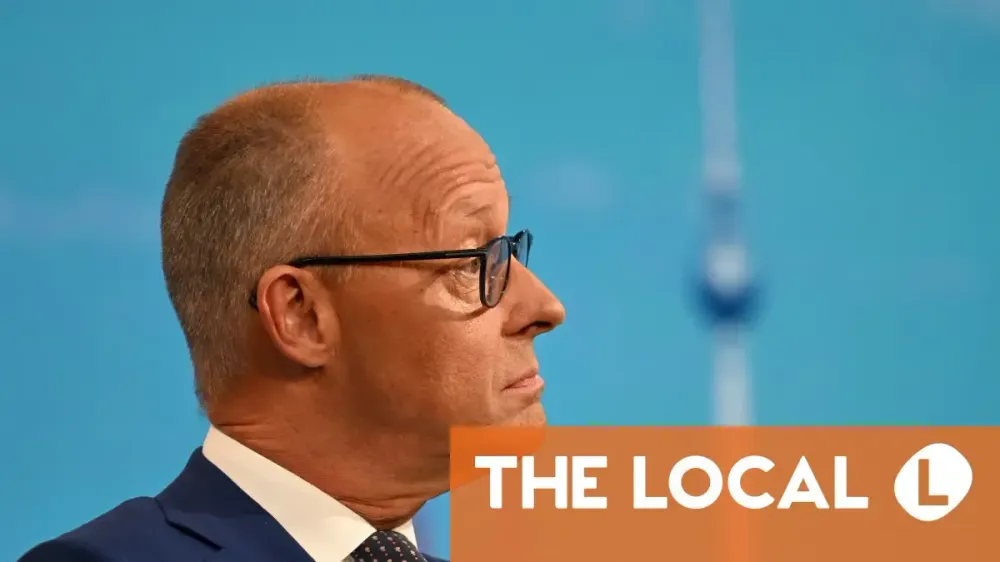
Merz, who became chancellor on 6 May 2025 after his CDU/CSU won just 28.5 percent in snap federal elections, now governs in a grand coalition with the Social Democrats that holds only 328 of 630 Bundestag seats. The SPD itself limped into the coalition after recording its worst result since World War II with 16.4 percent of the vote.
The chancellor's political troubles have deepened considerably since taking office. He began his term with modest approval ratings of 38 percent in May 2025, which dropped to 32 percent by December. By April 2026, a Morning Consult survey found his approval had collapsed to just 19 percent with 76 percent disapproval, making him the most unpopular democratically elected leader among 24 world leaders tracked by the pollster. In eastern Germany specifically, his satisfaction rating stood at only 12 percent with nearly 80 percent dissatisfied.
The visibly dejected CDU state premier Sven Schulze acknowledged that national government policies had complicated his campaign.
We often faced headwinds, and that wasn't always easy.
AfD seizes the moment
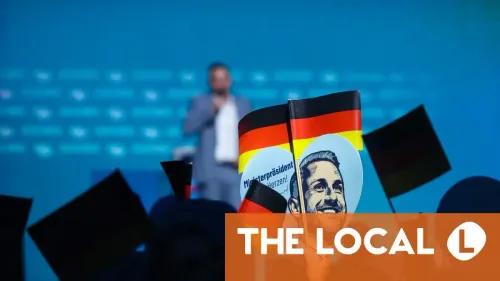
AfD lead candidate Ulrich Siegmund, 35, seized the moment to mock the 70-year-old chancellor directly.
Friedrich Merz is a very good campaigner
for the AfD, Siegmund said, adding that every day with Merz in the chancellery was
one day too many.
The far-right politician declared his party had
made history
and urged voters had sent
a signal to Berlin.
Germany's domestic intelligence agency officially classified the AfD as a
confirmed right-wing extremist organization
at the national level in May 2025, upgrading it from
suspected
status based on an 1,100-page report. Despite this designation, AfD national co-leaders Alice Weidel and Tino Chrupalla called on their state branch to pursue forming a government, viewing Saxony-Anhalt as a potential blueprint for national elections in 2029.
Political earthquake
Daniel Guenther, the CDU premier of Schleswig-Holstein state, called the result
a shocking moment for our country.
Political scientist Oliver Lembcke of Ruhr University Bochum described it as
more than a severe electoral defeat for the CDU
but rather
a tectonic shift in the party system.
The path to forming a government remains unclear. Opposing the AfD are the CDU, SPD, Greens and far-left Die Linke, but together they also lack a clear majority. The Bündnis Sahra Wagenknecht (BSW), a left-authoritarian party founded in January 2024 that combines left-wing economic policies with hard-right stances on immigration and opposition to weapons supplies to Ukraine, could potentially act as kingmaker if it crosses the five-percent threshold to enter parliament.
Siegmund indicated his party would
extend a hand to all forces that want to bring about a fundamental political shift with us,
raising the possibility of attempting to attract defectors from other parties.
Growing discontent within the CDU
Discontent is brewing within CDU ranks. Dennis Radtke, chairman of the party's employee wing, called Sunday's vote a
watershed moment
and warned that
the usual platitudes about a 'bitter evening' and the need for analysis won't cut it.
However, Thorsten Frei, leader of the centre-right parliamentary group, urged calm and noted that the chancellor was elected for a four-year term.
The AfD emerged in 2013 as a eurosceptic protest party but transformed into an anti-immigration force following Angela Merkel's 2015 decision to allow large numbers of refugees into Germany. Merz had vowed to return the CDU to its conservative roots and push back against the AfD through a crackdown on irregular immigration and economic reforms.
Merz took office with the promise of pushing back the AfD, yet instead, the party has grown even stronger, despite the Union's shift to a more conservative course,
Lembcke observed.
This confronts Merz with a question of renewed urgency: what strategy can the CDU use to reverse this trend?
Merz is scheduled to meet Monday with CDU party leadership to digest the defeat and chart a path forward for a government facing mounting challenges both at the state and federal level.