Citizenship not ancestry defines belonging
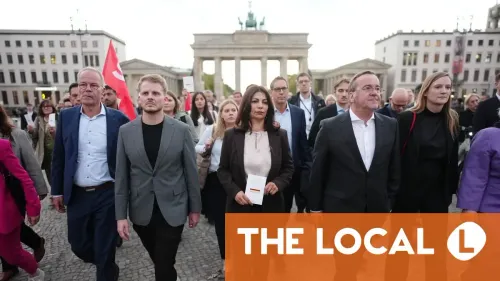
Just 11 days before voters in Saxony-Anhalt head to the polls on 6 September 2026, Federal President Frank-Walter Steinmeier delivered a pointed defence of Germany's constitutional principles, arguing that attempts to define German identity by bloodline or ethnic origin contradict the country's Basic Law.
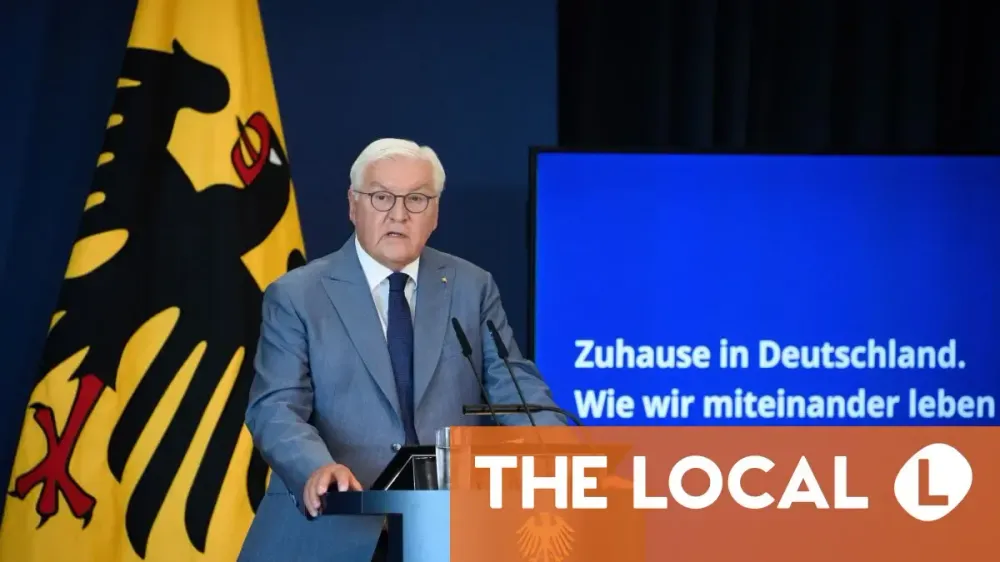
Speaking at the inaugural public event held at his temporary official residence at Spreebogen in Berlin, Steinmeier told an audience of politicians, academics and people with migrant backgrounds that Germany's future depends on rejecting what he termed "fantasies of ethno-nationalist isolation" and remaining an open society.
The president moved into the Spreebogen building in July 2026 with his approximately 250-person office while Schloss Bellevue undergoes an eight-year renovation expected to cost 200 million euros. The official key handover ceremony took place on 25 August, just one day before this event titled "At Home in Germany: How We Live Together".
Steinmeier's central message was unambiguous: citizenship, not ancestry, determines membership in the German nation. "There are no first- or second-class citizens," he said, emphasizing that the German people as defined by the constitution include both those born in the country and those who have become German through naturalization.
The president noted that German citizenship law, governed by Article 116 of the Basic Law, has evolved beyond pure descent. While historically following the principle of jus sanguinis, Germany introduced limited jus soli provisions in 2000, allowing children born in Germany to foreign parents to acquire citizenship under certain conditions.
"This country belongs to everyone who lives here lawfully,"
Steinmeier declared, pointing to shared citizenship, language, democratic values and commitment to peaceful coexistence as the foundations of German identity rather than bloodlines.
Economic necessity and social strain
The president grounded his arguments in economic reality, stating that "we need immigration if we want to function." Germany faces an estimated annual shortage of approximately 400,000 skilled workers, particularly in healthcare, IT, construction and transport sectors.
To address this challenge, Germany's Skilled Immigration Act has undergone reforms rolled out in phases from November 2023 through March 2026, introducing measures including the Opportunity Card and lowering EU Blue Card salary thresholds to facilitate skilled worker immigration.
Steinmeier acknowledged that immigration can place strains on communities and public services, arguing such concerns should be taken seriously rather than ignored. He also spoke about conversations with people from migrant backgrounds who feel increasingly unsafe. "When people in our country lie awake at night because they are being marginalized and attacked, then we must all be wide awake," he said.
Timing and political context
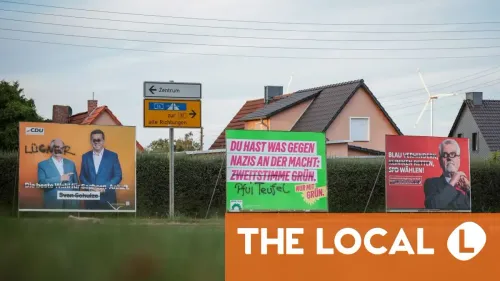
While the president avoided mentioning the far-right Alternative for Germany by name, the timing and content of his speech carried clear political significance. The Saxony-Anhalt election on 6 September is the first of three crucial state elections scheduled for September 2026, followed by Mecklenburg-Vorpommern and Berlin on 20 September.
In the 2021 Saxony-Anhalt state election, the CDU won 37.1 percent of votes while the AfD received 20.8 percent. The current government coalition consists of the CDU, SPD and FDP under Minister-President Sven Schulze, who took office in January 2026.
Migration has once again become a defining issue in the campaign, with questions of national identity and belonging at the forefront of public debate. Yet perhaps most striking about Steinmeier's speech was what it did not contain: no naming of the political forces driving opposition to migration, and no reflection on why a substantial portion of the electorate may be drawn to parties taking a diametrically opposed approach to questions of migration and national identity.
Adhering to the traditional neutrality expected of a German president, Steinmeier delivered a constitutional argument rather than a partisan intervention, leaving unstated whether his message would reach those voters whose concerns about immigration he acknowledged but whose choice at the ballot box he sought to influence.