Cultural identity battleground
A dome desk lamp, a modular kitchen, Sans-Serif fonts, an Apple mouse – each traces its design lineage to Germany's Bauhaus movement, which revolutionised architecture and product design through minimalist utility.
Regarded as one of the most influential art movements of the modern era, Bauhaus remains unmatched in its global reach and impact on contemporary design. Its origins are distinctly German.
Yet the Alternative for Germany (AfD) is campaigning to shut down institutions dedicated to preserving this legacy.
The far-right party's 150-page election manifesto for Saxony-Anhalt accuses the state government of promoting an image campaign called '#modern thinking' that attempts to derive the region's identity from Bauhaus. The AfD argues this approach is 'rootless' and internationalist, favouring instead what it deems more authentically German cultural traditions.
The manifesto goes further, alleging that promoting Bauhaus amounts to 'denying German identity.' The party threatens to slash public funding for the Bauhaus Foundation and redirect resources toward 'patriotic tourism' centred on historical figures such as Martin Luther, Otto von Bismarck and Friedrich Nietzsche.
The AfD proposes cutting budgets for institutions that promote modern, avant-garde and progressive art, channelling tax revenue instead toward what it considers traditionally German culture.
Historical parallels draw concern
This marks not the first time the AfD has targeted Bauhaus, nor the first time the movement has faced attacks from fascist politics. The party's criticism bears striking similarities to Nazi-era condemnation of Bauhaus.
Before seizing power in Dessau through local elections in October 1931, the Nazis campaigned against what they called the 'Bolshevik' Bauhaus, attacking its foreign teaching staff and 'un-Aryan principles.' Once in control, the school's fate was sealed.
The Nazis rejected the liberal and cosmopolitan dimensions of the movement, seeking to promote more 'traditional' German art and literature instead. Following a staff meeting on July 19, 1933, the Bauhaus school in Berlin officially closed on July 20, 1933, under Nazi pressure and anti-socialist measures. Many artists central to the movement fled Germany to escape persecution.
Economic stakes for de-industrialised region
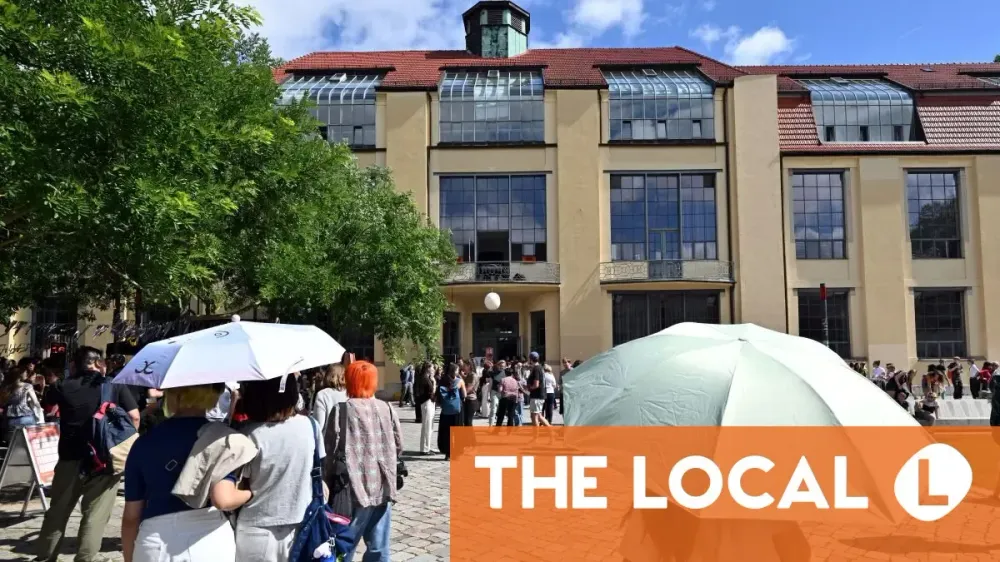
Today, the Bauhaus campus and museum in Dessau serve as major attractions in a region that has suffered decades of de-industrialisation. Bauhaus tourism has become the main economic engine for Dessau, a city that has lost approximately one-third of its population since its industrial peak, with roughly 80,000 inhabitants remaining.
The Bauhaus Museum Dessau, which opened in September 2019, houses the world's second-largest collection of Bauhaus objects with approximately 49,000 items and draws over 100,000 visitors annually. Should the AfD gain power in the state, this cultural and economic anchor could face an uncertain future.
Election mathematics and extremism classification
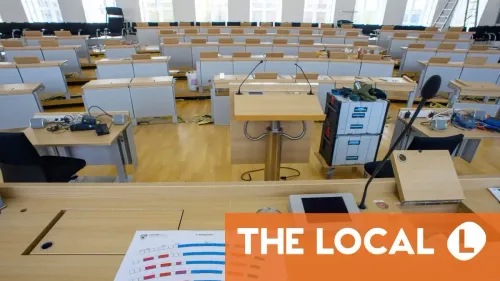
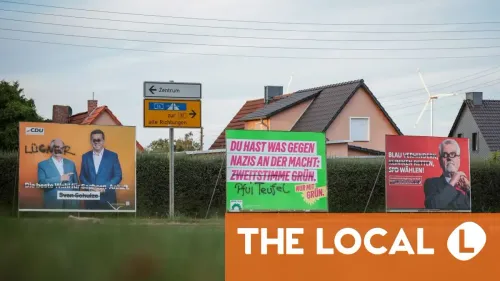
As of late August, polls showed the AfD commanding 40 percent support among Saxony-Anhalt voters ahead of the September 6 election. This represents a dramatic surge from the 2021 state election, when the party received 20.8 percent compared to the CDU's winning 37.1 percent.
However, current projections suggest this would not be sufficient for the party to form a single-party government in the 83-seat Landtag, where 42 seats are needed for a majority.
Germany's Office for the Protection of the Constitution classified AfD Saxony-Anhalt as a suspected right-wing extremist group in January 2021, upgrading this designation in November 2023 to a 'definite right-wing extremist effort.'
Independence Day solidarity in Berlin
Meanwhile in Berlin, activists marked Ukrainian Independence Day on August 24 with an installation featuring anti-drone netting stretched before the Brandenburg Gate. The mesh netting, similar to that deployed across Ukrainian towns and military sites, is designed to intercept explosive FPV drones before they reach their targets.
The demonstration called attention to escalating Russian drone attacks as Ukraine's allies pledged continued support. Germany remains Ukraine's largest military backer in Europe, having approved €3 billion in additional military aid for 2025 and a further €8.3 billion for 2026 to 2029, with total 2026 support estimated at over €11.5 billion.
Berlin stakes claim as capital of love
On a lighter note, Berlin's public transit company Berliner Verkehrsbetriebe (BVG) has launched a marketing campaign challenging Paris's title as Europe's city of love. While U-Bahn reliability may fluctuate, BVG's marketing prowess remains consistent.
The company's latest video presents Berlin as the authentic capital of love – in all its unconventional, unvarnished forms. The short film makes a compelling case that romance thrives not in polished perfection but in the city's raw, diverse reality.