
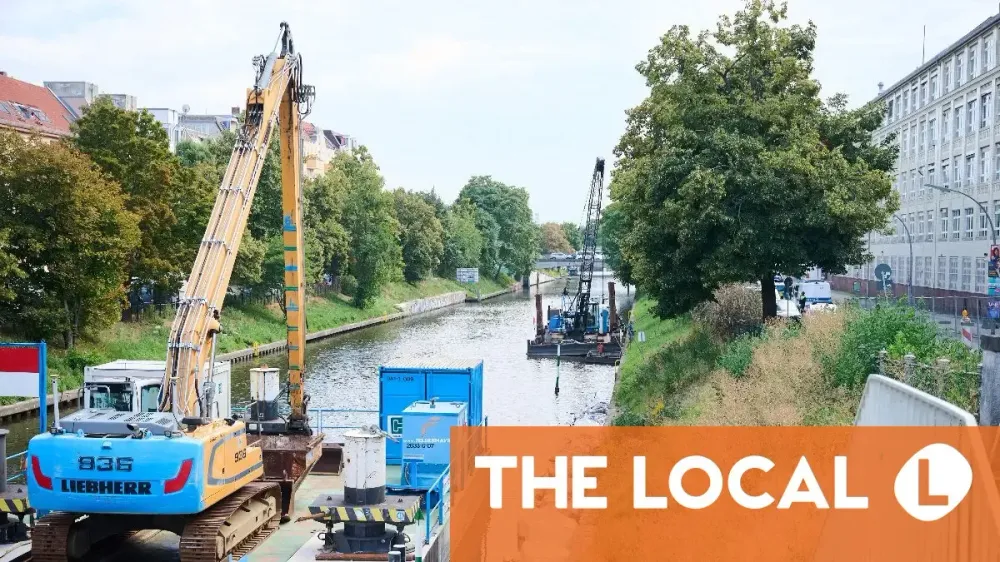
Berlin-Neukölln residents evacuated as WWII bomb discovered during canal works
Residents in Berlin's Neukölln district faced evacuations on Wednesday after workers discovered a 100-kilogram unexploded aerial bomb from World War II during construction at the Neukölln Shipping Canal.
The device was found at approximately 10:40am near the Weigandufer, between Teupitzer Straße and Treptower Straße. Workers brought the explosive to the canal bank, where forensic experts examined it before planning its disarmament.
Police cordoned off the immediate area and expected to establish an evacuation zone with a radius of 300 metres, though officials said this could extend to 500 metres depending on the assessment. The number of affected residents remained unclear as of Wednesday afternoon, and authorities warned the operation could continue well into the night.
A persistent legacy of war
Such discoveries are far from unusual in Germany. Across the country, approximately 2,000 tons of unexploded ordnance surface each year, with Berlin alone accounting for roughly 631 tons discovered annually by construction workers, road crews and bomb disposal teams. Since 1947, specialists have defused 1.8 million pieces of ordnance in the German capital.
The persistent presence of these weapons stems from Allied bombing campaigns during World War II, when Allied forces dropped approximately 1.3 million tons of bombs on Germany. An estimated 10 to 15 percent failed to detonate. Berlin specifically endured more than 350 bombing missions that delivered around 65,000 tons of explosives to the city.
Standard procedures and growing risks
German regulations require construction sites to be certified clear of unexploded ordnance before work begins, making bomb surveys a standard component of major projects. This explains why so many devices surface during infrastructure work like the canal maintenance that revealed Wednesday's bomb.
Emergency services coordinate with local authorities to ensure thorough evacuations, a process that typically takes several hours. Officials must verify all residents have left the exclusion zone and arrange transport for individuals with limited mobility. The Neukölln administration and fire department were working together to manage Wednesday's evacuation.
Bomb disposal in Germany falls to specialized police technicians and firefighters known as the Kampfmittelbeseitigungsdienst (KMBD). Their work has become more urgent as ordnance ages, with experts noting that degrading casing materials increasingly expose explosives like TNT to the elements, raising the risk of unexpected detonation.
Neukölln, home to approximately 320,000 people, is situated just a few hundred metres from the discovery site near Sonnenallee, one of the district's busiest commercial streets. The area was part of the American occupation zone after World War II and became part of West Berlin, making it a target of Allied bombing during the conflict.
Similar operations have become routine across Germany. In June 2026, around 6,500 people evacuated from homes in Potsdam for a 250-kilogram bomb defusal. The previous year, Dresden evacuated 17,000 residents for a comparable operation, while Cologne relocated 20,000 people in June 2024.