Stuttgart overtakes Munich to become Germany's most digitally advanced city
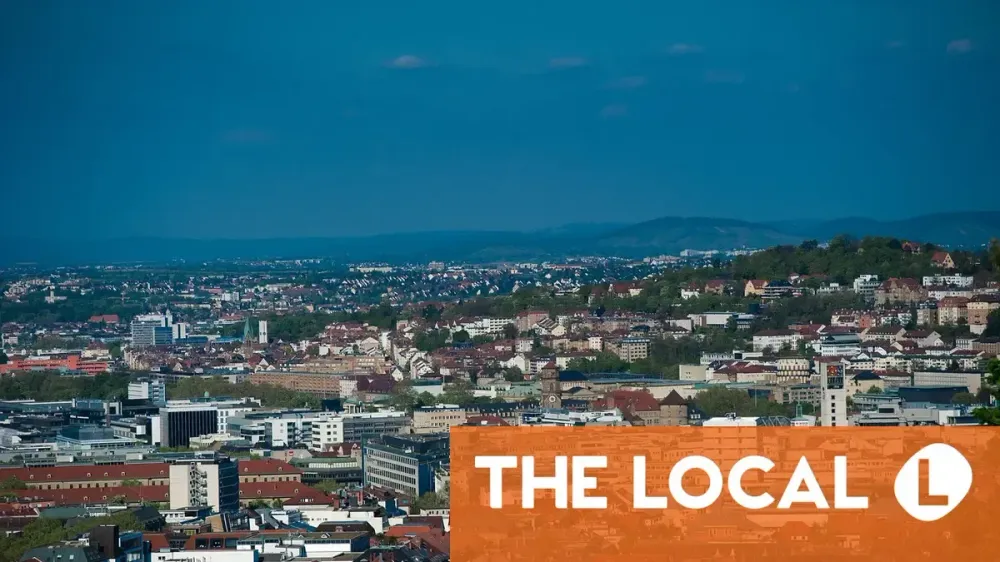
Stuttgart has been named Germany's most digitally advanced city, according to the latest Smart City Index published by the digital industry association Bitkom. The capital of Baden-Württemberg scored 92.8 points, surpassing previous leaders Munich and Hamburg to claim first place in the comprehensive national ranking.
The achievement is particularly striking given Stuttgart's recent trajectory. The city ranked seventh in 2024, jumped to third place in 2025, and now leads in 2026, making it only the third city to top the index since its inception in 2019. The ranking, which analyzed 14,442 data points across 174 parameters grouped into 39 indicators, evaluated all 83 German cities with at least 100,000 inhabitants.
"For a long time, it was said that these two cities (Munich and Hamburg) were in a league of their own when it comes to digitalisation," said Sven Wagner, Head of the Smart City Division at Bitkom. "But Stuttgart has proven that you can also rise to the top through consistent digitalisation."
Stuttgart's success comes against a backdrop of persistent digital challenges in Germany. While the country ranks 14th out of 27 EU member states in overall digital transformation—an improvement from 16th place the previous year—it remains significantly behind leaders like Finland, Denmark, Estonia, and the Netherlands. Germany's position is particularly weak in digital public administration, where it ranks 21st among EU countries, despite placing eighth in digital economy and ninth in network quality.
Practical digital services for residents
Like other German cities, Stuttgart has struggled with outdated systems and staff shortages, leading to long queues outside government offices. In 2023, foreign workers reportedly had to camp overnight outside immigration offices to secure appointments due to delays.
Since then, the city has made substantial progress moving services online. Certain administrative procedures, such as registering a business, can now be carried out via video appointment. "Customers are more relaxed because they can connect directly from home," said local government employee Marzena Dolata-Kosiol, who uses a headset and webcam to liaise with members of the public from her desk. "They don't need to get into a car, so they don't get stuck in traffic or have to queue at the office afterwards."
International residents can now register their address online, while the city indicates that many immigration-related applications can be submitted digitally. These pages are available in multiple languages. However, applying for citizenship is not yet an online process in Stuttgart. New technologies, including AI chatbots, are being trialled in selected areas for initial contact with residents to ease the burden on staff.
Innovative urban technology
The digital transformation extends beyond administrative services. Stuttgart now measures water quality in lakes using digital sensors, while digital signposts guide people through the pedestrian zone and display information about events. A 'digital twin' of the city aggregates data from various departments and can map traffic trends in real time, simulating different scenarios for urban planning.
"The key factor behind Stuttgart's top ranking is that digitalisation is being tackled on a truly broad scale there," said Wagner. Stuttgart ranks among the top ten in all five categories evaluated by the index—a feat no other city has achieved. The city placed seventh in digitalisation of "society and education," an area where officials hope to improve further.
Regional and national context
Stuttgart's achievement reflects broader trends in Baden-Württemberg, where cities have consistently performed above average in the Smart City Index. In 2025, cities from the state achieved a mean score of 78.2 points, significantly higher than the national average and better than Bavaria (75.1 points) and Saxony (74.5 points). The state has invested more than 1.5 billion euros in digitalisation during the current legislative period, with over 3.2 billion euros allocated for broadband expansion since 2016.
Across Germany, digital transformation is advancing, though progress remains uneven. The average score among all 83 cities evaluated increased to 73.8 points in 2026, up from 70.8 points in 2025. The threshold to enter the top ten rose from 84.7 points in 2025 to 85.5 points in 2026, indicating rising competition and improving standards. Nuremberg and Düsseldorf round out the top five cities, while Berlin ranks 33rd with 77.5 points.
Despite these improvements at the city level, Germany continues to face significant infrastructure challenges. The country's fiber optic coverage reached 43.98 percent in 2025, significantly below the EU average of 74.13 percent, placing Germany second-to-last in Europe for fiber connectivity.
Room for improvement
Even in Stuttgart, many administrative procedures still require in-person visits. When it comes to updating documents such as identity cards, the scope for fully digital processing remains limited. "In some cases, this requires changes at federal level," said Sandra Baumholz, head of the Strategic Planning, Digital Transformation and Innovation unit at the City of Stuttgart. "But even there, I believe people have realised that something needs to happen."
Dennis Richter, who heads the IT Competence Centre for Schools in the city administration, views the ranking as both validation and motivation. "For us, of course, this is confirmation that what we're doing as a city is making an impact and, at the same time, that we're laying the foundations for a digital society."
The Smart City Index results were announced ahead of the Smart Country Convention, Germany's leading event for public sector digitalisation, which takes place from October 13-15, 2026 in Berlin. More than 23,000 experts from administration, politics, business and science are expected to attend.