
Making the economic case for leaving fossil fuels
Fegebank and the chamber aim to showcase Hamburg as an international center for climate action. Their message is that moving away from fossil fuels should be seen as a major economic opportunity, rather than simply an obligation.
Fegebank advocates a socially equitable transition for the port, industry and heating supply. Hamburg Chamber of Commerce Chief Executive Dr. Malte Heyne is urging policymakers to provide the conditions businesses need to stay competitive over the long term, particularly green energy that is affordable and reliable.
That message comes as a concrete fossil-fuel phase-out roadmap remains the central unresolved issue at COP31, according to a European Parliament briefing. The roadmap was deferred at COP30 in Belém in November 2025.
A separate effort, the First Conference on Transitioning Away from Fossil Fuels in Santa Marta, Colombia, on April 24–29, 2026, began a voluntary coordination process to contribute a global roadmap to COP31. It did not produce binding commitments to phase out fossil fuels.
Hamburg's targets and conference program
Hamburg's own legally binding deadline for climate neutrality is now 2040, brought forward from 2045 after the successful Hamburger Zukunftsentscheid referendum in October 2025. The city retained its interim target of reducing CO2 emissions by 70% from 1990 levels by 2030. Binding annual CO2 caps apply from 2026, according to the Hamburg Senate Chancellery.
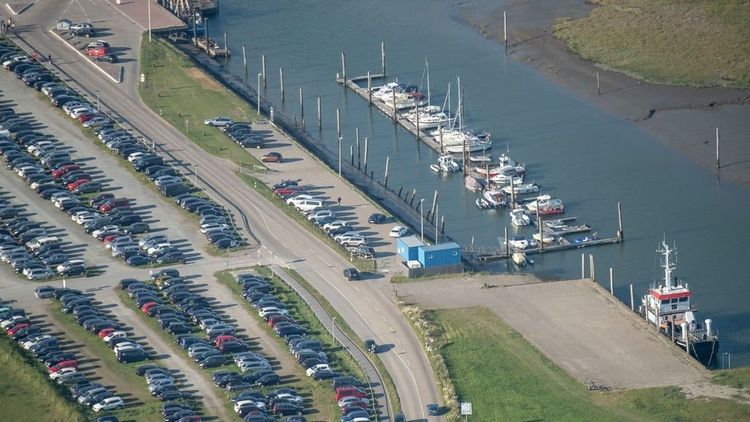
Fegebank's conference schedule includes a discussion of the circular economy at the Finnish pavilion and a session with Germany's Federal Foreign Office on coastal cities' resilience to storm surges and rising water levels. Those risks directly concern Hamburg, a port city on the Elbe.
At the German pavilion, Fegebank and Hamburg companies will discuss cooperation between government and business in pursuing climate neutrality. The delegation also plans bilateral meetings with representatives of science, politics and civil society, including direct talks with climate activists from the Global South.
Separate action agenda sets 2035 goals
Alongside the formal negotiations, Türkiye's COP31 Presidency has launched a Global Climate Action Agenda that was not negotiated by conference parties. Its 2035 targets cover energy, waste, buildings and circular material use, according to the European Parliament briefing.
The agenda calls for electricity to meet 35% of final energy demand by 2035, up from just over 20% today. It also seeks to halve the growth in global waste and bring the circular material use rate to at least 15%. Under its Resilient Cities target, building-sector energy consumption intensity would fall by at least 25%.
The broader COP31 meeting
Hamburg's three-day visit covers only part of the 31st UN Climate Change Conference, which runs from November 9 to 20, 2026. Representatives of more than 190 countries are gathering in Antalya, according to UN News.
The conference has a joint leadership arrangement. Türkiye holds the presidency, with Environment, Urbanization and Climate Change Minister Murat Kurum serving as COP31 President. Australia's Minister for Climate Change and Energy, Chris Bowen, is President of Negotiations, the European Parliament briefing says.
COP31 also coincides with the launch of the second Global Stocktake, the Paris Agreement's formal assessment of collective progress. Its information-collection phase formally begins in November 2026 at CMA8, the eighth meeting of the parties to the Paris Agreement.