New funding alongside existing programs
The agreement marks an early major climate-policy decision for the coalition led by Mayor Dominik Krause. It follows pressure from a successful signature campaign, bringing environmental policy back into focus after Munich's housing and financial crises had pushed it down the agenda.
The coalition of the Greens, SPD, FDP and Free Voters negotiated the deal with the Baumentscheid organizers. According to Süddeutsche Zeitung, the annual allocation includes €30 million in investment funds for planting and €8.5 million for tree care during the first years.
That money would be separate from funding for Munich's two existing tree programs. Both are to continue as planned, with about €51 million earmarked for 3,500 trees across the city; their spending would not count toward the new annual budget.
A signature campaign and a disputed canopy target
TU students Stefanie Günther and Joseph Coenen, who launched the initiative, collected 63,923 signatures, nearly twice the roughly 33,000 required for a citizens' referendum in Munich. If the council approves the compromise at the end of November, they say they will withdraw the referendum as agreed.
The initiative calls for tree canopy to cover 30 percent of Munich's area by 2040, compared with about 20 percent now. Abendzeitung München reports that reaching the goal would require roughly 12,000 trees to be planted within the Mittlerer Ring.
Süddeutsche Zeitung describes the additional annual plantings as a way to better prepare Munich for future hot summers. But ÖDP leader Tobias Ruff criticized the compromise for not retaining the central goal of at least 30 percent canopy coverage. With many large trees lost in Munich each year, he said it remained unclear how around 1,000 additional plantings or replacements annually would achieve that target.
Planning for heat and construction work
Under the agreement, the city administration is to prepare an implementation plan by the end of 2027. Alongside Munich's climate analysis, it would use social data to identify districts with many residents especially vulnerable to extreme heat, including young children and older people.
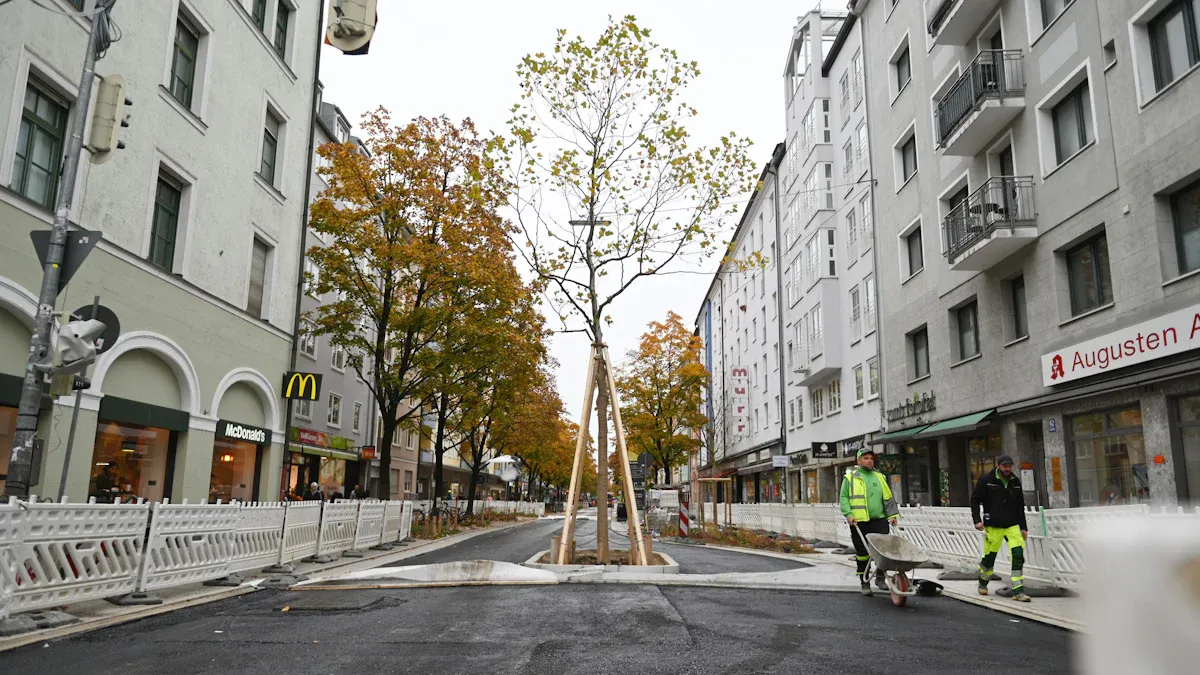
The agreement also addresses trees affected by street construction. City subsidiaries and companies carrying out major street work, including Stadtwerke and Stadtentwässerung, are to be required to avoid felling trees wherever possible and to plant replacement trees as part of their work where feasible.