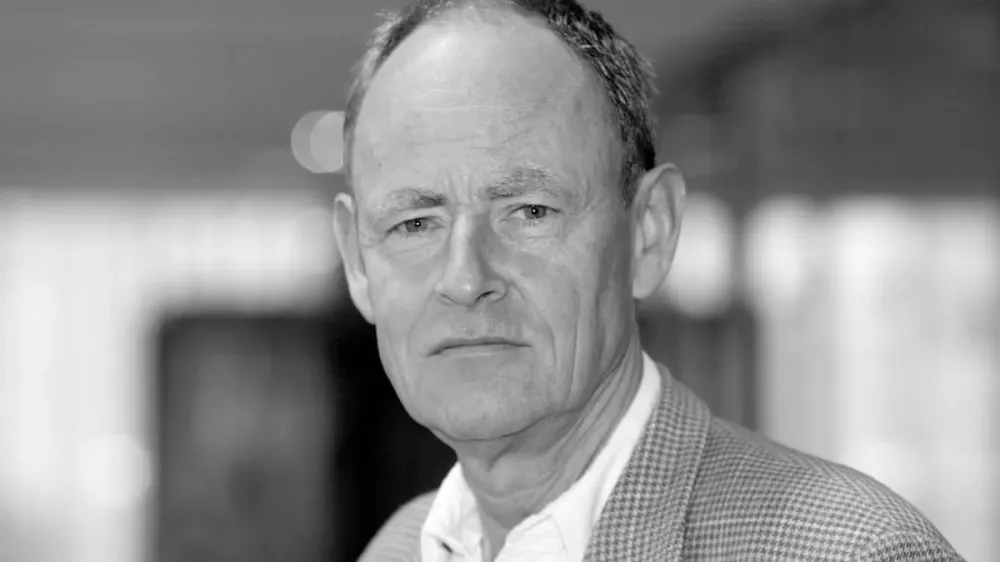
The diplomat he called his alter ego
Von Westphalen made social satire the centerpiece of his best-known novels, following Harry von Duckwitz, an aristocratic veteran of the 1968 movement and a womanizer. He called the diplomat his alter ego. The trilogy comprises "Im diplomatischen Dienst" (1991), "Das schöne Leben" (1993) and "Die bösen Frauen" (1996).
The character drew partly on his own life, and the novels also explored his family connections. His relatives included Jenny von Westphalen, wife of the philosopher and economist Karl Marx. Von Westphalen described his own involvement in the 1968 movement as more reserved than his character's: he regarded it with considerable goodwill but participated only moderately.
Satire across novels, essays and columns
His publisher remembered von Westphalen as a distinctive, independent-minded figure in contemporary German literature who also had a passion for jazz. Grusche Juncker, publisher at btb and Luchterhand, said his fiction and columns sought to expose cultural, political and social failings. She praised his literary skill and biting humor, describing him as a critical thinker and an uncomfortable political voice during Helmut Kohl's chancellorship.
His reputation for sharp criticism extended back to the 1985 collection "Warum ich Monarchist geworden bin". Writing about that book, Stern ranked him among the republic's great practitioners of verbal invective.
Von Westphalen's journalism appeared in the Braunschweig cultural magazine Westermanns Monatshefte and in Playboy. He also contributed more than 300 weekly installments of "Der Flaneur" to Munich's Abendzeitung, continuing the column until June 2014. In 1992, he received Munich's Ernst-Hoferichter-Preis, which recognizes originality combined with an open-minded outlook and humor.
In the second half of the 1990s, he was among the first authors to use multimedia and the internet to let readers explore how he worked. His projects included the 1996 CD-ROM "Mein Kosmos".
A life rooted in Munich
Born Joseph Graf von Westphalen on June 26, 1945, in Schwandorf, Bavaria, he belonged to the old noble Westphalen family. According to the Süddeutsche Zeitung's obituary, his birth came seven weeks after World War II ended; his father had been shot dead during the war. He liked to identify his birthplace as Schwandorf bei Wackersdorf.
He grew up in Munich and began studying literature and art history at the University of Munich in 1966. In 1978, he earned a doctorate with a thesis titled "Die Figur des scheiternden Dichters". He had worked as a freelance writer in Munich since 1987.