IPCC assessment faces delays and a funding shortfall
The next multivolume assessment from the Intergovernmental Panel on Climate Change is intended for publication in 2028, when governments are also due to take stock of global progress on climate change. But countries have yet to agree on its timetable.
At the IPCC's 65th plenary session in Addis Ababa, Ethiopia, in October 2026, negotiations ended without agreement for the sixth consecutive time since 2024, according to Carbon Brief. IPCC Chair Jim Skea suspended the meeting and said the panel would reconvene at the earliest opportunity.
Saudi Arabia, Russia and China are among the countries challenging the schedule. They earn substantial revenue from fossil fuels and have repeatedly opposed climate action at international summits. IPCC reports undergo a formal government acceptance process and serve as a shared scientific reference for negotiations.
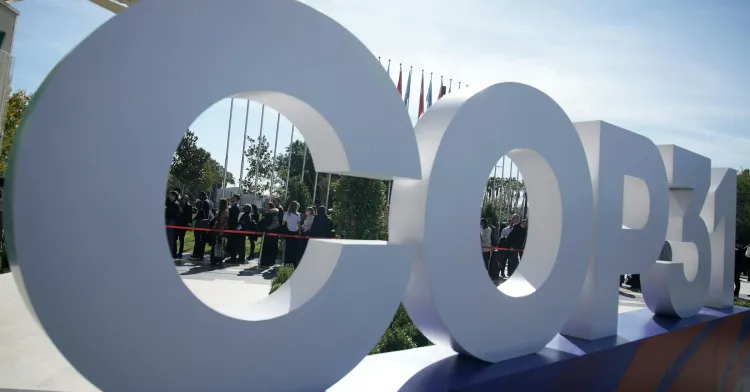
Heike Henn, a state secretary in Germany's environment ministry, said an honest global stocktake in 2028 requires an up-to-date, independent assessment of climate change. EU representatives also pressed for timely publication at COP31, which the United Nations says runs from November 9 to 20, 2026, in Antalya.
The assessment also faces financial constraints. According to Carbon Brief, the IPCC secretariat estimates that completing the Seventh Assessment Report, known as AR7, will require approximately 33 million Swiss francs. It warned that contributions continuing at their 2025 level would leave the panel's trust fund exhausted by the end of 2028, preventing delivery of the reports.
The United States, historically the IPCC's largest donor, has made no financial contribution since 2024, before President Donald Trump's second term, Carbon Brief reported.
What the science establishes
The dispute over the report's timing does not change the IPCC's findings: Human activity is unequivocally the main cause of global warming. Greenhouse gas emissions have raised the global average temperature substantially since the late 19th century.
In its 2021 assessment, the panel said global surface temperature during the preceding decade was likely higher than at any point in roughly 6,500 years. Multi-century periods warmer than today would have to be sought at least 125,000 years in the past.
Niklas Höhne, a climate researcher at the NewClimate Institute, said the scientific consensus is unequivocal. The climate damage researchers predicted has largely materialized as forecast, he said, and in some cases has been worse.
Germany backs efforts against climate disinformation
Trump has dismissed human-caused climate change as a deception, helping fuel false claims circulating on social media and elsewhere. Höhne identifies right-wing parties, oil and gas companies, and powers seeking greater chaos, including Russia, as major disseminators of climate disinformation.
Brazil launched an initiative against climate disinformation last year while hosting the climate conference, and Germany joined it. Participating countries called for action against denial, disinformation and targeted attacks on environmental journalists, climate activists and researchers. UN Secretary-General António Guterres supported the initiative, saying scientists should not have to fear speaking the truth.
On November 12, 2026, Henn announced Germany's intention to donate €2 million to the Global Fund for Information Integrity on Climate Change at the German Pavilion at COP31, according to UNESCO.
UNESCO manages the fund, which began with a $1 million contribution from Brazil. Its first 10 grantees, selected at COP30, have been investigating who sponsors climate disinformation and how it spreads, as well as corporate greenwashing and attacks on environmental defenders.
Johan Rockström, director of the Potsdam Institute for Climate Impact Research, said distrust of science is growing, pointing to vaccine skepticism during the pandemic as another example. He said rising populism challenges fact-based knowledge and pledged to defend science.
At the COP31 Leaders' Summit, Guterres said: "Science is not telling us to surrender. It is telling us to fight harder." He urged leaders to advance a new Climate Justice Compact encompassing a just transition away from fossil fuels, stronger protections for people, more climate finance and international cooperation.
AI answers weaken under user pressure
Wars, rising prices and political shifts to the right have pushed climate action down many governments' agendas. The international climate movement has also lost momentum after bringing millions into the streets. Those changes have contributed to less frequent coverage by news outlets focused on immediate events, even as more people turn to artificial intelligence for information.
A UNESCO report developed with University College London and presented at COP31, "Can We Trust AI on Climate?", found that language models generally began with correct answers to questions about climate change and climate action. But they often agreed with users who challenged those answers or supplied false claims, a behavior the authors describe as sycophancy.
In tests involving 15 large language models, repeated disagreement from users reduced climate-fact accuracy by 31 to 35 percentage points. In about eight out of 10 cases, models gave up the correct answer after the first mild expression of disagreement.
The report examined up to 33 AI models across its tests. Even the strongest averaged only 75% accuracy when judging whether new evidence supported or contradicted established climate facts. On assessing how climate policies work together, accuracy was 33.8%, barely above the 33.3% expected from random guessing.