Areas covered by the order
Central Roding is covered except for the Kaserne and Stadthalle. The order also includes the Roding districts of Regenpeilstein, Hofmühl, Wiesing, Fichtenberg, Stadlhof and Kaghöfl, along with the cadastral areas of Kalsing and Obertrübenbach.
All of Michelsneukirchen and Rettenbach are affected. In Falkenstein, the order applies everywhere except Marienstein, Hagenau, Schweinsberg, Breitenbach, Birkenau and Neuhofen.
The notice also covers specified villages in the municipality of Zell; Beckenschlag, Dürnberg and Losenhof in the municipality of Wald; and Zumhof in the municipality of Brennberg.
Restrictions on water use
According to the notice from Kreiswerke Cham and the Cham health office, the water fails the microbiological requirements of the German Drinking Water Ordinance, Section 6, Annex 1, Part I. It therefore does not legally qualify as drinking water and must be boiled before human consumption until further notice.
Residents may still shower, bathe and wash their hands, but should avoid swallowing the water. Small children should be supervised while bathing. Only boiled tap water or bottled drinking water should be used to brush teeth.
Toilet flushing and laundry washing remain permitted. Dishwashers may be used on a full cycle at a temperature of at least 60°C.
Earlier outages and the suspected source
Mittelbayerische reported that taps in higher-elevation parts of Roding ran dry or produced only a trickle on November 11. By Monday, water was flowing again, but the detection of enterococci, intestinal bacteria, meant it should not be consumed without boiling.
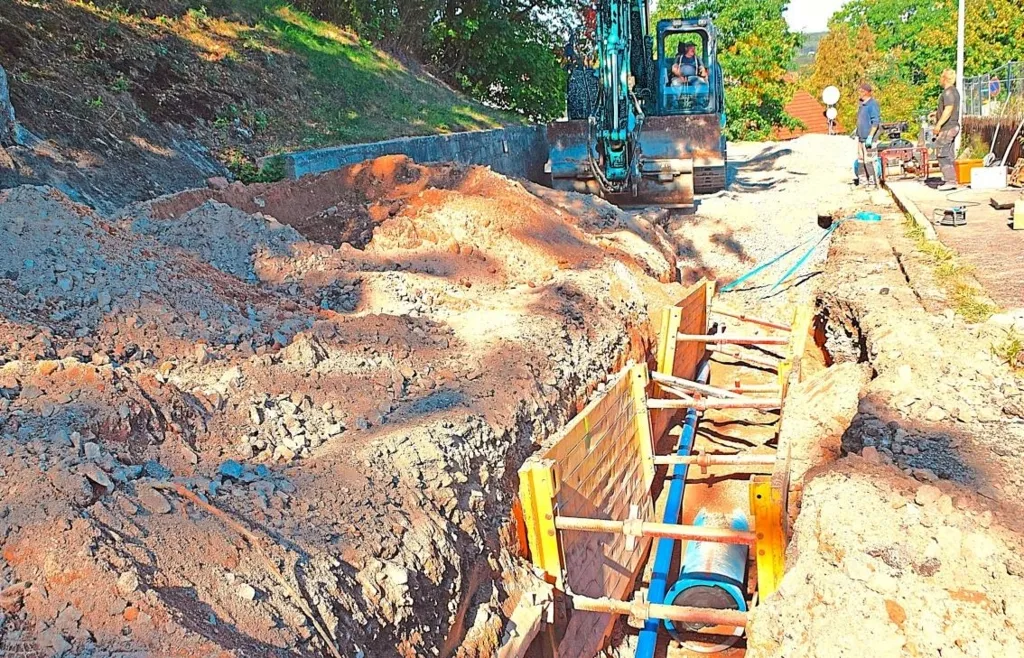
According to idowa and the official notice, investigators suspect the contamination is connected to emergency measures taken after major damage to the main pipeline between Neubäu and Roding. The damage occurred during reconstruction work on Nanzinger Weg overnight from Wednesday into Thursday in the week before the order. The source of the contamination remains under investigation.
What the bacteria indicate
Kreiswerke Cham and the health office describe intestinal enterococci and coliform bacteria as indicators of possible hygiene problems in a water supply. Testing looks for them not because they necessarily cause illness themselves, but because their presence can signal contamination.
Their detection does not establish that anyone has become ill. Officials issued the boil-water order as a precaution because they could not rule out a health risk.
The authorities say consuming microbially contaminated water can cause diarrhea, abdominal pain, nausea, vomiting and fever. If those symptoms occur, infants, small children, older adults and people with weakened immune systems should receive medical advice.
Flushing and expanded testing
After learning of the findings, the utility began flushing affected equipment and the distribution network; that work is continuing. It has also substantially expanded microbiological testing and is collecting additional samples at numerous locations across the supply area while investigating how the bacteria entered the system.
The order will remain in effect until repeated tests confirm that the water meets drinking-water quality requirements and the health office formally lifts the measure. Affected residents will be notified as soon as the water again meets the microbiological requirements.