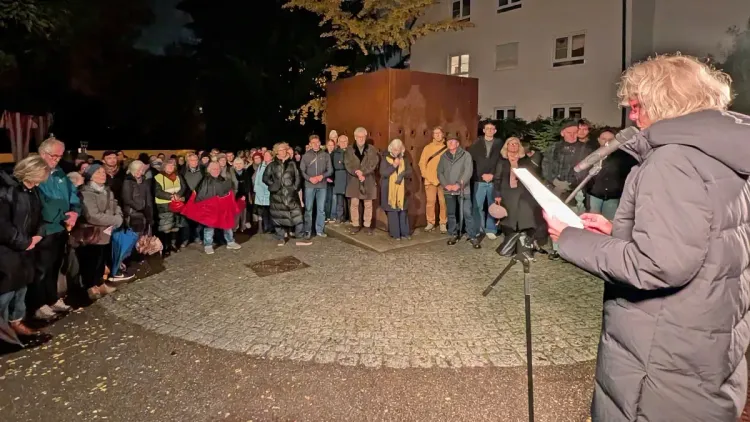
Residents gather despite the barrier
Biesdorf residents gathered around the enclosure at the Gnadenkirche on Sunday to honor the war dead, B.Z. reported. The memorial had been restored in October at the request of an initiative led by Helmut Lessing.
Lessing condemned the congregation's decision to screen it off. He told B.Z. that the monument serves relatives as a substitute for a cemetery because most of those commemorated have no grave available to them.
The Evangelische Versöhnungskirchengemeinde Berlin-Biesdorf says the work on the eagle was unauthorized. In a statement on its website, the congregation said three men were observed attaching the figure on October 17, 2026. Church leaders had neither agreed to nor commissioned the work, it said, adding that the congregation had filed a criminal complaint over the unauthorized construction work.
Conflicting assessments of the fastening
Church advisory council member Michael Zippel told B.Z. that the congregation could not determine whether the eagle had been properly secured, yet bore responsibility for safety. He criticized how the work had been carried out, describing it as improper and clandestine. He nevertheless expected the monument preservation authority to order the fencing removed.
Stone sculptor Andreas Hoferick, who carried out the restoration, said the roughly five-kilogram eagle was firmly attached with an iron bolt three centimeters thick. He maintained that the fastening was safe.
According to B.Z., Hoferick has spent decades working on historical reconstructions, including more than 20 years on the Berlin Palace.
An older disagreement over what to restore
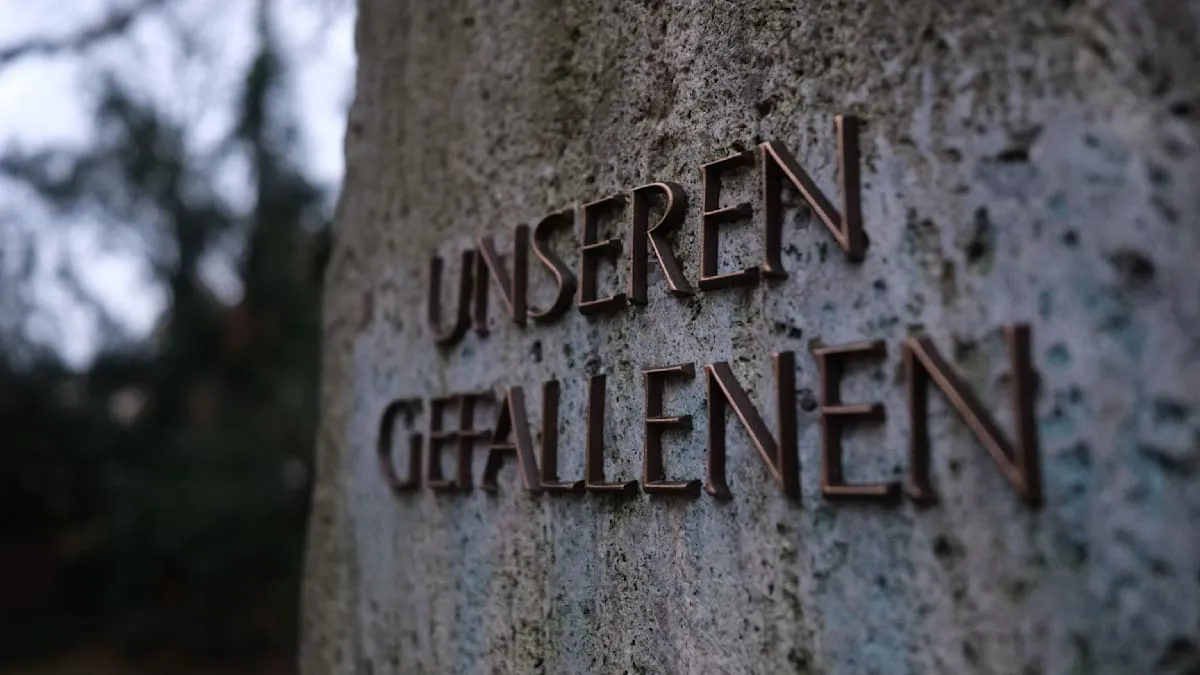
The obelisk commemorates 86 Biesdorf villagers killed in World War I. Funded by donations from residents, it was dedicated on June 18, 1922, according to a 2014 report by evangelisch.de about Helmut and Susanne Lessing's campaign to restore its original appearance.
The memorial belongs to the Evangelische Kirchengemeinde Biesdorf and stands on church property. A 2020 taz report traced that arrangement to the SPD-led Lichtenberg district's refusal to allow war memorials on public land: such proposals usually came from German-national veterans' associations. The church instead permitted the Biesdorf memorial on its grounds.
The eagle and the iron chain that once surrounded the monument disappeared in the 1970s, taz reported. The newspaper described the original figure as a Prussian eagle clutching a globe atop the obelisk.
The congregation says a June 5, 2013, church council decision led to restoration of the memorial in the form it had retained since the 1970s, without the chains or eagle. According to the congregation, that version is protected as part of the "Dorfanger Alt-Biesdorf" heritage ensemble.
By 2014, the eagle's meaning had become a central point of disagreement. Then-pastor Wolfram Geiger told evangelisch.de that it represented power and that recreating the original monument would make a political statement the congregation did not wish to support. Lessing argued instead that the eagle embodied Christian ideas of divinity and immortality. He also maintained that it was an eagle of the Weimar Republic, not an imperial one.
The congregation rejected accusations of neglect at the time. Evangelisch.de reported that the foundation and base had been repaired, the monument's stability improved and its inscription panels cleaned. District representatives and local institutions also opposed restoring the original design.
District politics over war memorials
The restoration dispute also reached the Marzahn-Hellersdorf district assembly. According to taz, an AfD motion seeking heritage protection and historically faithful reconstruction of the Biesdorf memorial won a majority with CDU and SPD support in fall 2019.
In February 2020, the SPD reversed its position. It proposed turning World War I monuments into memorials against war, expulsion and genocide, accompanied by explanatory panels. The motion's title called for memorials of warning rather than monuments and opposed war memorials in Marzahn-Hellersdorf.
Taz reported in 2020 that the district had five World War I memorials: four on church property in Alt-Marzahn, Biesdorf, Kaulsdorf and Mahlsdorf, and one in a municipal cemetery. Hardly any remained in its original historical form.