Leadership roles in Holstebro
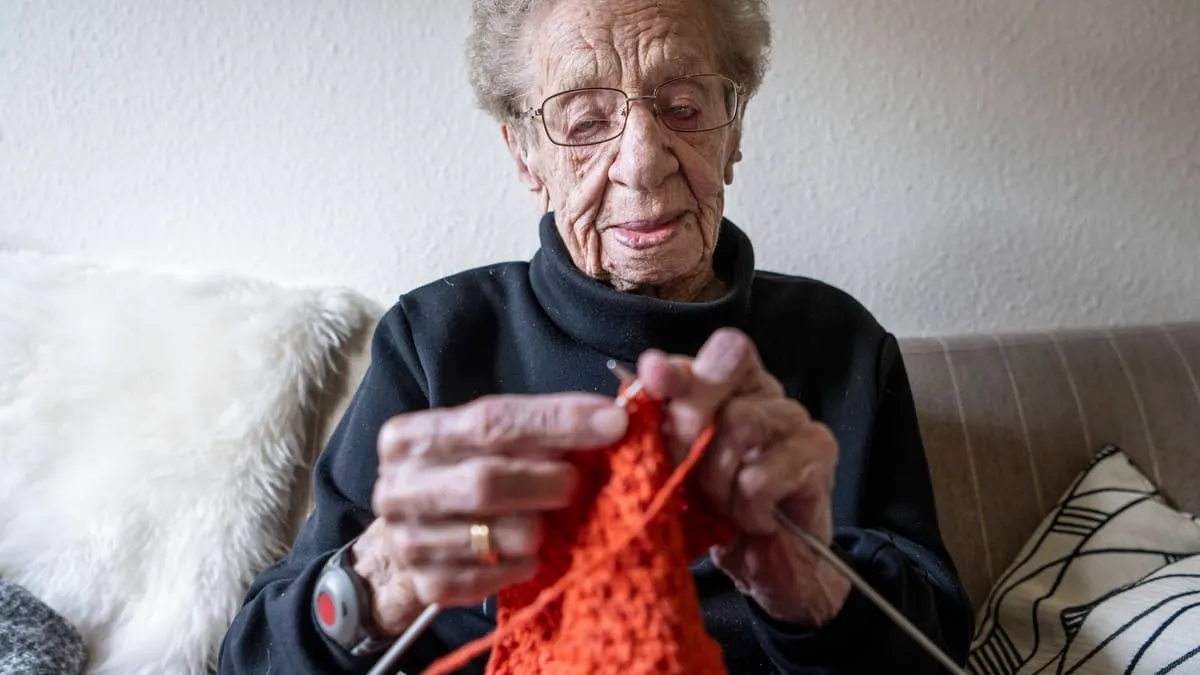
Frihedsbrevet reported on November 16, 2026, that Schwalbe served as acting department group leader and women's group leader in Holstebro from August 1943 to July 1944. The news site examined documents from the Danish National Archives and consulted two historians.
Gry Scavenius Bertelsen, a historian at the Frihedsmuseet, said the acting department group position was a local leadership role. Historian Claus Bundgård Christensen likewise said Schwalbe's standing went beyond ordinary membership.
A regional party official recommended Schwalbe for appointment by describing her as a loyal member. Bertelsen said that assessment indicated recognition by local party leaders, but did not establish Schwalbe's personal beliefs. Christensen also cautioned that the documents did not demonstrate any specific activities.
Her husband, Laurits Wilhelm, had been acting leader of the party's Holstebro branch since November 1942, according to Frihedsbrevet's archival review. His position, known as afdelingsleder, was effectively that of a local chairman.
Both resigned their leadership posts in July 1944, citing several reasons they said they could not explain further. The party leadership added that neither could take a prominent role in the party. They initially remained members.
Membership and the limits of the records
Schwalbe had acknowledged joining the DNSAP before the leadership records emerged. She told TV Midtvest that her husband had pressured her to join, that politics had never interested her and that she had not sympathized with National Socialism. Her membership application dates to July 1941; she was admitted the following month.
Her membership also appears in the Bovrup card index, a register of DNSAP members. The entry spells her surname "Schalbe," but details including her birth date and address match.
University of Copenhagen historian Charlie Krautwald told DR that the index records whether someone signed up, not their reasons for joining, the duration of their membership or whether they paid dues. Inclusion does not necessarily mean a person was active in the party.
Founded in 1930, the DNSAP drew heavily on Adolf Hitler's German Nazi party, the NSDAP. Christensen emphasized that it contested elections to Denmark's parliament, the Folketing, where Nazis won seats in 1939 and again in 1943.
Revelations follow a biography and longevity record
Kristeligt Dagblad first disclosed Schwalbe's DNSAP past in October 2026. Frihedsbrevet's November report added evidence of the two leadership positions.
The disclosures came during a month of public attention to her life. Gyldendal published her biography, "Vi skal have noget at grine af," on October 8, 2026. Six days later, on October 14, she became Denmark's longest-lived person ever, at 112 years and 218 days.
The biography's authors are journalist Frederik Helms and TV photographer Line Morell Holm, both employees of TV Midtvest. Gyldendal said neither the authors nor the publisher knew of Schwalbe's party membership before Kristeligt Dagblad reported it.
Family seeks privacy; publisher plans an addition
Schwalbe's family told Frihedsbrevet that the new coverage had deeply affected her and that she could not comment on the information. The family requested privacy from the media on health grounds.
Gyldendal said it would review the biography more thoroughly following the revelations. The next edition will include an addition based on the new information.