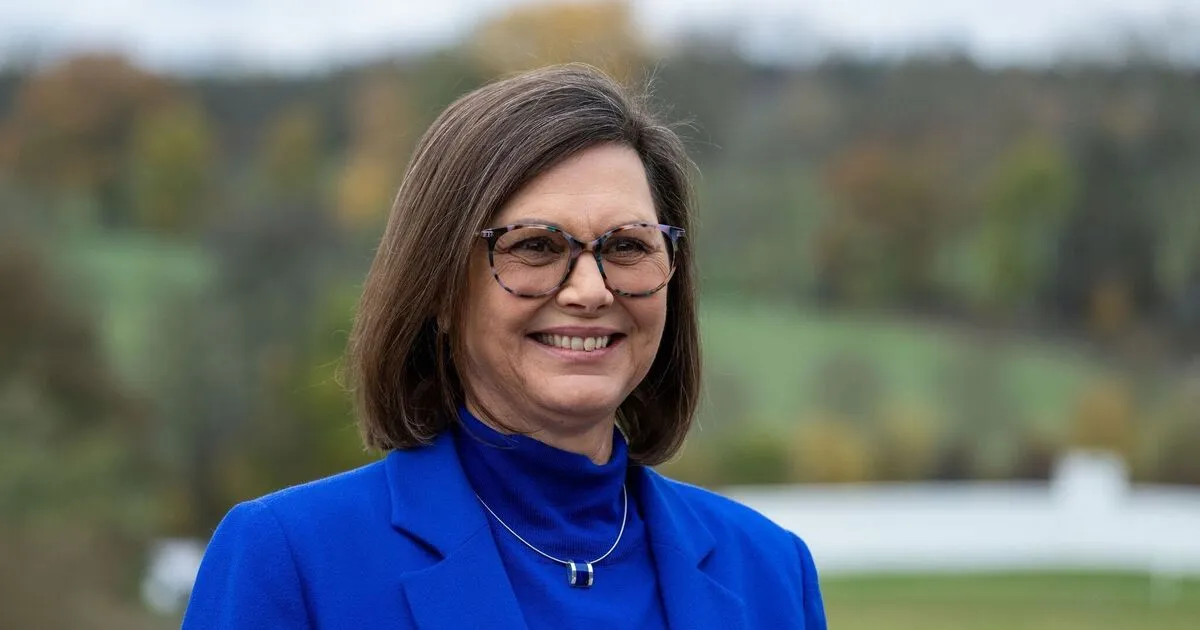
Formal proposal expected in Berlin
Merz intends to put Aigner's name before CDU leadership bodies meeting in Berlin on Sunday and Monday, dpa reported, citing several senior sources in the CDU/CSU alliance, known as the Union.
CSU leader Markus Söder first suggested Aigner in April. Merz initially stayed out of the public debate before committing to a female candidate. Several names circulated, but support for Aigner grew among CDU state leaders in the days before the reported decision.
Aigner has led the Bavarian state parliament, the Landtag, since November 2018. She previously served as federal minister for food, agriculture and consumer protection in Angela Merkel's cabinet from 2008 to 2013, according to rbb24.
News of her candidacy emerged as Bavaria mourned Deputy Minister-President and Free Voters leader Hubert Aiwanger. Merkur reported that Aigner, dressed in black and visibly shaken, was signing a book of condolence when the first reports appeared.
Support extends beyond the governing parties
SPD leader Lars Klingbeil has said his party would welcome and support Aigner's candidacy. The Bundesversammlung will elect Frank-Walter Steinmeier's successor on January 30, 2027. The Union and SPD hold a majority of about 50 votes in that assembly, according to dpa.
Merkur reported on November 6 that the assembly has 1,260 members, with roughly 680 votes held by the CDU/CSU and SPD. It also reported sympathy for Aigner among many Greens, whose delegation has nearly 200 votes, all 18 Free Voters delegates and the 11-member FDP group.
Public endorsements by early November included Baden-Württemberg CDU chairman Manuel Hagel, Berlin CDU party and parliamentary group leader Stefan Evers, and Brandenburg Minister-President Dietmar Woidke of the SPD, according to the Lausitzer Rundschau and rbb24. All three eastern CDU minister-presidents also backed her: Saxony's Michael Kretschmer, Thuringia's Mario Voigt and Saxony-Anhalt's Sven Schulze.
Green parliamentary group leader Britta Haßelmann praised Aigner's approachable and attentive manner in her previous political roles, despite criticizing Merz's handling of the selection. Aigner herself has largely avoided commenting on the speculation. In early November, she told Die Zeit that she would welcome bringing the Greens on board.
Within the Union, Mechthild Heil, chair of its women's group in the Bundestag, welcomed Aigner's nomination in comments to the Augsburger Allgemeine. Former CSU leader Horst Seehofer, a longtime supporter, told the same newspaper that Aigner was the right person for the presidency at this time.
CSU General Secretary Martin Huber said the breadth of support suggested Aigner could achieve a strong result in the first round, describing it as a strong result for the democratic center, the Lausitzer Rundschau reported. Union parliamentary group leader Thorsten Frei also expected support beyond the coalition, while noting other highly qualified women, including Bundestag President Julia Klöckner, Education Minister Karin Prien and former CDU leader Annegret Kramp-Karrenbauer.
Merz challenged over the selection process
The favorable response to Aigner has not spared Merz criticism. Former Green leader Omid Nouripour told the Kölner Stadt-Anzeiger that the chancellor had again lost control of an important personnel decision. Haßelmann told dpa that the Union's unprofessional search was unworthy of the presidency and criticized how the process had been mishandled.
CDU foreign policy specialist Roderich Kiesewetter had already criticized the delays on ZDF's "Markus Lanz." Referring to Merz and the difficult federal elections ahead in 2029, he said such inept handling of a senior appointment was bitter to witness.
Merz still did not name his choice publicly on Friday. Speaking at a Westfalenpost event in Hagen, he said the CDU and CSU had agreed on a procedure and that he was among those following it, the newspaper reported. He reiterated that he had settled on a woman.
The AfD and the Left oppose Aigner. AfD leader Tino Chrupalla argued on X that a candidate from the Union, with its political firewall against his party, could not unite all Germans. Left parliamentary group leader Heidi Reichinnek had called for a nonpartisan candidacy.
Political implications and preparations for the vote
An Aigner presidency would probably affect any future bid for the chancellorship by Söder or CSU Interior Minister Alexander Dobrindt as potential successors to Merz, dpa noted. In Berlin political circles, the prospect of the CSU holding both the presidency and the chancellorship is considered difficult to imagine.
Merkur reported that Aigner was expected to spend roughly two and a half months introducing herself to presidential electors across Germany's federal states ahead of the vote.