Restricted attendance at the Marakana
The stadium, Red Star Belgrade's home and widely known as the Marakana, normally holds around 55,000 spectators. The Serbian soccer association, FSS, expects only about 5,000 for Friday's game, which kicks off at 8:45 p.m. and will be broadcast by RTL.
Germany's away section will also remain empty. A 200-person delegation will accompany the German team inside the stadium, including 50 particularly loyal supporters.
For Klopp, the prospect brings back memories of playing for Mainz 05 in the second division during the 1990s, sometimes before virtually empty stands. But the 59-year-old said the more significant comparison was with games during the COVID-19 pandemic, when teams experienced how profoundly the absence of spectators changed the atmosphere.
Racist behavior brings fines and stadium restrictions
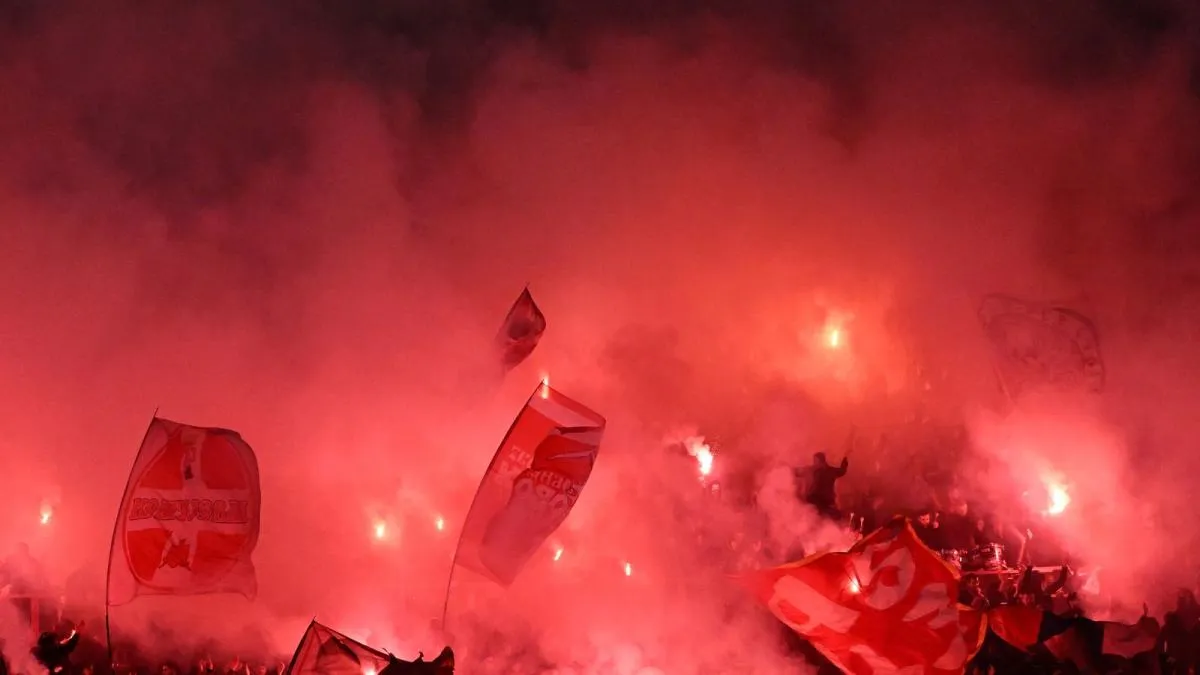
UEFA imposed the one-match stadium closure and a fine of 50,000 euros after racist and discriminatory behavior by Serbian supporters during Nations League defeats to Greece and the Netherlands, both by 2-1 scores.
Additional fan offenses brought nearly 80,000 euros in further fines. UEFA also imposed a ban on away supporters for one match, suspended for two years.
The FSS declined to comment on the punishment. Some media outlets dependent on the right-wing populist government voted out last month portrayed the sanctions as excessively harsh punishment for Serbian soccer.
Serbian supporters had already faced restrictions for the teams' previous meeting in Munich on October 1, 2026. The Serbian association was barred from selling tickets to its fans for that game, which Germany won 2-0 to give Klopp his first victory as national coach.
Germany's quarterfinal hopes
The Belgrade fixture is Germany's next-to-last group game. Germany enters it third in Nations League A, Group 2, with five points, behind the unbeaten Netherlands and Greece on eight points apiece. Serbia is last with no points. Only the top two teams advance to the quarterfinals.
Klopp selected 24 players for the November internationals against Serbia and the Netherlands. Niclas Füllkrug returns to the national team, while Borussia Mönchengladbach's Wael Mohya, an under-21 international, has received his first senior call-up.
Entrenched problems among ultra groups
The disciplinary cases reflect a deeper problem with certain Serbian fan groups. Dpa describes ultra groups with extreme nationalist and racist views and a readiness to use violence, as well as infiltration by organized crime and state intelligence services. Radical supporter groups in Serbia and elsewhere in the Balkans have been infiltrated by criminals and police informants for decades.
In September, supporters used chants and banners to honor Serbian war criminal and mass murderer Ratko Mladić, who had died shortly beforehand. The association's warnings against political messages, pyrotechnics and violence in stadiums have gone unheeded.
The overlap between criminal networks and organized supporters was evident when alleged mafia boss Veljko Belivuk was arrested in Belgrade in February 2021. Belivuk, also a significant figure in international drug trafficking, led Partizan Belgrade's Principi ultras. Police found firearms and drugs in the underground areas of Partizan's stadium.
A ground with a formidable history
The Marakana once accommodated about 110,000 people, a scale that drew comparisons with Rio de Janeiro's Maracanã. Its history includes Uli Hoeneß's missed penalty in the shootout against Czechoslovakia in the 1976 European Championship final. Bayern Munich supporters also remember the closing moments of the 1991 European Cup semifinal, when Klaus Augenthaler's attempted clearance looped into Raimond Aumann's goal amid deafening celebrations.
Today, the stadium's fiercest atmosphere is largely reserved for derbies. Red Star, whose European nights once featured Dragan Stojković, Robert Prosinečki and Dejan Savićević, now struggles to compete internationally. After missing out on the Champions League and then the Europa League, the club is playing in the Conference League under Albert Riera, whose spell at Eintracht Frankfurt ended in failure last year.