Disputed language returns at the press conference
Von der Leyen told the summit's closing press conference that she had discussed the proposal with Canadian Prime Minister Mark Carney. She first made the idea public in September.
Acknowledging that a country outside Europe cannot join the EU, she proposed pursuing a shared ambition and vision instead of accession. She described associate membership as an untested concept, but said the two sides had the ambition, trust and creativity to develop it together.
Germany had already secured support from other EU governments to exclude both "associate membership" and "associate member" from the summit declaration. EU diplomats told t-online that Berlin objected because the concept remained undefined and the terminology had not been agreed with member states. Deutsche Welle identified France and Italy among the other countries raising objections and reported that existing EU treaties do not provide for such a status.
Carney downplayed the disagreement over terminology. "The name doesn't matter," he said, according to Deutsche Welle. He nevertheless used "associate member" himself at a summit business roundtable while sitting beside von der Leyen.
Two different visions of associate membership
The dispute also involves competing uses of the same term by two politicians from Germany's CDU. Merz has promoted associate membership for Ukraine since the spring, before von der Leyen applied it to Canada, t-online reported.
For Merz, the status could give Ukraine an intermediate step toward full EU membership. His proposal would, for example, let Ukrainian politicians attend EU summits and ministerial meetings without voting rights.
Von der Leyen envisages something different: a status reserved for the EU's closest partners on other continents, rather than European countries eligible to join. She wants those partners involved as closely as possible in EU political decisions, coordination and programs.
According to t-online, the disagreement has caused irritation both among member states and inside the Commission. One Commission employee questioned why von der Leyen insisted on the label while acknowledging that Canada could not become a full member. The outlet also reported speculation that Merz's resistance might partly reflect the lack of broad support for his Ukraine proposal.
An alliance with narrower economic commitments
The declaration instead emphasizes the "Alliance for the Future," conceived as a broader grouping of like-minded countries seeking to strengthen economic security, supply chains, prosperity and their ability to act politically.
Merz endorsed that approach and placed the EU and Canada at its center. In a statement reported by t-online, he said the alliance would bring them closer together, drawing on shared values and deep trust in an increasingly uncertain world.
According to the Council of the EU, the alliance launched at the summit covers six fields. These are trade and regulatory cooperation; digital, research and communications technologies; critical resources and energy; financial services and markets; security and preparedness; and people-to-people ties.
EU governments also scaled back some proposed economic commitments, Deutsche Welle reported. They dropped an explicit objective of deeper financial market integration. Rather than offer each other preferential treatment when taking economic security measures, the EU and Canada now intend to limit any negative effects those measures could have on the other side.
Existing ties and the next deadline
The proposed closer relationship builds on substantial trade and defense cooperation. The Council of the EU put bilateral trade in goods and services at roughly 130 billion euros in 2025, more than 80% above its 2016 level, supported by the CETA free trade agreement.
Canada also became the only non-European country permitted to participate in the EU's 150-billion-euro fund for joint defense purchases, NPR reported. Participation in the Security Action for Europe, or SAFE, instrument allows Canadian suppliers to take part in EU member states' defense procurement, according to the Council.
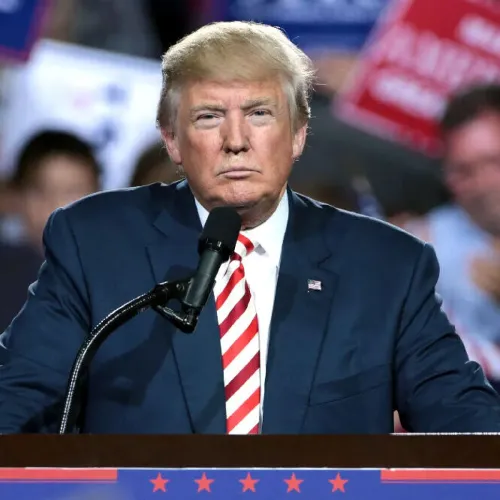
The associate membership proposal has drawn a hostile response from US President Donald Trump. NPR reported that he called it "laughable" and warned that, if he regarded the move as a hostile act, he would impose very serious tariffs or stop trading with Europe in many areas.
Although the fate of the disputed label remains unresolved, the summit set a deadline for defining a closer relationship. The joint statement issued at the 21st EU-Canada summit in Montreal on October 30, 2026, commits the leaders to working toward closer association. According to the Council, they agreed to define an "ever-closer association of Canada to the EU," short of full membership, by the 2027 EU-Canada summit.