
Warnings and surveillance under scrutiny
Bild reported the study, and wa.de covered its findings on October 29, 2026. Shtuni and Stockhammer, who heads the Center for Terrorism and Extremism Research at Danube University Krems, identified failures across the system: an ignored May 2025 warning from Germany's BND intelligence service, reduced surveillance despite the highest risk classification, and a deradicalization program whose suitability was unclear.
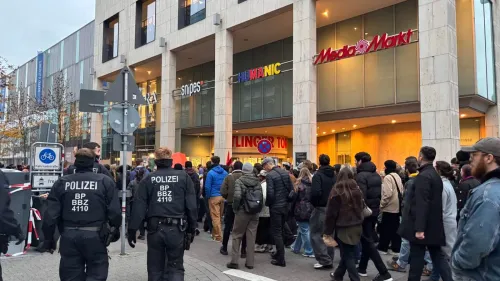
Berlin police president Barbara Slowik Meisel gave an account of the measures police took after Ballout's May 12, 2026, conviction and release from pretrial detention. She said officers classified him as a high-risk case, used a camera to monitor him and tapped his phone. According to Slowik Meisel, the surveillance produced nothing that would have justified an ankle monitor or preventive detention.
The attack and the victim
Ballout drove a van into Berlin's Christopher Street Day (CSD) Pride parade on July 25 and attacked spectators with a machete. Tichys Einblick, in an article republished by wallstreet-online, reported that authorities had long considered him capable of serious politically motivated violence, a classification known in Germany as Gefährder.
The woman killed was a 65-year-old from Poland who had come to Berlin with her daughter. First responders attempted to resuscitate her, but she died at the scene. Another 31 people were injured.
Convictions, detention and release
Ballout had two convictions at the Amtsgericht Berlin-Tiergarten. The first, in February 2022, was for assault and robbery. The second followed his attempt to reach Syria and join the Islamic State.
In May 2025, he traveled through Turkey to Lebanon with that intention. Lebanese authorities arrested him on July 24, 2025, and a military court imposed a three-month prison term for inciting religious and sectarian conflict. After his release, he returned to Germany on November 17, 2025. He was arrested at Berlin Brandenburg Airport and spent months in pretrial detention.
On May 12, 2026, the Berlin court convicted him of preparing a serious act of violence endangering the state and imposed a 22-month juvenile sentence. It postponed for six months the decision on whether to suspend that sentence, releasing him under probation supervision in the meantime. The verdict was not final: prosecutors appealed, seeking a longer sentence that could not be suspended.
Evidence and the attempted arrest
Investigators recovered Ballout's DNA, and no one else's, from the van used in the attack. They also found a machete sheath inside, but the blade that matched it was missing.
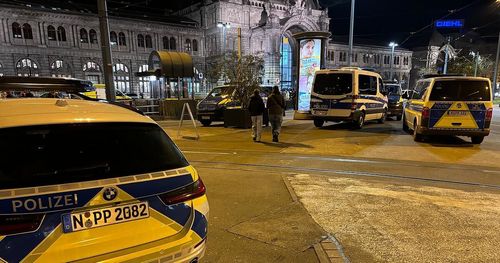
On the evening of July 26, officers from the SEK, a German state police tactical unit, attempted to arrest Ballout at a garden allotment in Spandau, Berlin's westernmost borough. He approached them with a bladed weapon, and officers shot him. Resuscitation efforts began immediately, but he died at the scene.
Police also recovered a confession video from his phone showing a masked person, believed to be Ballout, pledging allegiance to the Islamic State. Reports in September 2026 said he had sent the recording to an Islamic State contact identified as British national Sharmeena Begum. She was arrested in northern Syria that month.
Government considers sentencing change
After the attack, the German government began considering whether to bar convicted terrorists from receiving suspended sentences.