Consumers hold back as investment falls
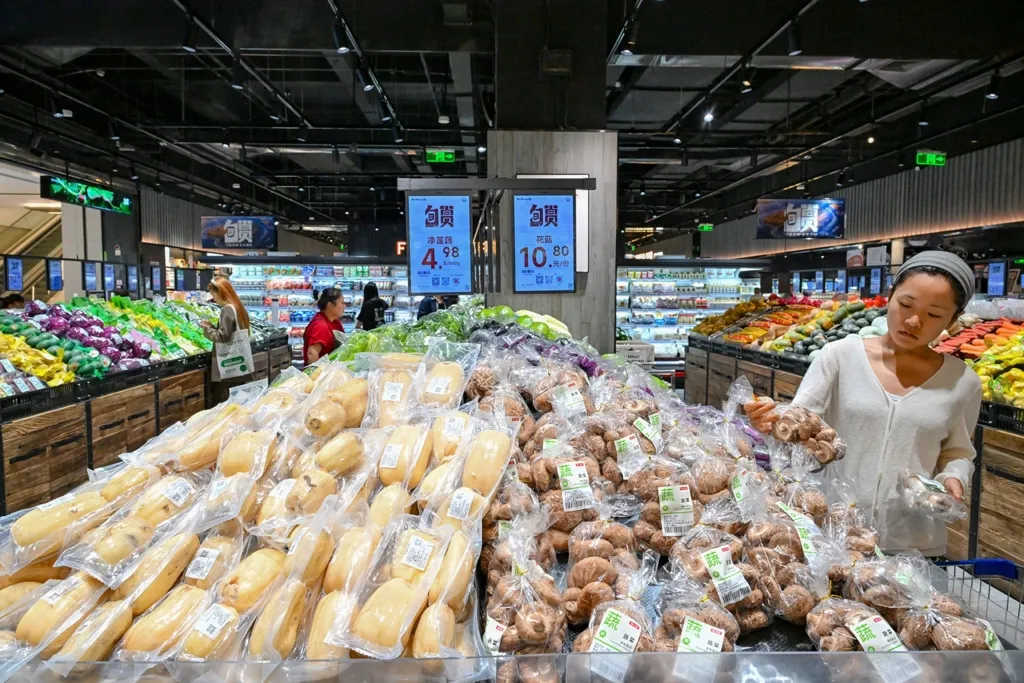
Retail sales increased 0.4 percent from a year earlier, slowing from September's 1.1 percent gain. Industrial production also decelerated, with annual growth of 4.8 percent compared with 5.5 percent the month before.
The investment slump worsened: spending fell 8.1 percent in January through October, compared with a 7.2 percent decline over the first nine months. Property investment dropped 21.6 percent.
The prolonged real estate crisis continues to weigh on consumer sentiment, with many households postponing major purchases. Businesses are also investing less. Even outside property, fixed-asset investment declined 5.1 percent year on year over the first 10 months, although investment in intellectual property products increased 9.2 percent.
There was some easing in the decline in housing prices. According to data cited by Investing.com, new home prices were 2.4 percent below their year-earlier level in October, following a 2.8 percent fall in September. The figures suggested some moderation in the property downturn.
Other household indicators were mixed. The surveyed urban unemployment rate edged down 0.1 percentage point to 5.1 percent. Consumer prices were up 0.7 percent from a year earlier, but inflation slowed for the first time after two consecutive months of increases.
Trade and advanced manufacturing provide support
Exports remained a source of strength as domestic demand struggled. Bureau figures released November 16 put October goods trade at 4.87 trillion yuan, a 31.2 percent increase from a year earlier. Exports rose 28.7 percent, while imports grew 34.7 percent.
Several manufacturing segments also outpaced industry overall. In October, value-added grew 17.6 percent year on year in high-tech manufacturing and 10.6 percent in equipment manufacturing, according to the bureau.
Production gains varied widely by product: output rose 85.9 percent for 3D-printing equipment, 30 percent for lithium-ion batteries and 26 percent for industrial robots. New energy vehicle production increased 17.1 percent.
Annual growth target still seen within reach
The weak October readings followed a modest recovery in quarterly GDP growth. Bureau data released October 19 showed that the economy expanded 4.5 percent year on year in the third quarter, exceeding the 4.4 percent forecast in a Reuters poll. Growth had fallen to 4.3 percent in the second quarter, its lowest rate in more than three years.
Growth averaged 4.6 percent over January through September, within the government's full-year target range of 4.5 to 5.0 percent.
In a November 16 assessment, ABN AMRO analysts said China would likely meet that 2026 target despite October's weakness. They cautioned, however, that growth depended heavily on exports and that policymakers would probably need to provide more support to safeguard GDP growth in 2027.
State support has had limited results
The government has been trying to lift economic activity through state assistance, so far with limited success.
Reuters reported October 19 that Beijing had assigned 550 billion yuan, about $82 billion, in unused government debt quotas to relieve financial pressure on local governments and increase infrastructure investment. Authorities also used an 800 billion yuan policy-based financing tool to support infrastructure spending and broadened loan interest subsidies for small private businesses and consumers.