Coalition talks await party approval
National co-chairs Ines Schwerdtner and Luigi Pantisano reaffirmed their support for a Linke-led government in comments to Redaktionsnetzwerk Deutschland (RND). They said Berlin had voted for left-wing policies and pledged to make the city affordable.
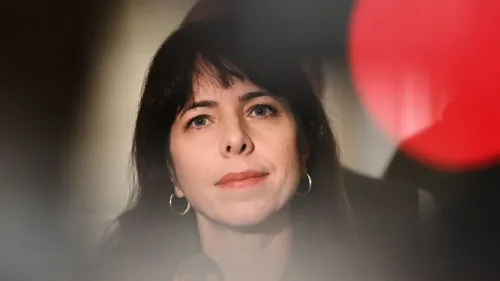
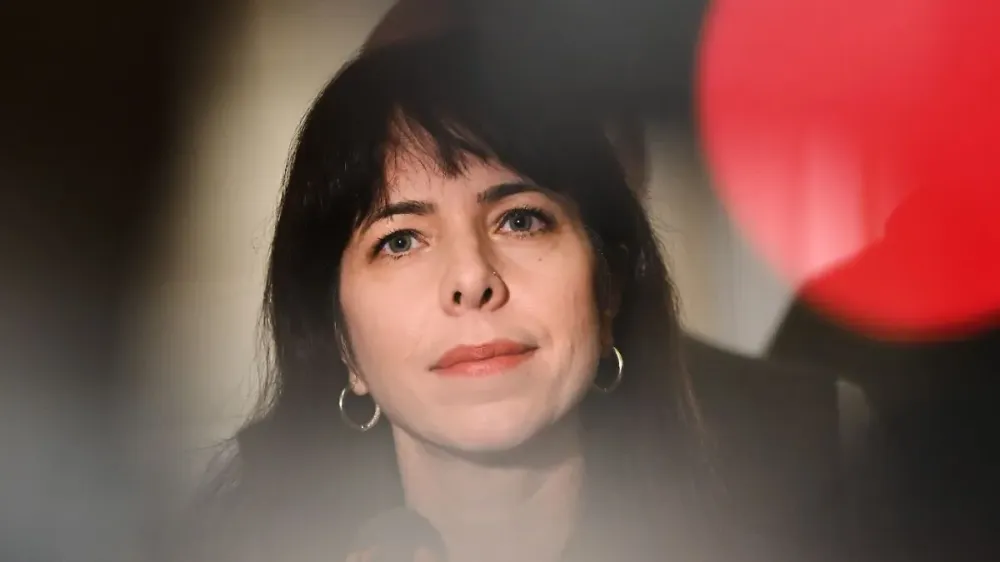
The Berlin party congress on October 31, 2026, will decide whether to open formal negotiations with the Greens and the Social Democratic Party (SPD). Both prospective partners have already approved talks. A clear majority of Linke delegates is expected to agree, which would allow negotiations to begin Monday. Eralp hopes to become Berlin's governing mayor.
Eralp told RBB-Inforadio before the congress that she expected a very large majority to back her. According to security sources cited by dpa, she received police protection in connection with protests announced at the venue.
The party's youth organization, Linksjugend Solid, opposes the proposed alliance and advocates a strong socialist opposition in the state legislature and on the streets instead. Social media announcements also called for a rally outside the congress, accusing the party of betraying voters and demanding consistent solidarity with Palestine and the transfer of property into common ownership.
Family safety and the antisemitism dispute
Der Spiegel reported that Eralp's internal comments on an interview revealed that she and her husband feared Hamas sympathizers in circles around Berlin's Linke. The account intensified debate about the party's response to antisemitism and its plans to form a government.
According to tagesschau.de's account of the Spiegel report, Eralp declined to comment explicitly on Hamas sympathizer Ibrahim Ibrahim because she feared risks to herself and her family. Ibrahim is said to have ties to the Popular Front for the Liberation of Palestine (PFLP), which Germany's domestic intelligence service classifies as a terrorist organization.
Schwerdtner and Pantisano told RND that a campaign against Eralp and Die Linke had begun when a Berlin election victory and the party's commitment to transferring housing into common ownership became credible prospects. They said concerns about family safety were being exploited for headlines and that neither media coverage nor real estate companies would intimidate them.
Support extended beyond the two co-chairs. More than 100 Linke politicians signed a statement backing Eralp and the Berlin party organization, tagesschau.de reported. They included Bundestag Vice President Bodo Ramelow, parliamentary group leader Heidi Reichinnek and longtime party figure Gregor Gysi.
Before exploratory talks began, Linke, the Greens and the SPD agreed on a declaration addressing antisemitism, Israel's right to exist and the protection of Jewish life. The parties intend to include it in their coalition agreement, according to rbb24. Proposed penalties for violating its principles extend to expulsion from the parliamentary group.
Election result gives the alliance a majority
Die Linke finished first in Berlin's September 20, 2026, state election with 25.7 percent of the vote. The CDU received 18.8 percent, the AfD 16.3 percent, the Greens 14.3 percent and the SPD 12.1 percent. The incumbent CDU-SPD coalition lost its majority.
A Linke-Greens-SPD government would control 91 seats in Berlin's new state legislature, the Abgeordnetenhaus, putting it 14 seats above the absolute-majority threshold, rbb24 reported. A possible CDU-Greens-SPD alliance would exceed that threshold by only two seats.
Housing plans face federal opposition
The three prospective partners' exploratory agreement calls for housing companies with more than 10,000 apartments to be brought into common ownership. It also proposes approving construction of 100,000 apartments in the coming years and capping rent increases at state-owned housing companies at 2 percent, according to rbb24.
Other provisions include a Berlin initiative in the Bundesrat to seek proceedings to ban the AfD. Higher taxes and fees would raise at least 400 million euros in additional revenue.
The housing ownership proposal is the agreement's most nationally contentious element, according to dpa. It would cover about 160,000 apartments belonging to five companies. Transferring them into common ownership with compensation, as provided for in Germany's Basic Law, would be unprecedented in the country. The conservative-Social Democratic federal government wants to block the plan through new legislation.
Berlin CDU chairman Stefan Evers sharply criticized the exploratory agreement, saying the SPD and Greens had capitulated to a radical Left party that he described as partly antisemitic. He also argued that the proposed ownership transfers would cost billions without creating a single new apartment.