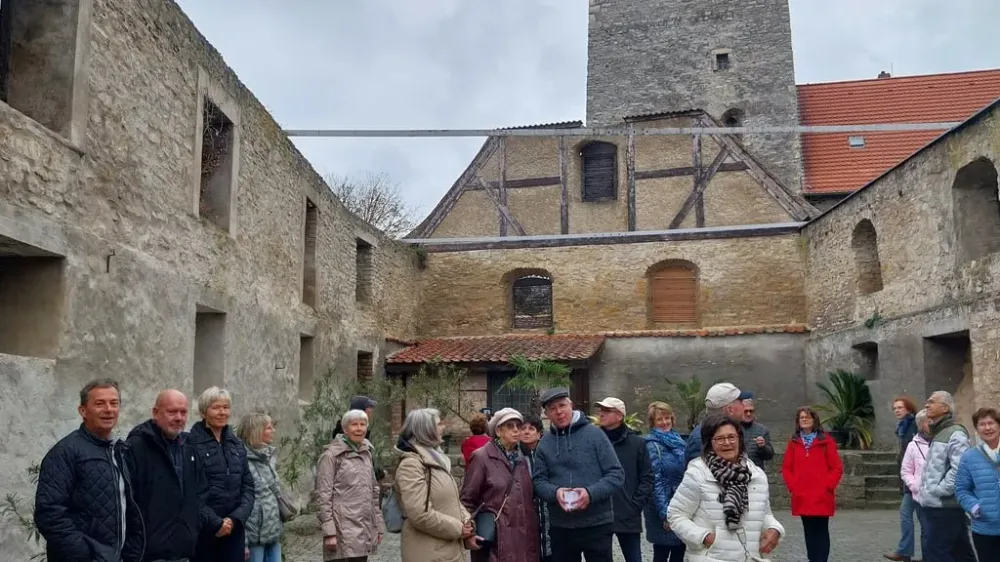
Monthly tours from cellar to tower
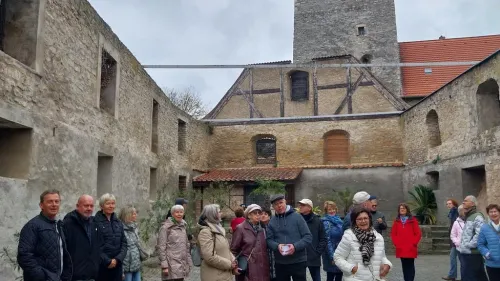
Lachmuth leads the public tours on behalf of the town. According to Egeln's published schedule, they run at 2 p.m. on the first Sunday of each month from February through November, taking visitors from the cellar to the tower room.
Coffee and cake are available afterward in the castle's historic café. Visitors can also arrange tours outside opening hours in advance.
The castle is one of several attractions bringing visitors to Egeln. Volksstimme also points to the Klosterkirche, artists' studios and the town's range of cultural events.
Funding secured for the museum
The increased interest comes in a year when the future of the town's Museum für Vor- und Frühgeschichte at the castle was secured for the coming years. As Volksstimme reported on July 9, 2026, the district council approved a motion by the SPD/GRÜNE/WG group, rejecting the district administration's proposal to terminate a funding agreement.
Dated December 31, 1996, the agreement provides an annual district subsidy of 12,782 euros to maintain the museum.
Founded in 1933, the museum has occupied the castle's gatehouse and keep since their restoration in 1993. The Museumsverband Sachsen-Anhalt describes it as the only specialized museum of its kind in the northern Harz foreland. Its largest department is a scientific collection devoted to the settlement history of the Egelner Mulde region.
Visitors can climb the 36-meter-high keep as part of their museum visit, according to the town. Another exhibition room, established in 2012 in connection with the castle's inclusion in the Schwedenstrasse, explores Wasserburg Egeln's role as the residence of Field Marshal Johann Banér, the museum association says.
A historic site with year-round cultural uses
The museum association dates the castle complex to the 12th century. The town records its first mention in 1206/1207, its conquest by the Edlen von Hadmersleben in 1250 and its rebuilding as a Renaissance castle in the 16th century.
Egeln took ownership of the complex in October 1995 and has a long-term goal of developing it into the town's cultural center. Today, the upper castle hosts events throughout the year on its open-air stage, in its creative center and in its cellar theater.
The site also accommodates civil weddings in the museum foyer and celebrations in the Romanesque vault. Overnight guests can stay in four castle-style rooms in the Palas, while the historic café has three rooms with a total of 54 seats.