Federal warning stops short of disclosing specific intelligence
The Federal Office for the Protection of the Constitution (BfV) told Münchner Merkur that parts of the left-wing extremist scene and some groups associated with foreign-related extremism could participate in the nationwide demonstrations.
The agency described efforts to insert extremist ideology into legitimate democratic debate and radicalize public protests as an established tactic of left-wing extremists. It declined to discuss specific intelligence findings about the upcoming rallies.
The Federal Ministry of the Interior, meanwhile, said it had seen no concrete calls for violence. A ministry spokesperson told tagesschau on October 29 that parts of the left-wing extremist scene and isolated groups from abroad were taking up the calls to demonstrate and helping mobilize participants.
A new group draws more than 140,000 non-binding registrations
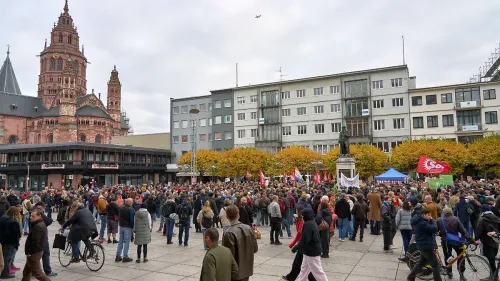
Tens of thousands of teenagers and young adults plan to demonstrate in German cities. By October 27, more than 140,000 people had registered through the initiative's website, compared with barely 10,000 a week earlier, according to taz. Those registrations are non-binding; Stuttgart and Cologne had the highest totals, at about 12,000 each.
Of the 24 demonstrations scheduled for October 31, the initiative itself is organizing five: Hamburg, Berlin, Cologne, Frankfurt and Munich. Other local groups are responsible for the remaining events, according to taz and the Hessian broadcaster FFH.
The initiative consists of about 30 people, ages 18 to 28, who met through social media, taz reported on October 27. Its first press spokesperson, 18-year-old Akram Selo, said the website was built with AI assistance and the slogan came from social media.
Organizers reject allegations and fears of violence. Their website says the protest must remain peaceful without exception and that violence against people or property is incompatible with the initiative's principles. Alongside its education, climate, health and affordability concerns, its six published demands include opposition to conscription and a call to protect civil rights rather than expand surveillance, tagesschau reported.
The Bundesschülerkonferenz, the federal pupils' conference, has distanced itself from the demonstrations because it considers the initiative's organizational structure unclear. According to tagesschau's October 29 report, it has announced a separate protest in Berlin on November 20. Protest researcher Jannis Julien Grimm said a loose structure is typical of an emerging protest movement.
Bavaria reports superficial online links; Hesse estimates extremist turnout
Bavaria's State Office for the Protection of the Constitution told Münchner Merkur that it had occasionally found superficial connections between the initiative's social media accounts and the online presence of left-wing extremist groups. On that basis, the agency said it expected members of Bavaria's left-wing extremist scene to attend.
Some left-wing extremist groups in Munich had discussed the planned demonstrations or the protests in France, the agency said, but it had not detected mobilization by those groups. It also said that "Gen Z regelt" itself was not under its surveillance.
Hessian Interior Minister Roman Poseck, a member of the CDU, said on October 29 that he expected attendance in the low thousands in Frankfurt, including about 80 left-wing extremists. He warned that extremists with the potential for violence could infiltrate the protest.
In Leipzig, organizers revised their expected attendance to 2,500 after a coordination meeting with the city's assembly authority. The Leipzig police directorate said on October 28 that it had no findings that would support a comparison with the situation in France.
Unrest abroad shapes preparations, but researcher sees differences
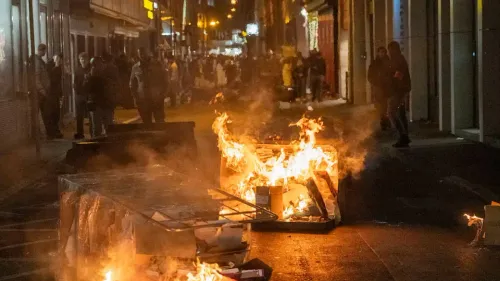
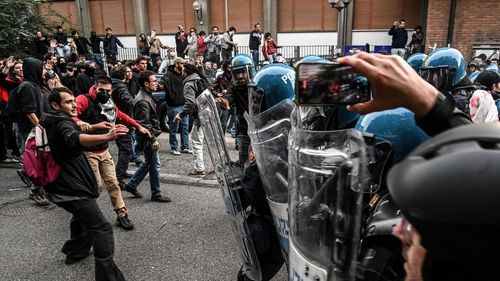
The German demonstrations trace back to student protests that began in France in late September, FFH reported on October 29. The French protests drew hundreds of thousands nationwide and were accompanied by riots and looting. Police officers and demonstrators were injured, and thousands of people were arrested. Violent clashes also occurred in Italy and Belgium.
That unrest has heightened concern among German security authorities. Bavarian Interior Minister Joachim Herrmann, a member of the CSU, told Table.Briefings that initial calls for violence had appeared online and announced a large police presence.
Grimm, of the Center for Interdisciplinary Peace and Conflict Research at Freie Universität Berlin, considers unrest on the French scale unlikely in Germany, according to tagesschau. He cited harsher policing in France and lower public acceptance of confrontational protest in Germany.
Police unions warn against attacks while backing peaceful protest
Florian Leitner, the Bavarian chair of the Gewerkschaft der Polizei (GdP) police union, told Münchner Merkur that officers would not stand by if people sought or provoked violence. He warned against treating officers as targets or using peaceful rallies as cover for attacks and destruction, while stressing that police would support those demonstrating peacefully.
Jürgen Köhnlein, the Bavarian chair of the Deutsche Polizeigewerkschaft (DPolG) police union, expressed particular concern about Frankfurt, Leipzig and Berlin, where the demonstrations are expected to require substantial police deployments.