Court appoints preliminary administrator
The filings affect Capricorn Holding GmbH and Capricorn Composite GmbH, according to WirtschaftsWoche. On November 4, 2026, the Düsseldorf local court ordered preliminary protective measures and appointed Dirk Andres of AndresPartner as preliminary insolvency administrator. The court has not yet made a final decision on formally opening the proceedings.
Andres will assess the companies' finances, determine which operations are economically viable and examine options for restructuring. An investor search is expected to begin as soon as possible, with normal operations continuing in the meantime.
The group says it employs just under 500 people across seven European sites. BILD reports that about 56 employees are directly affected by the insolvency and that their salaries are initially expected to be covered for three months through insolvency pay. A breakdown of employment by company and location has not been made public.
Long-term job retention depends largely on finding an investor and keeping the supply business operating. Whether the two companies can be restructured remains uncertain.
According to the insolvency database insolvenzmonitor.de, Andres was named as administrator, trustee or preliminary administrator in 77 corporate insolvency cases during the 365 days through November 10, 2026. Of those cases, 51 had a published opening of proceedings. His appointments were concentrated at the Düsseldorf, Hagen and Essen local courts.
A supplier with a broad motorsport history
Robertino Wild, Capricorn's current managing director, founded the business in 1994 with headquarters in Düsseldorf and Mönchengladbach, according to hna.de. The company specializes in lightweight construction, developing and manufacturing components primarily for high-performance sports cars and motorsport.
A Capricorn project overview cited by auto motor und sport details work for Porsche, Bugatti and Lamborghini. Porsche projects included chassis and body parts for the 918 Spyder and several GT models. Capricorn also produced engine and vehicle components for Bugatti's Veyron, Chiron, Mistral and Bolide, along with crankshafts for Lamborghini.
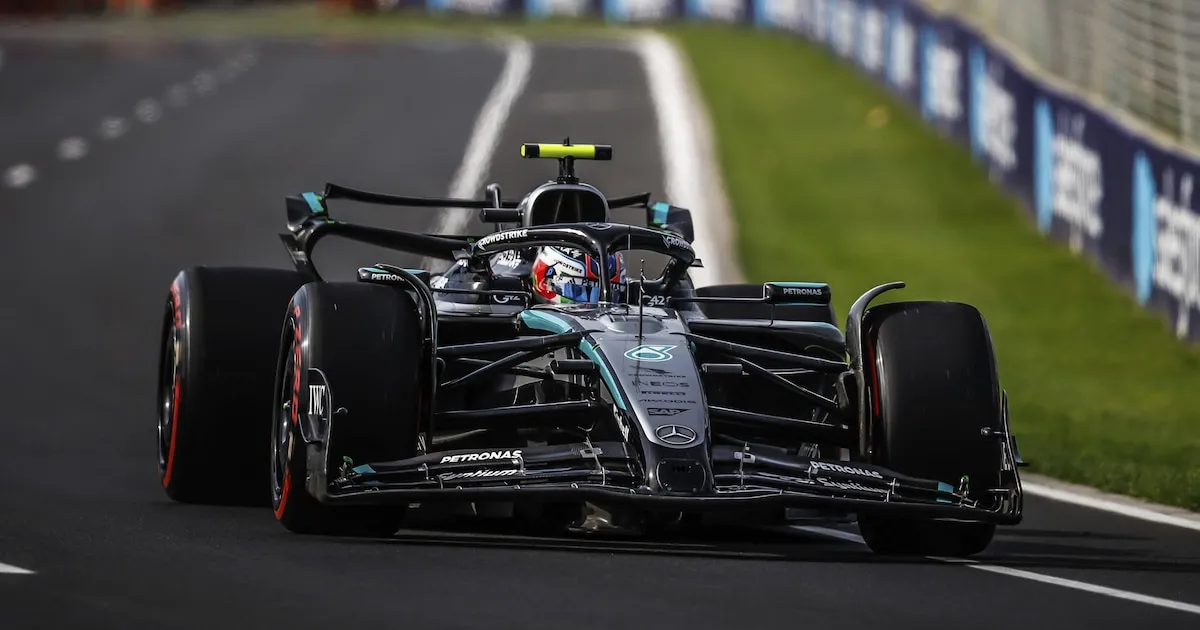
Other projects listed include components for the Audi R8, RS4 and RS5, and engine parts for the McLaren MP4-12C and P1. The overview names Lotus, Alpine, Mercedes, BMW, Renault and Toyota among Formula 1 customers and lists vehicle structures for the Porsche 919 Hybrid and Audi R18 e-tron quattro. These records include past orders and do not establish that every supply relationship is still active.
Capricorn has developed sports car parts at the Nürburgring since 2006. Wild also attempted to acquire the insolvent racing complex in 2014, according to AutoNext. His €77 million bid won in March of that year, narrowly ahead of HIG Capital, and he pledged another €25 million in investment.
That transaction fell apart seven months later. WirtschaftsWoche reported that Wild missed a second payment of €5 million; Russian billionaire Viktor Kharitonin subsequently took the majority stake.
Financial causes remain unconfirmed
The reasons for Capricorn's current financial difficulties have not been conclusively established. WirtschaftsWoche has suggested that the company may have underestimated the development work and investment required for its own hypercar, the Capricorn 01 Zagato. That remains a possible explanation, not a confirmed cause of the insolvency.
According to AutoNext, Wild told the Rheinische Post that he first had to "sort out the shock." He did not give a reason for the insolvency.
Uncertainty over the Capricorn 01 Zagato
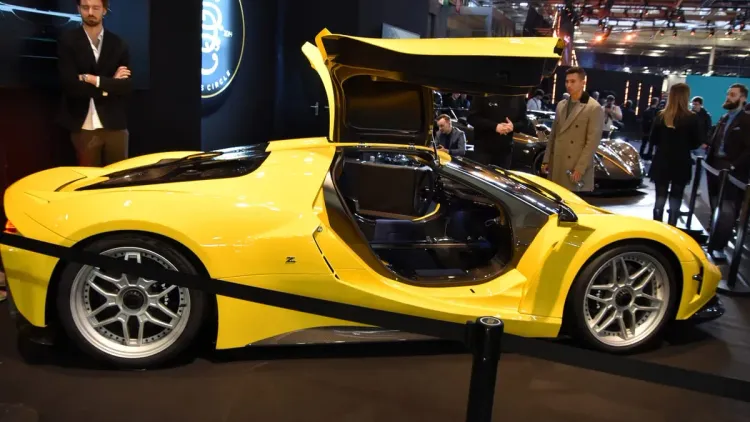
Developed with Italian coachbuilder Zagato, the Capricorn 01 Zagato was planned as a limited run of 19 cars priced at nearly €3 million each. The project calls for around 900 hp, a weight of about 1,200 kilograms and acceleration from 0 to 100 km/h in 2.9 seconds.
Auto motor und sport describes a mid-mounted, extensively reworked 5.2-liter supercharged V8 derived from a Ford engine, with reported output of more than 900 hp and 1,000 Nm of torque. A CIMA five-speed manual dogleg transmission sends power to the rear wheels.
The car uses an LMP1-style carbon monocoque and an all-carbon-fiber body, with double-wishbone and pushrod suspension and carbon-ceramic brakes. Reported specifications put dry weight below 1,200 kilograms, the 0-100 km/h time below three seconds and top speed at 360 km/h.
The first prototype appeared at the Zoute Grand Prix in October 2025, AutoNext reports. Deliveries were scheduled to begin in late 2026, with final assembly in Mönchengladbach. The stated price is €2.95 million before tax, and Louyet Group handles sales in Belgium, France and Luxembourg. A Spider was also planned as the second model.
It is not yet clear whether the hypercar project will continue. The reporting does not specify what will happen to outstanding orders.